

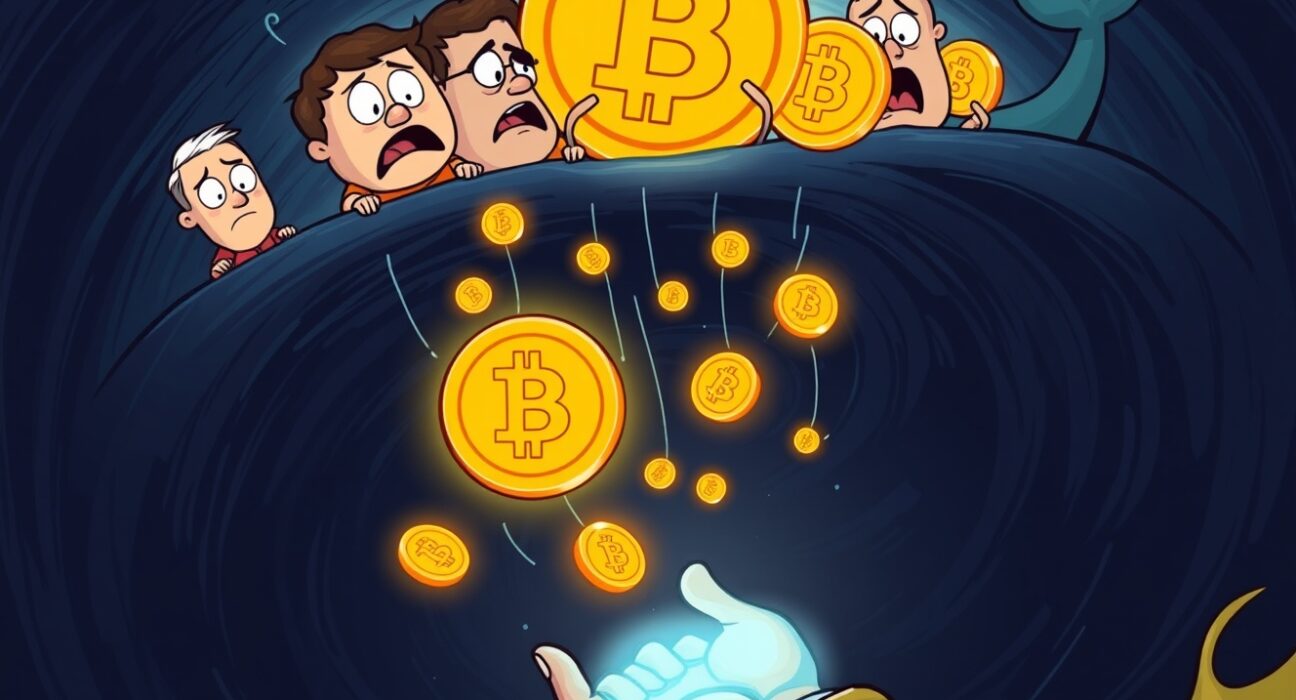
Recent on-chain analysis reveals a concerning trend for Bitcoin investors, with data showing most short-term holders currently facing significant losses that could impact market dynamics throughout 2025.
Bitcoin Short-Term Holders Face Mounting Losses
CryptoQuant’s latest analysis presents troubling data for Bitcoin’s market structure. The on-chain analytics firm discovered that most short-term holders currently operate at a loss. These investors, typically holding Bitcoin for less than 155 days, represent a substantial portion of the market. Their average purchase price now exceeds Bitcoin’s current market value. This situation creates potential volatility as these holders might sell during price rebounds to minimize losses.
The firm’s researchers examined the realized price metric, which calculates the average price at which coins last moved on-chain. This metric provides crucial insight into investor psychology and potential market movements. When realized price exceeds market price, it indicates widespread unrealized losses across the holder cohort. Consequently, this scenario often precedes increased selling activity during price recoveries.
Understanding the Realized Price Metric
On-chain analytics utilize several key metrics to assess market health. The realized price specifically tracks the average acquisition cost of coins currently in circulation. Unlike simple market averages, this metric weights prices by when coins last moved. Therefore, it provides a more accurate picture of investor cost basis. CryptoQuant’s analysis focuses specifically on short-term holders, defined as addresses holding coins for fewer than 155 days.
These investors typically exhibit different behavior patterns than long-term holders. They often react more quickly to price movements and market sentiment. Currently, data shows approximately 5.7 million BTC held by this cohort. Alarmingly, only 8% of these holdings currently show a profit. This percentage represents one of the lowest profitability rates observed in recent years.
The Psychology of Loss Aversion
Behavioral economics provides important context for understanding potential market movements. Investors generally exhibit loss aversion, meaning they feel the pain of losses more acutely than the pleasure of gains. This psychological tendency often leads to specific market behaviors. When prices approach their break-even point, investors frequently sell to avoid further potential losses. This phenomenon creates what analysts term “resistance zones” at certain price levels.
CryptoQuant’s statement highlights this dynamic clearly. “This could lead to increased selling pressure with every price rebound,” the firm noted. Essentially, as Bitcoin’s price recovers toward the average cost basis of short-term holders, selling activity typically increases. This selling pressure can then slow or reverse price momentum, creating a cyclical pattern that markets must navigate.
Historical Context and Market Cycles
Similar patterns have emerged during previous Bitcoin market cycles. Analysis of historical data reveals consistent behavioral patterns among different investor cohorts. Short-term holders often face the most volatility during market corrections. Their reactions frequently amplify price movements in both directions. During the 2018 bear market, for instance, similar metrics preceded extended periods of consolidation.
The current situation differs in several important aspects, however. Bitcoin’s market structure has matured significantly since previous cycles. Institutional participation has increased substantially. Regulatory frameworks continue developing globally. These factors might influence how current market dynamics unfold. Nevertheless, fundamental investor psychology remains remarkably consistent across market cycles.
| Metric | Value | Significance |
|---|---|---|
| Short-term holder BTC | 5.7 million | Total coins held by this cohort |
| Profitable positions | 8% | Extremely low profitability rate |
| Realized price vs. market | Higher | Indicates widespread unrealized losses |
| Historical comparison | Similar to 2018 | Pattern matches previous bear markets |
Potential Market Implications
The current data suggests several possible outcomes for Bitcoin’s price action. First, resistance levels might form near short-term holders’ average cost basis. Second, volatility could increase as prices approach these psychological levels. Third, market recovery might proceed more gradually than during periods with higher holder profitability. These factors combine to create a complex trading environment.
Market analysts monitor several additional metrics alongside holder profitability:
- Exchange inflows and outflows: Tracking movement to and from exchanges
- Network activity: Monitoring transaction volumes and active addresses
- Miner behavior: Observing selling pressure from mining operations
- Derivatives data: Analyzing futures and options market positioning
These complementary metrics provide a more complete picture of market health. Currently, most indicators suggest cautious sentiment prevails across cryptocurrency markets. However, Bitcoin has demonstrated remarkable resilience throughout its history. The network continues operating securely despite price fluctuations. Adoption metrics show steady growth in several key areas.
Long-Term Holder Perspective
While short-term holders face challenges, long-term holders present a different picture. These investors, typically holding coins for more than 155 days, often exhibit different behavior patterns. They generally show lower selling propensity during market downturns. Their cost basis frequently sits significantly below current market prices. This positioning provides psychological comfort during volatile periods.
The divergence between short-term and long-term holder experiences highlights Bitcoin’s dual nature. It functions simultaneously as a speculative asset and a long-term store of value. Different investor groups approach the asset with varying time horizons and risk tolerances. This diversity contributes to market depth and liquidity, even during challenging periods.
Conclusion
CryptoQuant’s analysis reveals significant challenges for Bitcoin short-term holders, with 92% currently holding at a loss. This situation creates potential selling pressure that could impact price rebounds throughout 2025. Market participants should monitor realized price metrics and exchange flow data closely. Historical patterns suggest such conditions often precede extended consolidation periods. However, Bitcoin’s fundamental network strength remains intact despite current holder profitability concerns. The divergence between short-term and long-term holder experiences continues shaping market dynamics in this evolving digital asset class.
FAQs
Q1: What defines a Bitcoin short-term holder?
Analysts typically define short-term holders as addresses holding Bitcoin for fewer than 155 days. This timeframe corresponds with common market cycle patterns and behavioral analysis.
Q2: How does realized price differ from market price?
Realized price calculates the average price at which coins last moved on-chain, weighted by transaction size. Market price simply reflects current exchange trading prices without considering acquisition costs.
Q3: Why would investors sell during price rebounds?
Behavioral economics shows investors experience loss aversion more strongly than gain appreciation. As prices approach their break-even point, many sell to avoid returning to loss positions.
Q4: Does this analysis predict Bitcoin’s price direction?
No, on-chain analysis describes current conditions and potential pressures rather than predicting specific price movements. Multiple factors influence cryptocurrency prices beyond holder profitability.
Q5: How might this situation resolve over time?
Several outcomes are possible: prices could rise above the realized price, eliminating losses; holders could become long-term holders through extended holding; or market structure could shift through new investor entry.
Disclaimer: The information provided is not trading advice, Bitcoinworld.co.in holds no liability for any investments made based on the information provided on this page. We strongly recommend independent research and/or consultation with a qualified professional before making any investment decisions.