

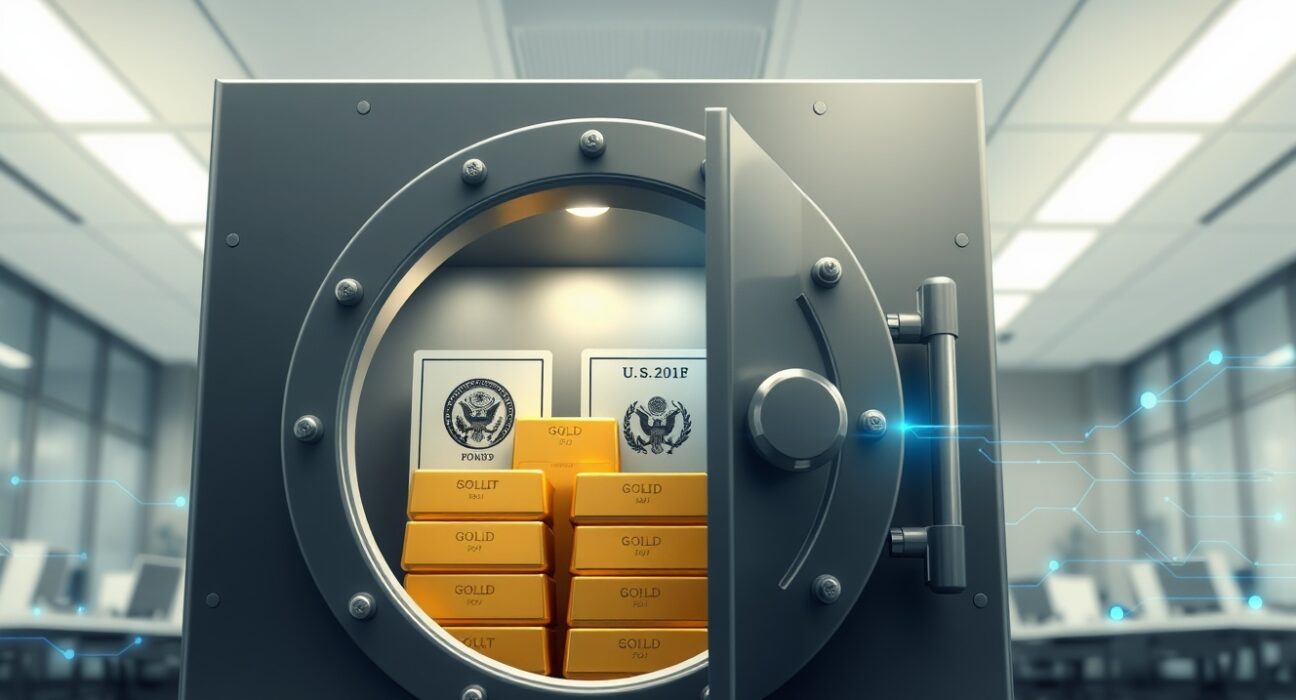
In a significant move for institutional blockchain adoption, BlackRock has integrated oracle provider Chronicle as a verification layer for its landmark BUIDL fund. This strategic partnership, first reported by The Block, aims to provide continuous, independent attestation of the fund’s U.S. Treasury-backed assets. Consequently, this development marks a pivotal step toward building verifiable trust in tokenized real-world assets (RWAs).
BlackRock’s BUIDL Fund Adopts Chronicle for Asset Verification
BlackRock’s BUIDL (BlackRock USD Institutional Digital Liquidity Fund) represents a cornerstone of the firm’s digital assets strategy. Launched on the Ethereum blockchain, the fund tokenizes ownership in short-term U.S. Treasury securities and repurchase agreements. Moreover, the integration of Chronicle’s Proof of Assets (PoA) system directly addresses a critical need for institutional participants: real-time, auditable proof of reserve backing.
Chronicle, originally a product of MakerDAO’s development, functions as a decentralized oracle network. Its institutional-grade PoA layer will now independently verify and continuously publish attestations about BUIDL’s underlying asset composition. Therefore, token holders and regulatory observers can access a cryptographically secured, tamper-evident record of the fund’s integrity.
The Critical Role of Proof of Assets in Tokenized Finance
The 2022 market downturn highlighted catastrophic failures in asset verification across the crypto ecosystem. Several high-profile collapses stemmed from opaque or fraudulent reserve claims. In response, institutional entrants like BlackRock prioritize verifiable transparency from the outset. Chronicle’s system operates by autonomously collecting and verifying data from trusted, off-chain sources.
Subsequently, it publishes this data on-chain in a format that smart contracts and external auditors can trustlessly consume. For BUIDL, this means the fund’s daily net asset value (NAV) and the specific composition of its Treasury holdings receive continuous, immutable attestation. This process effectively creates a public audit trail that functions 24/7.
Expert Analysis on Institutional-Grade Infrastructure
Market analysts view this integration as a benchmark for future tokenized funds. “BlackRock isn’t just adopting blockchain technology; it’s building the requisite audit and compliance layer directly into the product’s architecture,” observes a fintech research director from a major consultancy. This approach contrasts sharply with the post-hoc verification common in earlier crypto-native projects. Furthermore, by selecting an established oracle solution like Chronicle, BlackRock leverages battle-tested infrastructure rather than proprietary, closed systems.
The following table outlines the core verification data Chronicle’s PoA provides for the BUIDL fund:
| Data Point | Description | Verification Impact |
|---|---|---|
| Fund Net Asset Value (NAV) | The total value of the fund’s assets minus liabilities. | Provides real-time proof of total backing for issued tokens. |
| U.S. Treasury Holdings | Types, quantities, and identifiers of government securities. | Attests to the quality and specificity of the underlying collateral. |
| Repurchase Agreement Details | Counterparty and terms of cash-equivalent instruments. | Ensures short-term liquidity assets are properly recorded. |
| Attestation Timestamp & Hash | Cryptographic proof of data origin and time. | Creates an immutable audit trail resistant to manipulation. |
Broader Implications for the Tokenization Ecosystem
BlackRock’s action creates a powerful precedent. Other asset managers exploring tokenization, such as Franklin Templeton and WisdomTree, now face increased pressure to implement similar verification standards. This trend accelerates a broader shift toward on-chain finance (OnFi) where traditional financial instruments gain the transparency and efficiency of blockchain. Additionally, regulatory bodies, including the U.S. Securities and Exchange Commission (SEC), are closely monitoring these developments.
Enhanced verification mechanisms may facilitate smoother regulatory approval for future blockchain-based products. The integration also strengthens the value proposition for BUIDL against competing yield-bearing stablecoins and money market funds. Investors receive not only exposure to U.S. Treasuries but also an unprecedented level of operational transparency.
The Timeline and Strategic Context
BlackRock announced the BUIDL fund in March 2024, with initial assets surpassing $400 million within months. The decision to integrate Chronicle follows a deliberate period of operational testing and reflects ongoing engagement with ecosystem partners. This move is part of a multi-pronged digital asset strategy that also includes a spot Bitcoin ETF. Ultimately, it signals that for institutional giants, trust through verification is non-negotiable for mainstream blockchain adoption.
Conclusion
BlackRock’s integration of Chronicle’s Proof of Assets system for its BUIDL fund establishes a new benchmark for transparency in tokenized finance. By providing continuous, independent verification of its U.S. Treasury collateral, the firm addresses a core concern of institutions and regulators alike. This development not only strengthens the BUIDL fund’s credibility but also propels the entire ecosystem toward more robust, auditable, and trustworthy financial infrastructure built on blockchain technology.
FAQs
Q1: What is the BlackRock BUIDL fund?
The BUIDL fund is a tokenized money market fund from BlackRock that invests in U.S. Treasury securities and repurchase agreements, allowing investors to earn yield through a digital token on the Ethereum blockchain.
Q2: What does Chronicle’s Proof of Assets (PoA) system do?
Chronicle’s PoA is an oracle system that independently verifies and continuously publishes on-chain attestations about the composition and value of an asset pool, like BUIDL’s Treasury holdings, providing real-time proof of reserves.
Q3: Why is this verification important for a tokenized fund?
It solves the “trust but verify” problem by giving token holders and regulators a cryptographically secure, tamper-evident, and continuous audit trail, proving the digital tokens are fully backed by the claimed real-world assets.
Q4: How does this affect other asset managers?
It sets a new institutional standard for transparency. Competing firms launching tokenized products will likely need to implement similar, robust verification solutions to meet investor and regulatory expectations.
Q5: Does this make BUIDL a stablecoin?
No, BUIDL is a tokenized securities fund. Its value accrues based on the yield from its underlying assets (Treasuries), unlike a stablecoin which aims to maintain a peg to a flat currency like the US dollar.
Disclaimer: The information provided is not trading advice, Bitcoinworld.co.in holds no liability for any investments made based on the information provided on this page. We strongly recommend independent research and/or consultation with a qualified professional before making any investment decisions.
