

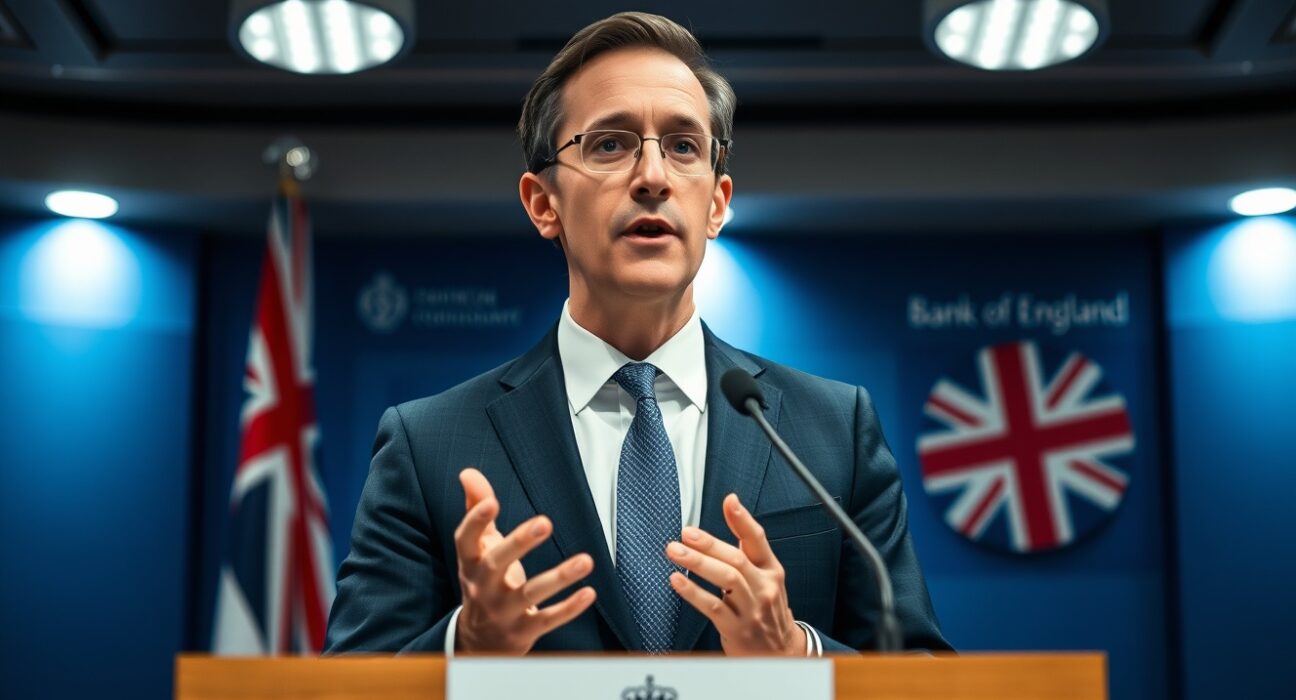
Bank of England Chief Economist Huw Pill has stated that it is currently impossible to determine whether any future interest rate increase would be temporary, injecting a note of caution into market expectations about the trajectory of UK monetary policy.
Speaking at a recent event, Pill emphasized that the central bank remains in a data-dependent mode, and that the persistence of inflationary pressures is not yet clear enough to make firm judgments about the duration of any tightening cycle. His remarks come as financial markets have been pricing in potential rate cuts later this year, following a prolonged period of elevated borrowing costs.
Context of Pill’s Comments
Pill’s statement reflects the ongoing debate within the Monetary Policy Committee (MPC) about whether the UK’s inflation problem is largely transitory or more deeply embedded. While headline inflation has fallen from its peak of over 11% in late 2022, core inflation and services sector inflation have remained stickier than anticipated.
The chief economist’s caution is particularly significant because he has often been seen as a centrist voice on the MPC. His reluctance to commit to a temporary rate rise suggests that the committee is not yet confident that the battle against inflation is won.
“We cannot say now if a rate rise would only be temporary,” Pill said, according to reports from the event. “The path of inflation remains uncertain, and we need to see more evidence that domestic price pressures are sustainably returning to target.”
Market Implications
Financial markets reacted with mild volatility to Pill’s comments, with gilt yields edging higher as traders scaled back bets on imminent rate cuts. The British pound also saw a slight uptick against the dollar, reflecting the view that UK interest rates may stay higher for longer than previously expected.
Economists noted that Pill’s remarks underscore a key risk for borrowers: even if the Bank of England does raise rates again, the duration of higher rates is uncertain. Households and businesses planning for lower borrowing costs in the near term may need to reassess their expectations.
Why This Matters for Readers
For UK mortgage holders, savers, and businesses, the trajectory of interest rates directly affects monthly payments, savings returns, and investment decisions. Pill’s comments serve as a reminder that the Bank of England is prioritizing inflation control over providing forward guidance, meaning that rate decisions will remain unpredictable in the near term.
The broader economic context includes a labor market that remains tight, with wage growth still elevated, and services inflation running above 5%. These factors give the MPC reason to remain cautious, even as the economy shows signs of slowing.
Conclusion
Huw Pill’s refusal to characterize a potential rate rise as temporary signals that the Bank of England is keeping all options open. The central bank is unlikely to signal a clear direction until it sees more consistent data on inflation, wages, and economic activity. For now, uncertainty remains the defining feature of UK monetary policy.
FAQs
Q1: What did Huw Pill say about a rate rise being temporary?
A1: Pill stated that the Bank of England cannot currently determine whether any future interest rate increase would be temporary, emphasizing the need for more data on inflation persistence.
Q2: Why is Pill’s comment significant?
A2: As Chief Economist, Pill’s views carry weight within the MPC. His caution suggests the committee is not ready to signal a shift toward looser policy, which affects market expectations for rate cuts.
Q3: How might this affect UK borrowers?
A3: Borrowers hoping for rapid rate cuts may need to wait longer. Pill’s remarks indicate that rates could stay higher for longer, and even if raised, the duration of higher rates is uncertain.
Disclaimer: The information provided is not trading advice, Bitcoinworld.co.in holds no liability for any investments made based on the information provided on this page. We strongly recommend independent research and/or consultation with a qualified professional before making any investment decisions.
