

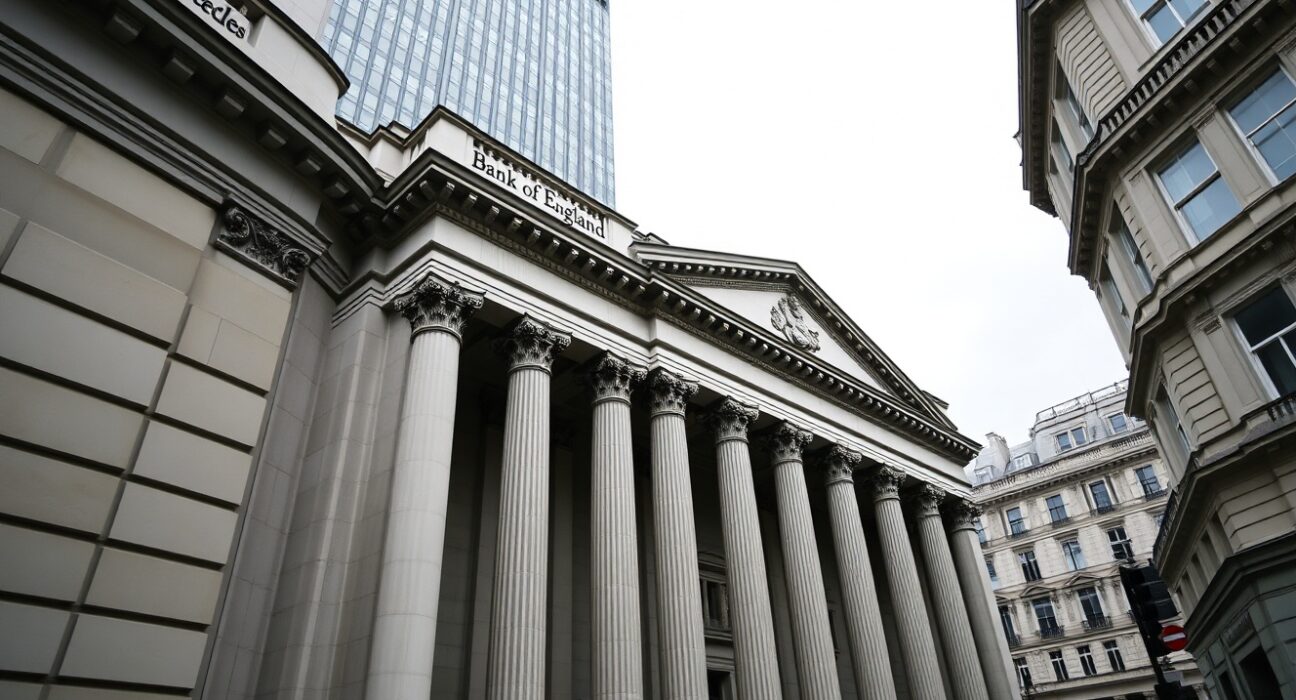
The Bank of England is widely expected to keep its monetary policy stance restrictive in the near term, as the inflation outlook continues to run above the central bank’s 2% target, according to a recent Reuters poll of economists. The survey, which gathered projections from a broad panel of analysts, indicates that the Monetary Policy Committee (MPC) is unlikely to pivot toward easing until there is clearer evidence that underlying price pressures are durably subsiding.
Persistent Inflation Pressures Shape Policy Path
The Reuters poll, conducted in early April 2025, reveals a consensus among economists that the BoE will hold the Bank Rate steady at its current level for the coming months. Key drivers of this outlook include sticky services inflation, robust wage growth, and the pass-through of higher energy costs to consumer prices. While headline inflation has moderated from its peak, core inflation metrics remain elevated, reinforcing the MPC’s cautious stance.
Market participants and analysts are closely watching the BoE’s forward guidance for any shift in language. The poll suggests that a majority of respondents expect the first rate cut to occur no earlier than the fourth quarter of 2025, contingent on a sustained decline in both headline and core inflation. The central bank’s own projections, outlined in its February Monetary Policy Report, indicated that inflation is expected to remain above target through much of 2025 before gradually returning to 2%.
Implications for the UK Economy and Markets
The BoE’s restrictive policy stance carries significant implications for the UK economy. Higher borrowing costs continue to weigh on consumer spending and business investment, particularly in interest-rate-sensitive sectors such as housing and construction. Mortgage rates remain elevated, squeezing household budgets and dampening demand in the property market.
For financial markets, the extended period of tight policy means that UK gilt yields are likely to stay relatively high, supporting the pound but also increasing the government’s debt servicing costs. The poll indicates that economists expect the yield on 10-year gilts to remain in a range of 4.0% to 4.5% over the next six months, reflecting the market’s pricing of a prolonged restrictive stance.
Divergent Views on Timing of Easing
While the consensus leans toward a hold, there is notable divergence among economists regarding the exact timing of the first rate cut. Some analysts argue that the BoE may need to act sooner if the economy weakens more sharply than anticipated, while others caution that premature easing could reignite inflationary pressures. The poll shows that roughly 30% of respondents expect a rate cut by September 2025, while the majority point to later in the year or early 2026.
This uncertainty reflects the delicate balancing act facing the MPC: supporting a sluggish economy while ensuring that inflation expectations remain well-anchored. The central bank’s next policy decision is scheduled for May 8, 2025, and market participants will scrutinize the accompanying statement and minutes for any subtle shifts in tone.
Conclusion
The Reuters poll underscores the prevailing expectation that the Bank of England will maintain a restrictive policy stance for the foreseeable future, as elevated inflation continues to limit the scope for easing. The outlook hinges on the trajectory of price pressures and the resilience of the broader economy. For households, businesses, and investors, the message is clear: borrowing costs are likely to remain high for some time, and any pivot toward looser policy will depend on sustained progress in bringing inflation back to target. The coming months will be critical in determining whether the BoE can navigate this challenging environment without derailing the economic recovery.
FAQs
Q1: Why is the Bank of England expected to keep policy restrictive?
The Bank of England is expected to maintain restrictive policy because inflation remains above its 2% target, driven by persistent services inflation, wage growth, and energy costs. The MPC needs clearer evidence that price pressures are sustainably declining before considering rate cuts.
Q2: When might the BoE start cutting interest rates?
According to the Reuters poll, most economists expect the first rate cut no earlier than the fourth quarter of 2025, with some pointing to early 2026. The timing depends on inflation data and economic conditions.
Q3: How does the BoE’s policy affect UK households and businesses?
Higher interest rates increase borrowing costs for mortgages, loans, and credit, reducing disposable income for households and raising financing costs for businesses. This can slow economic growth but is necessary to control inflation.
Disclaimer: The information provided is not trading advice, Bitcoinworld.co.in holds no liability for any investments made based on the information provided on this page. We strongly recommend independent research and/or consultation with a qualified professional before making any investment decisions.
