

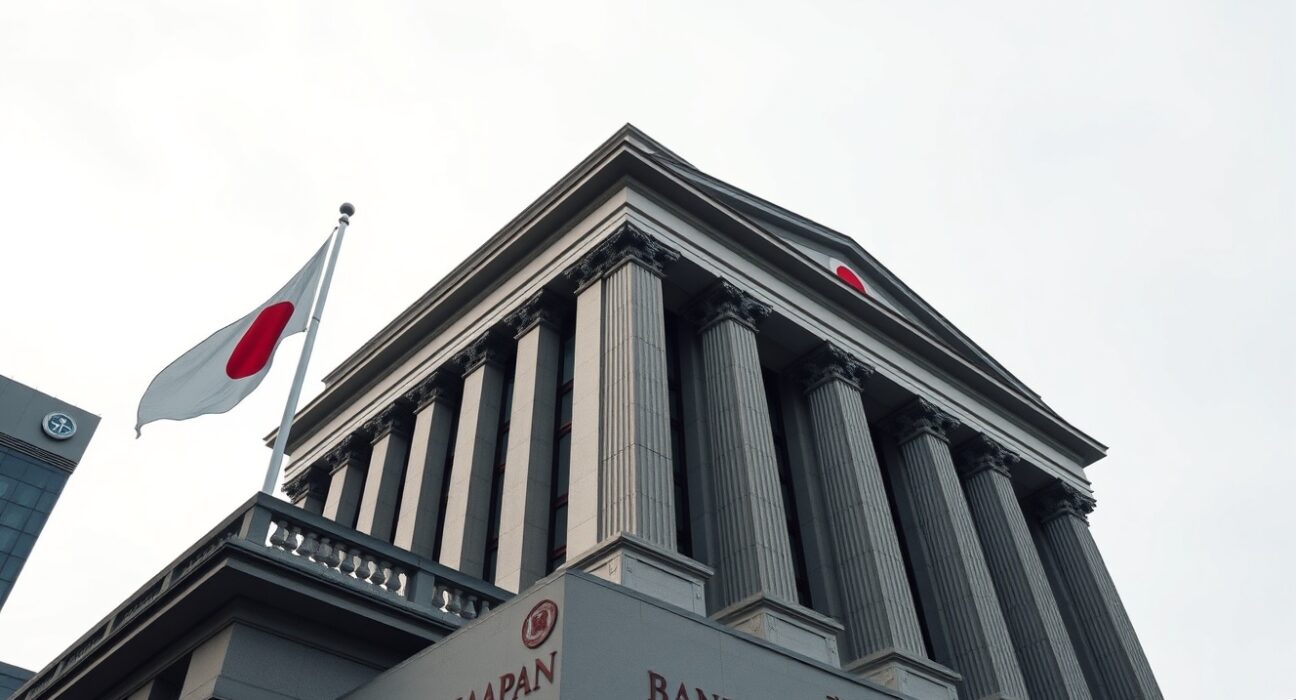
Bank of Japan Deputy Governor Ryozo Himino stated on Thursday that the recent increase in long-term interest rates is being interpreted by financial markets as a reflection of growing global inflation concerns rather than a shift in domestic monetary policy expectations. The remarks, delivered during a speech to business leaders in Tokyo, provide rare clarity on how the central bank views the recent bond market movements.
Market Interpretation and Global Context
Himino emphasized that the rise in long-term yields is primarily driven by external factors, including persistent inflationary pressures in the United States and Europe, as well as uncertainty surrounding commodity prices. He noted that Japanese government bond yields have moved in tandem with global peers, indicating that investors are pricing in a prolonged period of higher inflation worldwide.
“The market sees the increase in long-term rates as reflecting global inflation worries rather than a change in Japan’s economic fundamentals,” Himino said. The comments come as the yield on the 10-year Japanese government bond has edged higher in recent weeks, approaching levels not seen since 2011.
Implications for BoJ Policy
The deputy governor’s remarks suggest that the Bank of Japan is closely monitoring global developments but remains cautious about adjusting its ultra-loose monetary policy. While the BoJ has maintained its yield curve control framework, Himino indicated that the central bank is prepared to respond if market movements become disorderly or threaten financial stability.
Analysts view the statement as a signal that the BoJ is unlikely to tighten policy solely in response to external pressures. “Himino is essentially telling markets that the BoJ sees this as a global phenomenon, not a domestic overheating issue,” said Hiroshi Watanabe, a senior economist at the Nomura Research Institute. “This reduces the likelihood of a near-term policy shift.”
What This Means for Investors
For investors, the key takeaway is that Japanese interest rates may remain low relative to other developed economies, even as global yields rise. This could continue to make the yen a funding currency for carry trades, while also supporting Japanese equities by keeping borrowing costs low for corporations.
However, Himino also warned that prolonged global inflation could eventually feed into Japan through higher import prices, potentially complicating the BoJ’s policy outlook. The central bank remains committed to achieving its 2% inflation target sustainably, a goal that has proven elusive for decades.
Conclusion
Himino’s comments provide important context for understanding the BoJ’s current policy stance. By attributing the rise in long-term rates to global factors, the central bank is signaling that it will not rush to normalize policy. For now, the BoJ appears willing to tolerate some upward pressure on yields as long as the domestic economy remains on a recovery path.
FAQs
Q1: What did BoJ Deputy Governor Himino say about long-term interest rates?
Himino stated that financial markets view the recent increase in long-term rates as a reflection of global inflation concerns, not a shift in Japanese monetary policy expectations.
Q2: How does this affect the Bank of Japan’s policy outlook?
The remarks suggest the BoJ is unlikely to tighten policy in the near term, as it sees the yield rise as externally driven rather than a sign of domestic overheating.
Q3: Why are global inflation concerns impacting Japanese bond yields?
Japanese government bond yields move in tandem with global peers due to interconnected financial markets. Rising inflation in the U.S. and Europe leads to higher global yields, which spill over into Japan.
Disclaimer: The information provided is not trading advice, Bitcoinworld.co.in holds no liability for any investments made based on the information provided on this page. We strongly recommend independent research and/or consultation with a qualified professional before making any investment decisions.
