

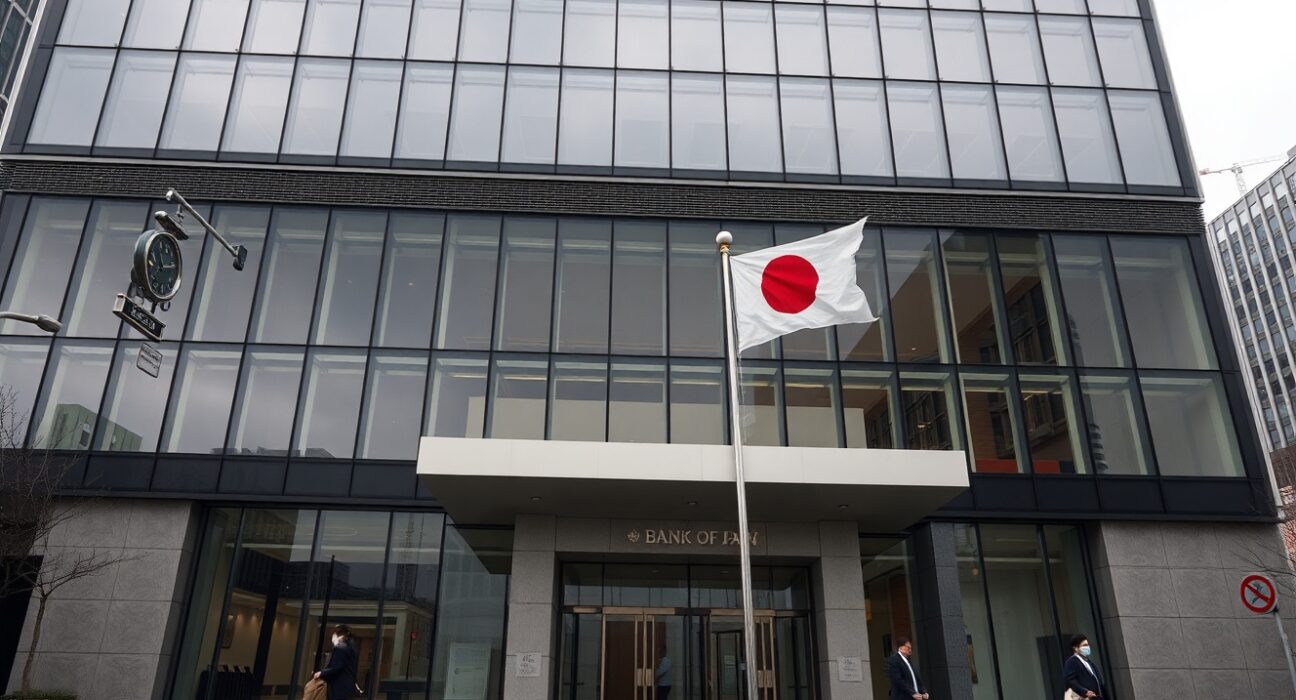
The Bank of Japan interest rate remains unchanged at 0.75%, as widely anticipated by markets and economists. This decision marks a continued pause in the central bank’s monetary policy normalization. The Bank of Japan (BOJ) concluded its two-day policy meeting on [insert date] in Tokyo. The unanimous vote to hold rates steady reflects a cautious approach amid global economic uncertainties.
BOJ Rate Decision: Context and Background
The BOJ rate decision to leave the benchmark rate at 0.75% aligns with consensus forecasts. Analysts from major financial institutions, including Nomura and Daiwa Securities, had predicted this outcome. The decision comes after a series of rate hikes in 2024 that brought the rate from negative territory to 0.75%. The BOJ’s move signals a wait-and-see stance on future tightening.
Key factors influencing the decision include:
- Moderate inflation: Japan’s core consumer price index (CPI) remains above the 2% target but shows signs of cooling.
- Wage growth: The spring wage negotiations (shunto) yielded solid gains, but the BOJ wants to confirm sustainability.
- Global risks: Slowing growth in China and geopolitical tensions weigh on Japan’s export-driven economy.
- Yen volatility: The yen’s recent stability reduces immediate pressure for rate action.
Market Reaction to the Unchanged Rate
Financial markets reacted calmly to the interest rate unchanged announcement. The Nikkei 225 index edged up 0.3% in afternoon trading. The yen weakened slightly against the US dollar, moving from 149.50 to 149.80. Bond yields remained stable, with the 10-year Japanese government bond (JGB) yield hovering at 1.15%.
Investors now focus on the BOJ’s forward guidance. Governor Kazuo Ueda stated that the central bank will monitor economic data closely. He emphasized that further rate hikes depend on inflation trends and wage dynamics. The market expects the next possible move in October 2025.
Impact on Japanese Economy and Households
The Japan monetary policy decision affects consumers and businesses directly. Homeowners with variable-rate mortgages benefit from stable loan costs. Savers, however, continue to face low returns on deposits. Small and medium-sized enterprises (SMEs) welcome the predictability, as borrowing costs remain manageable.
Key economic indicators supporting the BOJ’s decision:
- GDP growth: Japan’s economy expanded 0.4% in Q1 2025, driven by domestic consumption.
- Unemployment: The jobless rate stands at 2.5%, near historic lows.
- Industrial production: Output rose 1.2% month-over-month in April.
Comparison with Other Central Banks
The BOJ’s stance contrasts sharply with other major central banks. The US Federal Reserve held rates at 5.25% to 5.50% in its latest meeting. The European Central Bank cut rates to 3.75% in June 2025. The Bank of England maintained its rate at 5.00%. Japan’s 0.75% rate remains the lowest among advanced economies.
| Central Bank | Current Rate | Recent Action |
|---|---|---|
| Bank of Japan | 0.75% | Held steady |
| US Federal Reserve | 5.25% – 5.50% | Held steady |
| European Central Bank | 3.75% | Cut 25 bps |
| Bank of England | 5.00% | Held steady |
Expert Analysis on the BOJ’s Strategy
Economists view the BOJ 0.75% rate as a deliberate pause. “The BOJ is in no rush to tighten further,” says Masaki Kondo, chief economist at Sompo Institute Plus. “They want to see if wage gains translate into sustained domestic demand.” The central bank’s quarterly outlook report, released alongside the decision, revised GDP growth forecasts slightly downward to 1.0% for fiscal 2025.
The BOJ also maintained its bond purchase program at ¥6 trillion per month. This decision keeps long-term yields capped. The central bank’s balance sheet remains massive, at over 130% of GDP. Normalization will be a multi-year process.
Timeline of BOJ Policy Shifts
Understanding the current decision requires a look at recent history:
- March 2024: BOJ ended negative interest rate policy, raised rate to 0.10%.
- July 2024: Hiked rate to 0.25% amid rising inflation.
- December 2024: Raised rate to 0.50% as wage growth accelerated.
- March 2025: Increased rate to 0.75%.
- June 2025: Held rate at 0.75%.
The BOJ’s gradual approach aims to avoid disrupting markets or the economy. Each hike has been telegraphed well in advance. The current pause allows the central bank to assess the cumulative impact of previous moves.
What This Means for Investors
For global investors, the Bank of Japan interest rate decision reinforces the carry trade appeal. The yen remains a funding currency for many strategies. Japanese stocks, particularly exporters, benefit from a stable yen. Bond investors see limited upside for yields in the near term.
Sector-specific impacts include:
- Banks: Net interest margins improve slowly as loan rates adjust upward.
- Real estate: Low mortgage rates support property prices.
- Insurance: Long-term liabilities become easier to manage with stable rates.
Conclusion
The Bank of Japan interest rate remaining unchanged at 0.75% reflects a careful, data-dependent approach. The BOJ prioritizes economic stability over rapid normalization. Markets have priced in this pause, and attention now shifts to the October meeting. The central bank’s commitment to gradual policy adjustment provides clarity for businesses and investors alike. As global uncertainties persist, Japan’s monetary path remains one of cautious optimism.
FAQs
Q1: Why did the Bank of Japan leave interest rates unchanged?
The BOJ held rates at 0.75% to monitor inflation trends, wage growth, and global economic risks. The decision aligns with market expectations and supports a gradual normalization strategy.
Q2: How does the BOJ rate decision affect the yen?
The unchanged rate keeps the yen relatively stable against major currencies. A pause in tightening reduces upward pressure on the yen, supporting export competitiveness.
Q3: What is the next expected BOJ rate move?
Economists expect the next rate hike in October 2025, contingent on sustained inflation and wage data. The BOJ will assess the impact of previous hikes before acting.
Q4: How does Japan’s interest rate compare to other countries?
Japan’s 0.75% rate is the lowest among advanced economies. The US rate is 5.25-5.50%, the ECB is 3.75%, and the UK is 5.00%.
Q5: What does the BOJ decision mean for Japanese consumers?
Homeowners with variable-rate mortgages benefit from stable payments. Savers face continued low deposit rates. Overall, the decision supports economic stability without sudden shocks.
Disclaimer: The information provided is not trading advice, Bitcoinworld.co.in holds no liability for any investments made based on the information provided on this page. We strongly recommend independent research and/or consultation with a qualified professional before making any investment decisions.
