

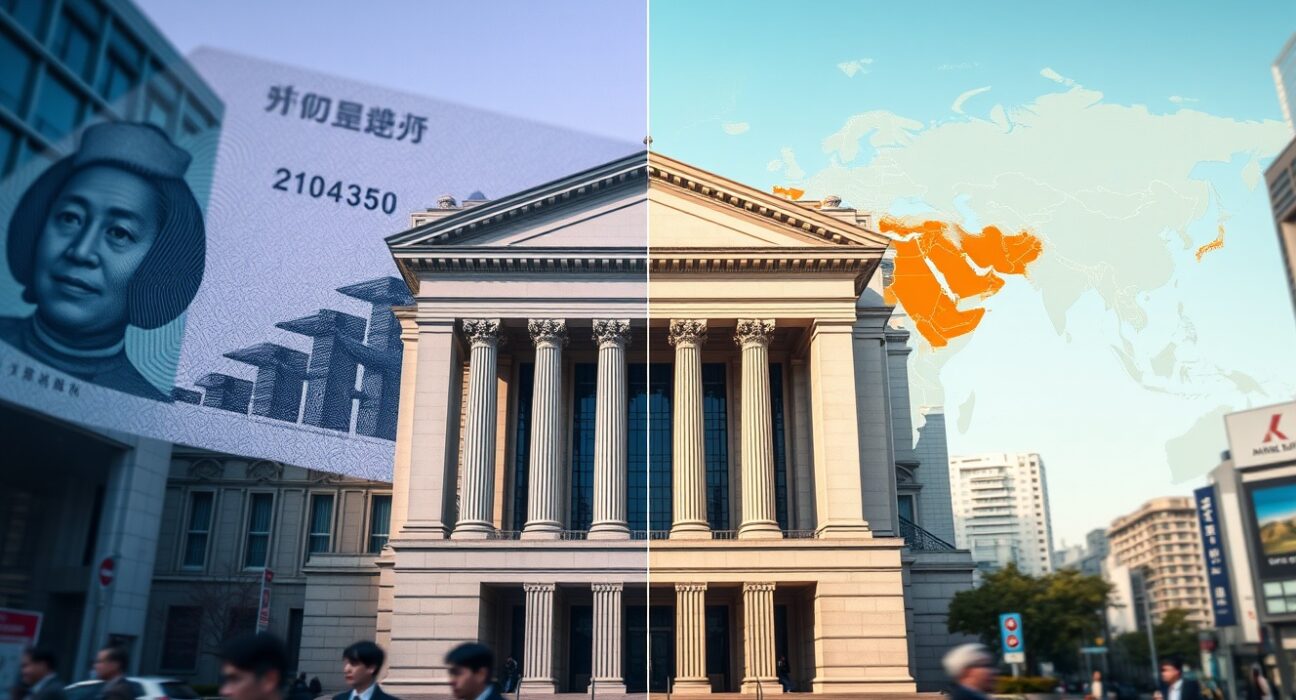
The Bank of Japan faces its most significant monetary policy crossroads in decades, with governing board members revealing deep divisions over interest rate hike timing during their latest meeting. This critical split emerges as escalating Middle East conflict introduces unprecedented global economic uncertainty, potentially derailing Japan’s fragile recovery from decades of deflation. The BoJ’s Summary of Opinions, released today from Tokyo, Japan, exposes fundamental disagreements among policymakers about when to normalize the world’s last negative interest rate regime.
Bank of Japan Rate Hike Debate Intensifies
Monetary policy committee members expressed sharply contrasting views during their October meeting. Some members advocated for maintaining ultra-accommodative policies indefinitely. They cited Japan’s still-modest core inflation and wage growth concerns. Other members pushed for earlier normalization, pointing to sustained price pressures and yen weakness. This division represents the most pronounced policy split since Governor Kazuo Ueda assumed leadership in April 2023.
The debate centers on three critical factors:
- Inflation sustainability: Japan’s core inflation has remained above the 2% target for 18 consecutive months
- Wage growth momentum: Spring wage negotiations delivered the largest increases in three decades
- Currency pressures: The yen has weakened approximately 15% against the dollar this year
Governor Ueda has maintained a cautious approach throughout this period. He emphasizes the need for sustainable inflation driven by domestic demand rather than temporary cost-push factors. However, the latest meeting minutes reveal growing impatience among some committee members with this gradualist stance.
Middle East Conflict Complicates Monetary Policy Calculus
Escalating hostilities in the Middle East have introduced new volatility into global energy markets. Japan, as the world’s third-largest economy, remains particularly vulnerable to oil price shocks. The nation imports approximately 90% of its energy requirements. This dependency creates significant complications for BoJ policymakers attempting to balance inflation control with economic stability.
Energy price fluctuations directly impact Japan’s inflation trajectory through several channels:
| Impact Channel | Short-Term Effect | Long-Term Risk |
|---|---|---|
| Import Costs | Immediate CPI pressure | Persistent inflation expectations |
| Corporate Margins | Profit compression | Reduced investment capacity |
| Consumer Spending | Discretionary cutbacks | Demand destruction risk |
The conflict’s timing presents particular challenges. Japan’s economy showed tentative signs of accelerating domestic demand before the geopolitical escalation. Now, policymakers must distinguish between temporary energy-driven inflation and genuine demand-pull price pressures. This distinction proves crucial for appropriate monetary policy response.
Expert Analysis on Policy Divergence
Former BoJ board member Takahide Kiuchi notes the unprecedented nature of current deliberations. “The committee faces simultaneous challenges not seen in modern Japanese monetary history,” he explains. “Members must weigh domestic normalization needs against global instability risks.” Kiuchi emphasizes that previous policy shifts occurred during relatively stable global conditions.
International Monetary Fund analysis supports this assessment. Their latest World Economic Outlook highlights Japan’s unique position among advanced economies. While other central banks have aggressively tightened policy, Japan maintained exceptional accommodation. This divergence creates both opportunities and risks as global financial conditions evolve.
Global Central Bank Context and Implications
The BoJ’s deliberations occur against a backdrop of shifting global monetary policy. The Federal Reserve has paused its tightening cycle after 11 rate increases. The European Central Bank recently held rates steady following ten consecutive hikes. This global pause provides Japan with potential policy space, but also increases pressure for normalization to prevent excessive yen depreciation.
Market participants closely monitor several key indicators:
- Yield curve control adjustments: The BoJ has already relaxed its 10-year yield cap
- Forward guidance changes: Communication shifts signal policy evolution
- Inflation expectations: Both professional forecasters and consumer surveys show rising expectations
International investors particularly focus on Japan’s potential exit from negative interest rates. Such a move would represent a historic shift after eight years of negative short-term rates. The global implications include potential capital flow reversals and portfolio rebalancing across major asset classes.
Economic Data and Timeline Analysis
Recent economic indicators present a mixed picture for Japanese policymakers. Third-quarter GDP data showed modest growth of 0.5% quarter-over-quarter. However, private consumption remained sluggish, expanding only 0.2%. Business investment showed stronger momentum at 1.3% growth, suggesting corporate confidence in medium-term prospects.
The inflation timeline reveals persistent pressures:
- September 2023: Core CPI excluding fresh food rose 2.8% year-over-year
- Services inflation: Accelerated to 2.0%, indicating broadening price pressures
- Input prices: Corporate goods price index showed 8.2% annual increase
Labor market conditions continue tightening, with the job-to-applicant ratio reaching 1.29 in August. This represents the highest level since June 2022. Wage growth, while improving, remains insufficient to fully offset inflation for many households. Real wages declined 2.5% year-over-year in August, marking 17 consecutive months of decrease.
Conclusion
The Bank of Japan faces unprecedented complexity in its monetary policy decisions. Committee members’ division reflects genuine uncertainty about appropriate timing for interest rate normalization. Middle East conflict escalation adds substantial risk to an already delicate balancing act. Policymakers must navigate between premature tightening that could derail Japan’s economic recovery and delayed action that might allow inflationary psychology to become entrenched. The BoJ’s eventual decision on interest rate hikes will significantly impact not only Japan’s economy but also global financial markets and central bank policy coordination. Market participants should prepare for continued volatility as this critical monetary policy debate unfolds amid persistent geopolitical uncertainty.
FAQs
Q1: What is the current Bank of Japan interest rate policy?
The BoJ maintains a negative interest rate of -0.1% on excess reserves, alongside yield curve control targeting 10-year government bond yields around 0% with flexibility up to approximately 1%.
Q2: How does Middle East conflict affect Japan’s monetary policy?
The conflict creates energy price volatility that complicates inflation assessment. Japan imports most of its energy, so oil price spikes directly increase import costs and consumer prices, potentially forcing earlier policy tightening despite economic fragility.
Q3: When might the Bank of Japan raise interest rates?
Most analysts expect potential action in 2024, but timing remains uncertain. The BoJ emphasizes data dependency, particularly regarding sustainable wage growth and inflation above 2% driven by domestic demand rather than temporary factors.
Q4: How are BoJ members divided on policy direction?
Some members advocate maintaining ultra-accommodative policy to support fragile economic recovery, while others push for earlier normalization to address inflation risks and prevent excessive yen depreciation that increases import costs.
Q5: What would a BoJ rate hike mean for global markets?
Japan’s exit from negative rates could trigger significant capital flow reversals, affect global bond yields through reduced Japanese buying of foreign debt, and potentially strengthen the yen against major currencies, impacting trade dynamics.
Disclaimer: The information provided is not trading advice, Bitcoinworld.co.in holds no liability for any investments made based on the information provided on this page. We strongly recommend independent research and/or consultation with a qualified professional before making any investment decisions.
