
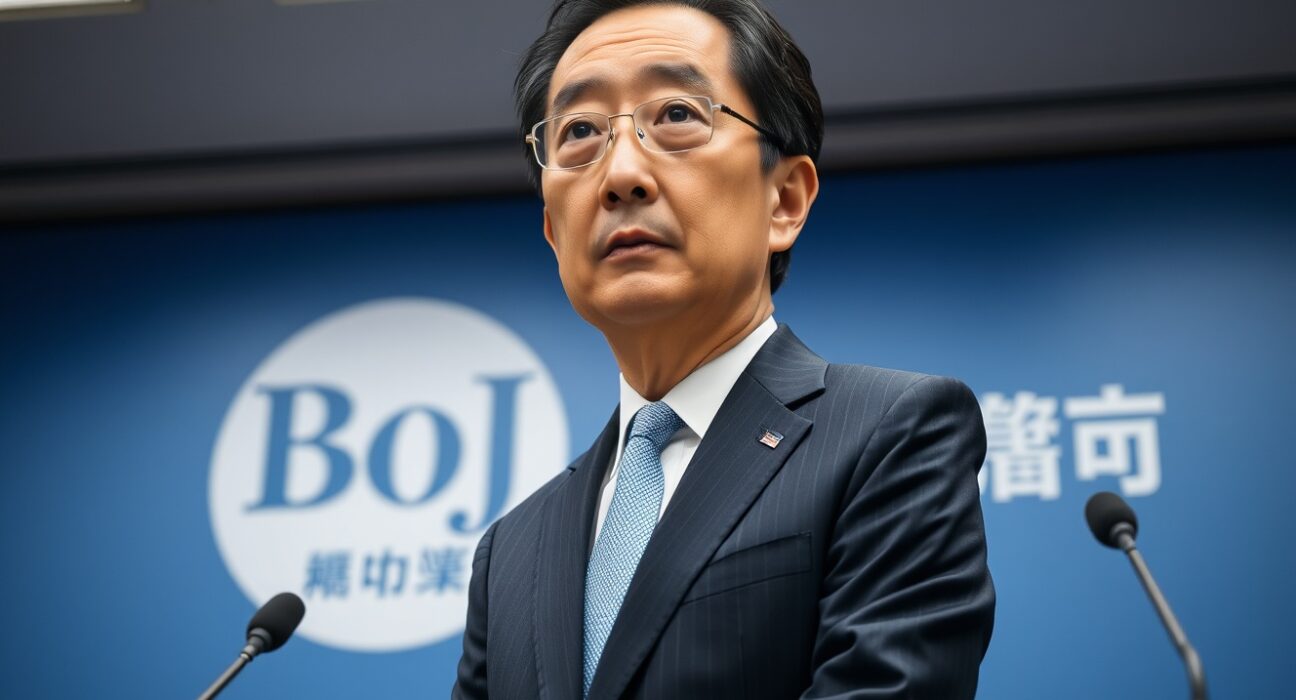
TOKYO, March 2025 – Bank of Japan Governor Kazuo Ueda delivered significant remarks today indicating that underlying inflation measures are gradually accelerating toward the central bank’s longstanding 2 percent target. This statement marks a pivotal moment in Japan’s monetary policy trajectory after decades of deflationary pressures. Consequently, financial markets immediately reacted to these comments, with the yen strengthening against major currencies. Furthermore, analysts are now closely watching for potential policy normalization steps.
Bank of Japan’s Inflation Assessment Signals Policy Evolution
Governor Ueda’s comments represent the most explicit acknowledgment yet of sustained inflationary momentum within Japan’s economy. The central bank has maintained ultra-accommodative monetary policy for over two decades. However, recent data shows consistent price increases across multiple sectors. Specifically, the core consumer price index excluding fresh food rose 2.8% year-on-year in January 2025. Meanwhile, the services price index increased 2.1%, demonstrating broadening inflationary pressures.
Several factors contribute to this inflationary environment. First, sustained wage growth following the 2024 Shunto spring wage negotiations provided households with increased purchasing power. Second, yen depreciation throughout 2023-2024 raised import costs significantly. Third, changing corporate behavior shows companies increasingly passing costs to consumers. These developments collectively create what Ueda described as a “virtuous cycle” between wages and prices.
Historical Context of Japan’s Deflation Battle
Japan’s journey toward the 2% inflation target spans multiple decades and policy regimes. The Bank of Japan first introduced quantitative easing in 2001 under Governor Masaaki Shirakawa. Later, Governor Haruhiko Kuroda launched aggressive monetary easing in 2013 with his “different dimension” policy. This framework included negative interest rates and yield curve control. Despite these efforts, inflation remained stubbornly below target for years.
Expert Analysis on Policy Implications
Monetary policy experts emphasize the significance of Ueda’s statement. “The acknowledgment of accelerating underlying inflation suggests the BoJ is preparing markets for policy normalization,” explains Dr. Aiko Tanaka, economics professor at Tokyo University. “We should anticipate gradual adjustments to yield curve control parameters before any interest rate hikes.” Financial institutions globally are adjusting their Japan investment strategies accordingly.
The timeline of Japan’s inflation targeting reveals persistent challenges:
| Period | Inflation Average | Key Policy |
|---|---|---|
| 2001-2012 | -0.3% | Quantitative Easing |
| 2013-2022 | 0.5% | QQE with YCC |
| 2023-2024 | 2.5% | Yield Curve Control Adjustments |
| 2025 (Projected) | 2.2% | Potential Policy Normalization |
Global Economic Impacts and Market Reactions
International markets responded immediately to Ueda’s inflation assessment. The yen appreciated 1.2% against the US dollar following the remarks. Japanese government bond yields edged higher across most tenors. Meanwhile, global central banks monitor these developments closely. The Federal Reserve and European Central Bank both face their own inflation challenges. However, Japan’s potential policy shift could alter global capital flows significantly.
Several key indicators demonstrate underlying inflation acceleration:
- Services inflation reached 2.1% in January 2025
- Corporate goods price index showed 3.2% annual increase
- Tokyo core CPI (leading indicator) rose 2.6% in February
- Input prices for manufacturers increased 8.3% year-on-year
These metrics suggest inflationary pressures are becoming more entrenched. Additionally, business sentiment surveys indicate companies plan further price increases. The Tankan survey showed 35% of firms intend to raise prices in 2025. This represents a substantial increase from 22% in the previous year.
Monetary Policy Framework and Future Adjustments
The Bank of Japan currently maintains several unconventional policy tools. Yield curve control targets 10-year government bond yields around 0%. Short-term policy interest rates remain at -0.1%. Furthermore, the central bank continues substantial ETF purchases. However, Ueda’s comments suggest potential adjustments to this framework. Market participants now anticipate several possible policy changes.
Potential Normalization Pathways
Policy normalization would likely proceed through measured steps. First, the BoJ might widen the yield curve control band from ±0.5% to ±1.0%. Second, the central bank could reduce monthly bond purchases gradually. Third, negative interest rates might be eliminated in late 2025 or early 2026. Each step would be carefully communicated to avoid market disruption. The bank emphasizes data-dependent decision-making throughout this process.
International institutions support this cautious approach. The International Monetary Fund recently commended Japan’s “prudent normalization path.” Similarly, the OECD projects sustainable inflation around 2% through 2026. These endorsements provide external validation for potential policy shifts. Nevertheless, the BoJ must balance normalization with economic stability concerns.
Conclusion
Bank of Japan Governor Kazuo Ueda’s confirmation of accelerating underlying inflation toward the 2% target represents a watershed moment for Japanese monetary policy. After years of deflationary struggle, sustained price increases across multiple indicators suggest fundamental economic changes. Consequently, financial markets now anticipate measured policy normalization in coming months. The Bank of Japan’s careful communication and data-dependent approach will remain crucial throughout this transition. Ultimately, achieving stable inflation around the target would complete Japan’s long journey from deflation to price stability.
FAQs
Q1: What did Bank of Japan Governor Kazuo Ueda say about inflation?
Governor Ueda stated that underlying inflation in Japan is gradually accelerating toward the central bank’s 2 percent target, marking significant progress in the long battle against deflation.
Q2: Why is the 2% inflation target important for Japan?
The 2% target represents price stability that supports sustainable economic growth. Japan struggled with deflation for decades, which discouraged investment and consumption, making this milestone particularly significant.
Q3: What policies might the Bank of Japan change as inflation approaches target?
The BoJ may gradually adjust its yield curve control parameters, reduce bond purchases, and eventually eliminate negative interest rates, though any changes will be communicated carefully to avoid market disruption.
Q4: How have markets reacted to Ueda’s inflation comments?
Financial markets responded with yen appreciation against major currencies and slightly higher Japanese government bond yields, reflecting expectations of potential monetary policy normalization.
Q5: What indicators show Japan’s underlying inflation is accelerating?
Key indicators include services inflation reaching 2.1%, corporate goods prices rising 3.2%, Tokyo core CPI increasing 2.6%, and business surveys showing more firms planning price increases in 2025.
Disclaimer: The information provided is not trading advice, Bitcoinworld.co.in holds no liability for any investments made based on the information provided on this page. We strongly recommend independent research and/or consultation with a qualified professional before making any investment decisions.