
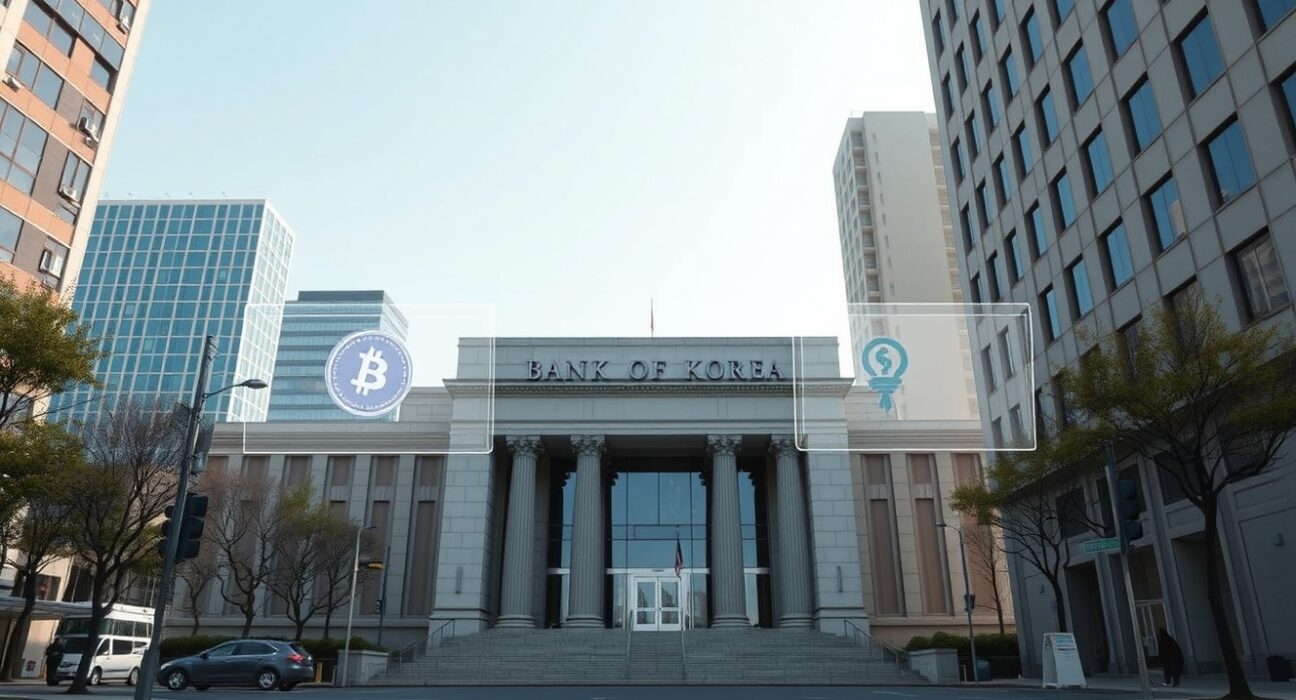
SEOUL, South Korea – The Bank of Korea has ignited significant debate within financial and technology circles by citing media ownership legislation as justification for its proposed bank-centric stablecoin regulatory framework. According to documents obtained by News1 and submitted to Democratic Party lawmaker Park Min-gyu’s office, the central bank specifically referenced Article 8 of the Broadcasting Act and Article 18 of the Newspaper Act. These laws prevent single entities from holding more than 49% stakes in media companies. Consequently, the BOK proposes applying similar “50% plus one share” ownership requirements to won-denominated stablecoin issuers. This regulatory approach represents a pivotal development in South Korea’s evolving digital currency landscape.
Bank of Korea’s Stablecoin Regulatory Framework
The Bank of Korea maintains its consistent position that commercial banks should serve as primary issuers for won-denominated stablecoins. This stance aligns with global central bank trends toward maintaining monetary policy control. However, the BOK’s legal justification has attracted substantial attention. The central bank’s submission materials explicitly reference media ownership restrictions as legislative precedents. Specifically, these materials highlight public infrastructure regulation principles. The Broadcasting Act and Newspaper Act both implement ownership caps to prevent media concentration. Therefore, the BOK argues these laws establish relevant precedents for financial infrastructure regulation.
South Korea’s financial regulatory environment has evolved significantly since 2020. The government implemented comprehensive cryptocurrency legislation through the Virtual Asset User Protection Act. Additionally, financial authorities established licensing frameworks for cryptocurrency exchanges. The BOK’s current proposal represents the next regulatory frontier. Stablecoins present unique challenges because they bridge traditional finance and digital assets. Consequently, regulators worldwide grapple with appropriate oversight frameworks. The European Union recently finalized its Markets in Crypto-Assets (MiCA) regulation. Similarly, Japan has implemented strict stablecoin regulations requiring banking licenses for issuers.
Comparative Regulatory Approaches
Global stablecoin regulation varies significantly across jurisdictions. The following table illustrates key regulatory approaches:
| Jurisdiction | Primary Regulator | Issuer Requirements | Implementation Status |
|---|---|---|---|
| South Korea (Proposed) | Bank of Korea | Bank ownership ≥50% +1 share | Under Discussion |
| European Union | European Banking Authority | Bank or e-money license | MiCA Implementation 2024 |
| Japan | Financial Services Agency | Banking license required | Implemented 2023 |
| United States | Multiple agencies | State money transmitter licenses | Fragmented approach |
| Singapore | Monetary Authority | Stablecoin-specific framework | Finalized 2024 |
Media Law Precedents and Financial Regulation
The Bank of Korea’s legal argument centers on structural parallels between media and financial infrastructure. Both sectors serve essential public functions. Media companies facilitate information dissemination while stablecoins enable digital value transfer. The Broadcasting Act’s Article 8 specifically limits ownership concentration in broadcasting companies. Similarly, the Newspaper Act’s Article 18 restricts newspaper ownership. These laws aim to prevent monopolistic control over public discourse. The BOK contends financial infrastructure requires similar safeguards. Therefore, the central bank proposes analogous ownership restrictions for stablecoin issuers.
Legal experts have analyzed this regulatory analogy extensively. Professor Kim Jae-won from Seoul National University’s Law School notes precedent exists for cross-sector regulatory borrowing. “Regulators frequently adapt frameworks from analogous sectors,” Professor Kim explains. “The critical question involves appropriateness of the analogy.” Media regulation traditionally addresses content diversity and democratic discourse. Financial regulation typically focuses on systemic risk and consumer protection. However, both domains involve critical infrastructure. Consequently, the BOK argues ownership concentration poses similar risks in both sectors.
South Korea’s media ownership laws originated during democratic consolidation periods. The government implemented these restrictions to prevent authoritarian recidivism. Media companies gained recognition as public trustees. This conceptual framework now influences financial regulation debates. The Financial Services Commission has previously referenced telecommunications regulation for fintech oversight. Therefore, the BOK’s approach follows established regulatory patterns. Nevertheless, critics question whether media ownership concepts translate effectively to digital currency.
Criticism of the Bank-Centric Model
Industry stakeholders and legal scholars have raised substantial concerns about the BOK’s regulatory proposal. Critics argue media laws reflect outdated regulatory paradigms. These laws emerged before digital convergence transformed media landscapes. Consequently, applying these frameworks to innovative financial technology seems problematic. Blockchain industry representatives particularly emphasize this point. The Korea Blockchain Association has issued formal statements opposing the bank-centric model. Association representatives argue stablecoins represent technological innovation rather than traditional financial products.
Technology companies highlight several practical implementation challenges. First, commercial banks lack blockchain technology expertise. Second, traditional banking systems operate slowly compared to cryptocurrency networks. Third, bank-centric models potentially stifle innovation. Major global stablecoins like Tether and USD Coin emerged from cryptocurrency companies. These stablecoins now facilitate substantial cryptocurrency trading volume. South Korean technology firms worry restrictive regulation will disadvantage domestic innovation. Consequently, they advocate for balanced regulatory approaches.
Academic researchers have identified additional conceptual issues. Dr. Park Soo-min from KAIST’s Graduate School of Finance notes logical inconsistencies. “Media ownership laws address content diversity,” Dr. Park explains. “Stablecoins represent payment instruments rather than content platforms.” This fundamental distinction raises questions about regulatory analogy validity. Furthermore, global media regulation trends have shifted toward convergence frameworks. Modern regulations acknowledge digital platform realities. Therefore, citing legacy media laws seems conceptually problematic according to critics.
Financial Stability Considerations
The Bank of Korea emphasizes financial stability as its primary regulatory concern. Stablecoins potentially create systemic risks through several mechanisms. First, rapid adoption could disrupt traditional banking systems. Second, operational failures might trigger payment system disruptions. Third, inadequate reserves could cause stablecoin de-pegging events. The BOK references historical financial crises when justifying stringent oversight. The 1997 Asian Financial Crisis particularly influences South Korean regulatory philosophy. Consequently, financial authorities prioritize stability over innovation in certain contexts.
International regulatory bodies support cautious approaches. The Financial Stability Board and Bank for International Settlements have issued stablecoin guidelines. These guidelines emphasize risk management and regulatory compliance. However, they don’t mandate bank-centric models specifically. The BOK’s proposal exceeds international minimum standards. This approach reflects South Korea’s unique financial history and regulatory culture. The country maintains conservative financial oversight traditions despite technological advancement. This tension between innovation and stability defines current regulatory debates.
Potential Impacts on South Korea’s Digital Economy
The BOK’s regulatory proposal carries significant implications for South Korea’s digital economy. First, bank-centric models might slow cryptocurrency adoption. Second, restrictive regulation could push innovation offshore. Third, the proposal affects South Korea’s global competitiveness in blockchain technology. The government has invested substantially in digital transformation initiatives. These initiatives include the Digital New Deal and blockchain technology development plans. Consequently, regulatory decisions must balance multiple policy objectives.
Market participants have analyzed potential economic impacts thoroughly. Financial analysts predict several likely outcomes:
- Bank Dominance: Commercial banks would control stablecoin issuance completely
- Innovation Constraints: Technology companies might avoid stablecoin development
- Market Concentration: Limited competition could reduce consumer benefits
- International Disconnect: South Korean regulations might diverge from global standards
- Implementation Timeline: Regulatory finalization could take 12-24 months
Consumer protection represents another critical consideration. The BOK argues bank oversight enhances consumer safeguards. Banks maintain robust compliance systems and deposit insurance schemes. These protections don’t exist in cryptocurrency exchanges currently. However, critics counter that technology enables alternative protection mechanisms. Smart contracts and blockchain transparency provide different security approaches. The regulatory debate ultimately involves fundamental questions about financial system architecture.
Legislative Process and Timeline
The Bank of Korea’s proposal represents an initial regulatory position rather than finalized legislation. The National Assembly must approve any stablecoin regulatory framework. Lawmaker Park Min-gyu received the BOK submission as part of legislative consultations. The Democratic Party controls the National Assembly currently. Therefore, party consensus will determine regulatory outcomes. Multiple committees will review proposed legislation including:
- Strategy and Finance Committee
- Science, ICT, Broadcasting and Communications Committee
- Legislation and Judiciary Committee
Stakeholder consultations will continue throughout 2025. The BOK plans additional discussions with financial institutions and technology companies. International coordination represents another consideration. South Korean regulators participate in global standard-setting bodies. These bodies include the Financial Action Task Force and Basel Committee. Consequently, international developments will influence domestic regulatory decisions. The government aims to finalize legislation before 2026. This timeline aligns with global regulatory implementation schedules.
Conclusion
The Bank of Korea’s bank-centric stablecoin model represents a distinctive regulatory approach grounded in media ownership precedents. This proposal highlights ongoing tensions between financial innovation and stability in South Korea’s digital economy. The BOK’s citation of Broadcasting and Newspaper Acts demonstrates creative regulatory thinking. However, critics question the logical connection between media diversity and financial infrastructure. The coming legislative process will determine South Korea’s stablecoin regulatory framework. This decision carries significant implications for financial technology innovation and digital currency adoption. Ultimately, the bank-centric stablecoin debate reflects broader questions about regulating emerging technologies within established legal frameworks.
FAQs
Q1: What specific laws does the Bank of Korea cite for its stablecoin proposal?
The BOK references Article 8 of the Broadcasting Act and Article 18 of the Newspaper Act. These laws prevent single entities from holding more than 49% stakes in media companies. The central bank proposes applying similar “50% plus one share” requirements to stablecoin issuers.
Q2: Why do critics oppose the bank-centric stablecoin model?
Critics argue media ownership laws reflect outdated regulatory frameworks from pre-digital eras. They contend these laws address content diversity rather than financial infrastructure. Additionally, technology companies worry restrictive regulation will stifle innovation and disadvantage South Korea globally.
Q3: How does South Korea’s approach compare to other countries?
South Korea’s proposed bank-centric model represents one of the most restrictive regulatory approaches globally. The European Union requires bank or e-money licenses while Japan mandates banking licenses. The United States maintains a fragmented state-based approach, and Singapore has implemented a stablecoin-specific framework.
Q4: What are the main arguments supporting the BOK’s position?
Proponents emphasize financial stability and consumer protection. Banks maintain robust compliance systems, deposit insurance, and experience managing systemic risk. The BOK argues these safeguards are essential for stablecoins, which could potentially disrupt traditional financial systems if poorly regulated.
Q5: What is the expected timeline for stablecoin regulation in South Korea?
The legislative process will continue throughout 2025 with stakeholder consultations. The National Assembly must approve any regulatory framework. The government aims to finalize legislation before 2026, aligning with global regulatory implementation schedules and domestic digital transformation initiatives.
Disclaimer: The information provided is not trading advice, Bitcoinworld.co.in holds no liability for any investments made based on the information provided on this page. We strongly recommend independent research and/or consultation with a qualified professional before making any investment decisions.