

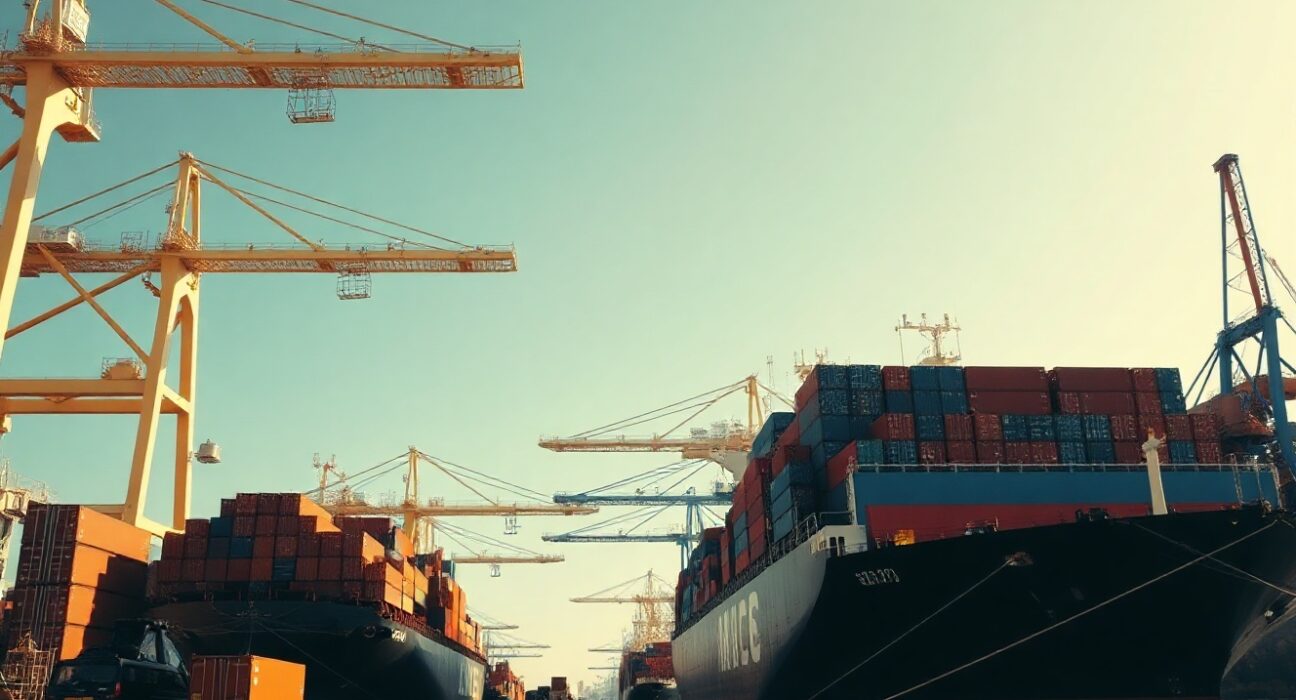
Brazil’s trade balance registered a surplus of $7.067 billion in July, falling short of the market consensus of $8.4 billion, according to data released by the country’s Ministry of Development, Industry, Trade, and Services on August 1, 2025. The figure represents a moderation from the previous month’s performance and reflects a combination of softer export growth and resilient import demand.
What the data shows
The July surplus, while still substantial, came in about 16% below expectations. Exports totaled $28.2 billion, while imports reached $21.1 billion, according to preliminary official data. The year-to-date surplus now stands at $57.3 billion, tracking above the same period last year but at a slower pace than earlier projections.
Analysts had anticipated a stronger monthly performance, partly due to robust agricultural shipments. However, a decline in commodity prices, particularly for soybeans and iron ore, weighed on export values. At the same time, imports of fuels, machinery, and consumer goods continued to rise, reflecting solid domestic demand.
Why the miss matters
The trade balance is a key component of Brazil’s external accounts and influences the exchange rate, fiscal policy, and investor sentiment. A narrower surplus could put mild pressure on the Brazilian real and affect the central bank’s inflation outlook, especially if import prices remain elevated.
Economists at major Brazilian banks had projected a range between $7.5 billion and $9.0 billion for July. The actual figure sits at the lower end of that spectrum, prompting some downward revisions to third-quarter GDP estimates. However, most analysts view the miss as a one-off rather than a trend reversal, given the resilience of agribusiness exports and ongoing demand from China.
Impact on markets and policy
Following the release, the Brazilian real traded slightly weaker against the US dollar, while interest rate futures showed marginal adjustments. The central bank, which has been signaling a cautious stance on inflation, may see the trade data as supporting its current monetary policy path.
For investors, the trade balance remains an important signal of Brazil’s ability to service its external debt and maintain reserve buffers. A persistent shortfall could raise concerns, but the current surplus level still provides a comfortable cushion.
Conclusion
Brazil’s July trade surplus of $7.067 billion, while below forecasts, remains healthy by historical standards. The miss is largely attributable to price effects and robust import demand, rather than a collapse in exports. Going forward, the trajectory of commodity prices and global demand will be critical in determining whether the country can sustain its trade performance in the coming months.
FAQs
Q1: What is the trade balance?
The trade balance is the difference between a country’s exports and imports. A positive balance (surplus) means exports exceed imports, while a negative balance (deficit) indicates the opposite.
Q2: Why did Brazil’s trade balance miss forecasts in July?
The miss was primarily due to lower commodity prices, especially for soybeans and iron ore, which reduced export values, while imports continued to grow steadily due to strong domestic demand.
Q3: How does the trade balance affect Brazil’s economy?
A trade surplus contributes to economic growth, supports the currency, and helps build foreign reserves. A narrowing surplus can influence inflation, interest rates, and investor confidence.
Disclaimer: The information provided is not trading advice, Bitcoinworld.co.in holds no liability for any investments made based on the information provided on this page. We strongly recommend independent research and/or consultation with a qualified professional before making any investment decisions.
