

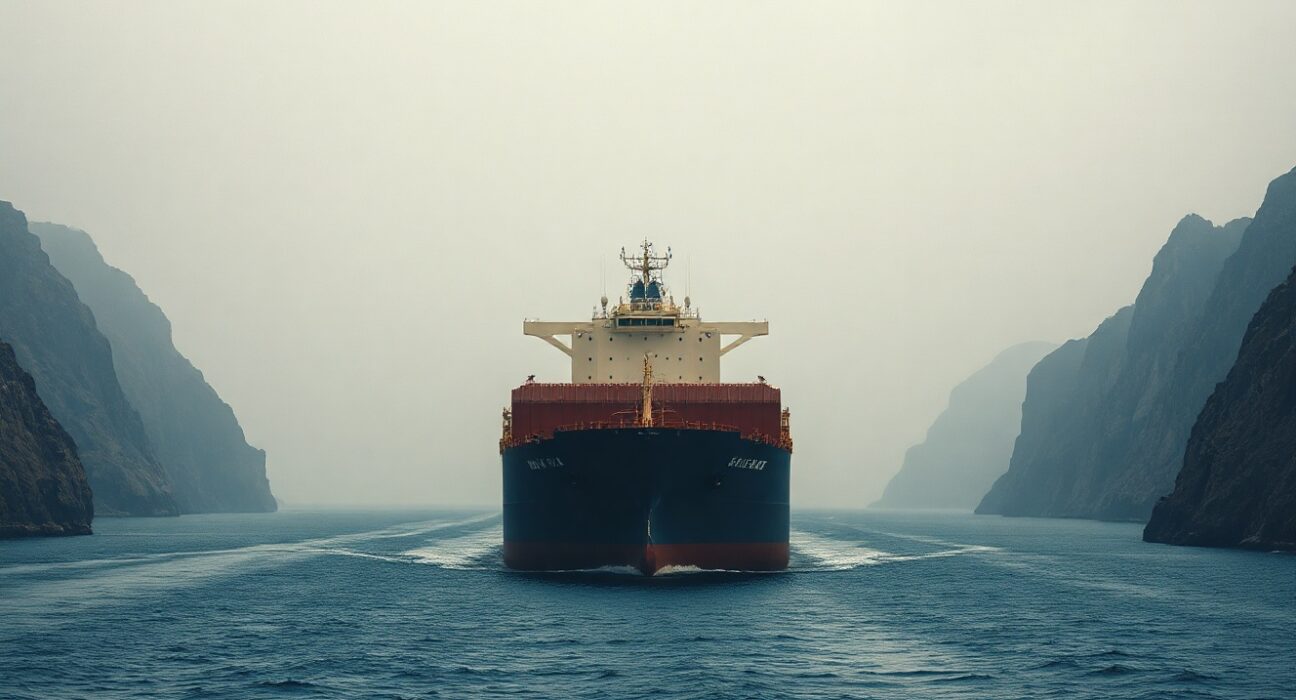
French investment bank Societe Generale has introduced a stress-case scenario for Brent crude oil, projecting prices could surge to $200 per barrel if the Strait of Hormuz faces an extended closure. The analysis, detailed in a recent note to clients, underscores the fragility of global oil supply chains amid rising geopolitical tensions in the Middle East.
Understanding the Hormuz Chokepoint
The Strait of Hormuz, a narrow waterway between Oman and Iran, is one of the world’s most critical oil transit chokepoints. Approximately 20 million barrels of crude oil and petroleum products pass through it daily, accounting for roughly 20% of global consumption. Any disruption to this flow would have immediate and severe consequences for global energy markets.
The Societe Generale Stress Case
Societe Generale’s analysis posits that a prolonged closure of the strait, driven by military conflict or geopolitical brinkmanship, could remove a significant portion of global supply from the market. Under this scenario, the bank models Brent crude reaching $200 per barrel, a level not seen in modern history. The stress case assumes a closure lasting several weeks, with no immediate diplomatic resolution.
The bank’s analysts note that while such an outcome remains a low-probability event, the potential impact on inflation, economic growth, and energy security warrants serious attention from investors and policymakers. The scenario highlights the lack of spare production capacity globally to compensate for such a sudden supply loss.
Market Implications and Historical Context
Historically, the Strait of Hormuz has been a flashpoint. During the Iran-Iraq War in the 1980s, both sides targeted oil tankers, leading to a temporary reduction in traffic. More recently, in 2019, attacks on tankers near the strait caused a brief spike in oil prices. However, a full closure has never been sustained. Societe Generale’s stress case represents a worst-case scenario that goes beyond any previous disruption.
For investors, the analysis serves as a reminder to factor in tail risks when assessing energy exposure. For consumers, it underscores the vulnerability of oil-dependent economies to supply shocks. Central banks, already grappling with inflation, would face additional pressure if such a scenario materialized.
Conclusion
Societe Generale’s $200-per-barrel stress case for Brent crude is a stark illustration of the risks inherent in the global oil market. While not a forecast, it provides a useful framework for understanding the potential consequences of a major supply disruption at the Strait of Hormuz. The analysis reinforces the importance of energy diversification and geopolitical risk management in an increasingly volatile world.
FAQs
Q1: What is the Strait of Hormuz and why is it important for oil prices?
The Strait of Hormuz is a narrow waterway connecting the Persian Gulf with the Gulf of Oman. About 20% of the world’s oil passes through it daily, making it a critical chokepoint for global energy supplies. Any disruption there can cause immediate and significant price spikes.
Q2: Is Societe Generale predicting oil will reach $200 per barrel?
No. The bank is presenting a stress-case scenario, not a forecast. It is a hypothetical analysis of what could happen under extreme conditions, such as an extended closure of the strait. It is meant to highlight risks, not predict outcomes.
Q3: How realistic is an extended closure of the Strait of Hormuz?
Most analysts consider it a low-probability event due to the severe economic and military consequences for all parties involved. However, geopolitical tensions in the region remain high, and the risk, while small, is not zero. The scenario is used for risk management and contingency planning.
Disclaimer: The information provided is not trading advice, Bitcoinworld.co.in holds no liability for any investments made based on the information provided on this page. We strongly recommend independent research and/or consultation with a qualified professional before making any investment decisions.
