

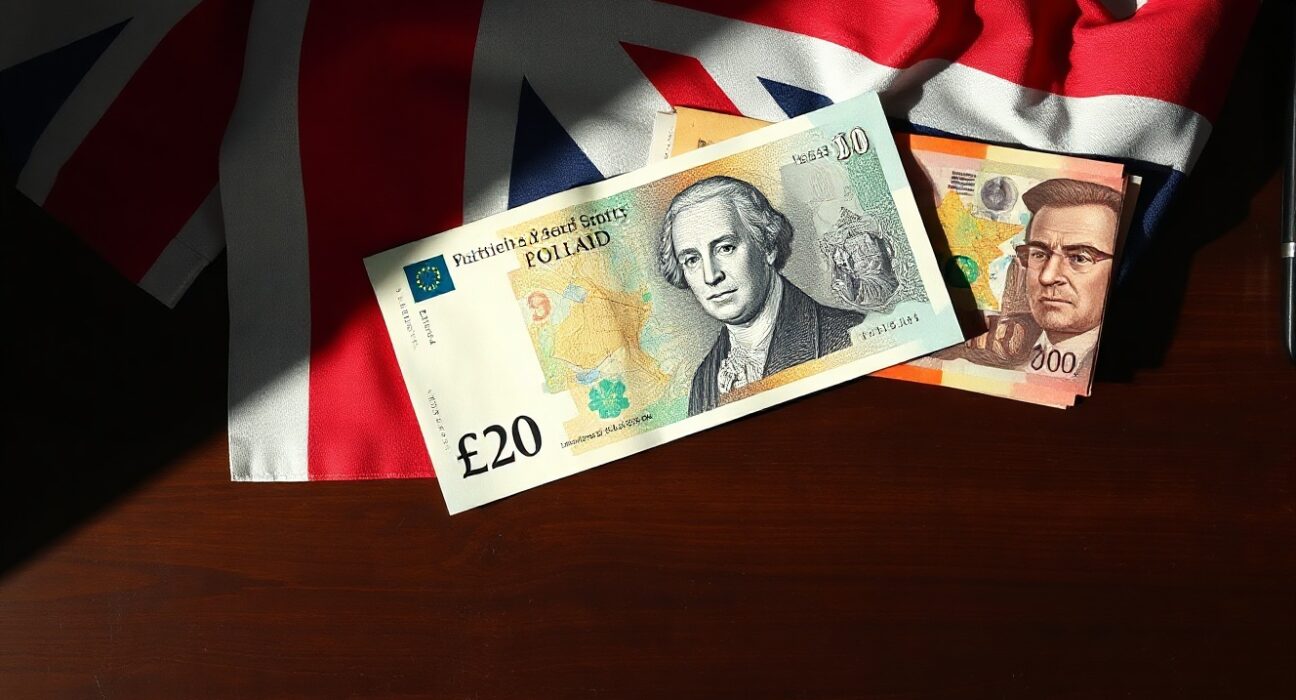
Currency analysts at ING have issued a fresh forecast suggesting the British Pound is likely to weaken further against both the Euro and the US Dollar in the coming weeks. The projection, outlined in a recent note to clients, points to persistent economic pressures and diverging monetary policy expectations as key drivers behind the anticipated decline.
ING’s Outlook on Sterling
ING’s foreign exchange strategy team argues that the Pound remains vulnerable due to a combination of factors. The UK economy continues to grapple with sluggish growth, while inflation, though easing, remains above the Bank of England’s target. This creates a challenging environment for the currency, particularly as the market prices in potential interest rate cuts from the Bank of England later this year.
In contrast, the European Central Bank and the Federal Reserve are expected to maintain a more cautious approach to easing, keeping their respective interest rates higher for longer. This policy divergence is a core reason for ING’s bearish view on GBP/EUR and GBP/USD.
Key Drivers Behind the Forecast
Several specific factors underpin ING’s analysis. First, the UK’s fiscal position remains under scrutiny, with limited headroom for government spending. Second, consumer confidence and business investment data have shown signs of stagnation. Third, the strength of the US economy, supported by robust employment data, continues to provide a tailwind for the Dollar.
For the Euro, ING notes that while the Eurozone faces its own growth challenges, the ECB’s commitment to data-dependent policy is seen as more supportive for the single currency than the BOE’s outlook is for Sterling.
Market Implications for Traders and Businesses
For currency traders, ING’s forecast suggests a potential opportunity to position against the Pound. Businesses with exposure to GBP-denominated imports or exports should also take note. A weaker Pound would increase the cost of importing goods from the Eurozone and the US, potentially feeding into UK inflation. Conversely, UK exporters could see a temporary boost in competitiveness.
The forecast also has implications for UK consumers, particularly those planning travel abroad. A declining Pound means that holidays in the Eurozone and the United States will become more expensive in the near term.
Conclusion
ING’s analysis presents a clear and cautious outlook for the British Pound, driven by macroeconomic fundamentals and policy divergence. While currency forecasts are inherently uncertain, the rationale provided by ING highlights the structural challenges facing the UK economy. Traders and businesses should monitor upcoming UK inflation data and central bank communications for further confirmation of this trend.
FAQs
Q1: Why does ING expect the British Pound to fall?
ING cites a combination of slow UK economic growth, expectations of Bank of England interest rate cuts, and stronger economic performance in the US and Eurozone as primary reasons for the Pound’s expected weakness.
Q2: How low could the Pound go against the Euro and Dollar?
ING’s note did not specify exact numerical targets in the provided content, but the analysis suggests a trend of gradual depreciation rather than a sharp crash. Traders should watch key support levels.
Q3: What does a weaker Pound mean for UK consumers?
A weaker Pound increases the cost of imported goods and makes foreign travel more expensive, particularly to the US and Eurozone. It can also contribute to domestic inflation.
Disclaimer: The information provided is not trading advice, Bitcoinworld.co.in holds no liability for any investments made based on the information provided on this page. We strongly recommend independent research and/or consultation with a qualified professional before making any investment decisions.
