

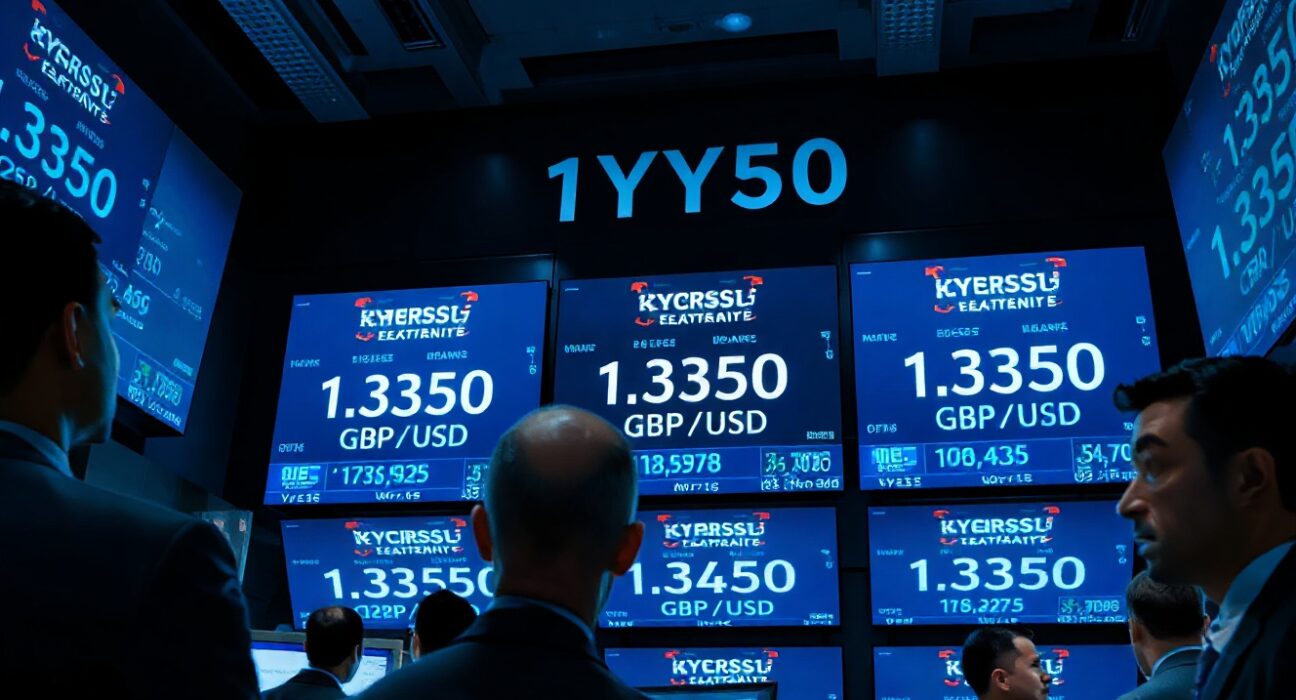
The British pound fell to near 1.3350 against the US dollar on Monday, as the United States launched military strikes on targets in Iran, escalating geopolitical tensions and driving investors toward safe-haven assets. The move marked a sharp reversal for the pound, which had been trading in a relatively tight range in recent sessions.
Geopolitical Shockwaves Hit Currency Markets
The US strikes, confirmed by the Pentagon early Monday, targeted Iranian military infrastructure in response to recent attacks on US personnel in the region. The development caught markets off guard, triggering a broad risk-off sentiment across global financial markets. The US dollar, traditionally viewed as a safe haven during times of geopolitical uncertainty, strengthened against most major currencies, including the British pound.
The GBP/USD pair, also known as cable, dropped from its opening level around 1.3400 to touch an intraday low of 1.3348 before stabilizing near 1.3350. Analysts noted that the move was driven primarily by dollar strength rather than pound-specific weakness, as investors rotated out of risk-sensitive currencies.
Market Context and Broader Implications
The decline comes at a time when the pound was already under pressure from mixed UK economic data and uncertainty over the Bank of England’s monetary policy path. While the UK economy has shown resilience in recent months, inflation remains above the central bank’s target, complicating the outlook for interest rate cuts.
The geopolitical shock adds a new layer of complexity. Historically, such events tend to boost the dollar and yen, while weighing on currencies of countries more exposed to energy prices and trade disruptions. The UK, as a net importer of energy, faces potential upward pressure on inflation if oil prices spike further in response to the conflict.
What This Means for Traders and Investors
For traders, the immediate focus is on whether the escalation remains contained or broadens into a wider regional conflict. A prolonged engagement could see the dollar extend its gains, pushing GBP/USD below the 1.3300 support level. Conversely, any signs of de-escalation could trigger a sharp rebound in the pound as risk appetite returns.
Investors with exposure to UK assets should monitor energy prices closely, as well as any statements from the Bank of England regarding the potential economic impact. The central bank has previously noted that geopolitical risks are a key factor in its policy deliberations.
Conclusion
The pound’s slide to 1.3350 reflects the immediate market reaction to a significant geopolitical development. While the move is largely dollar-driven, the broader implications for the UK economy and the Bank of England’s policy path remain uncertain. Traders should brace for continued volatility as the situation evolves.
FAQs
Q1: Why did the British pound fall after the US strikes on Iran?
The pound fell primarily because the US dollar strengthened as investors sought safe-haven assets amid increased geopolitical risk. The GBP/USD decline was driven more by dollar demand than by weakness in the UK currency itself.
Q2: Could the pound fall further if the conflict escalates?
Yes, if the US-Iran conflict broadens, the dollar is likely to continue strengthening, which could push GBP/USD below the 1.3300 level. However, any signs of de-escalation could reverse the move quickly.
Q3: How does this affect UK consumers and businesses?
A weaker pound makes imports more expensive, potentially adding to inflationary pressures in the UK. Businesses that rely on imported goods or raw materials may face higher costs, while exporters could benefit from a more competitive exchange rate.
Disclaimer: The information provided is not trading advice, Bitcoinworld.co.in holds no liability for any investments made based on the information provided on this page. We strongly recommend independent research and/or consultation with a qualified professional before making any investment decisions.
