
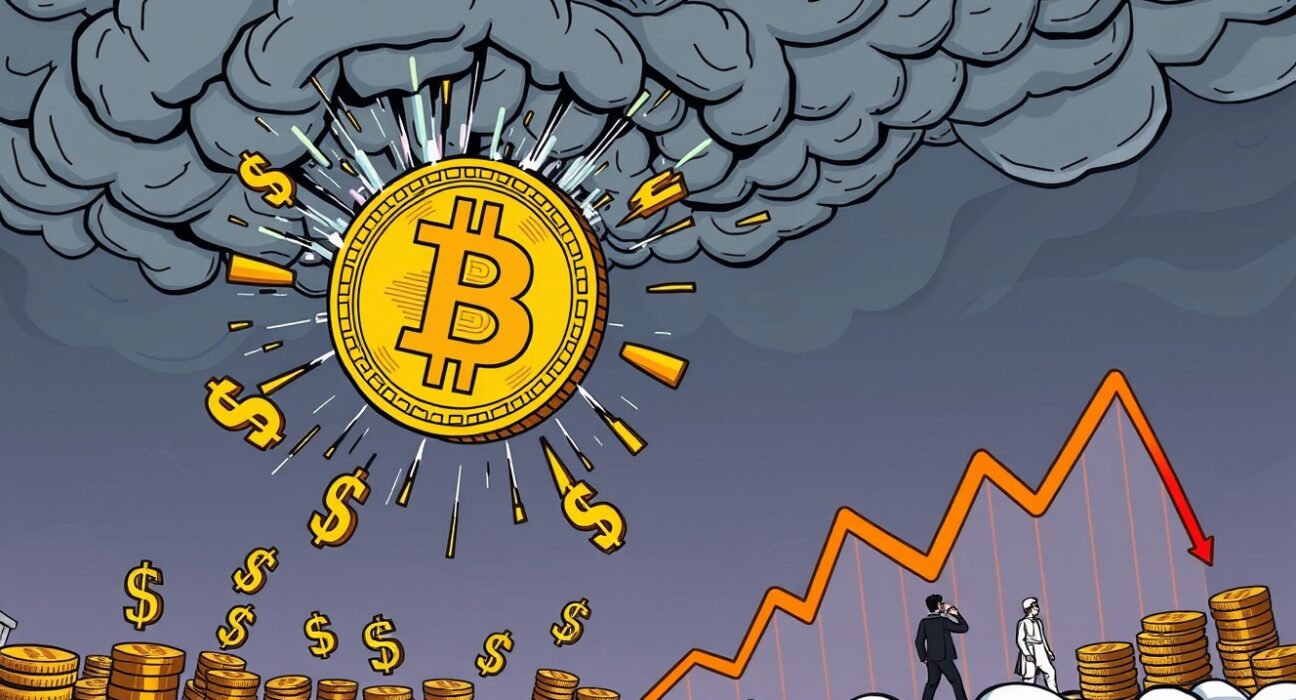
The cryptocurrency market is buzzing with recent developments as Bitcoin (BTC) experiences a significant BTC price fall, dropping below the critical $108,000 mark. According to real-time market monitoring, BTC is currently trading at $107,999.99 on the Binance USDT market. This sudden dip has captured the attention of traders and investors alike, prompting questions about the underlying causes and potential future implications for the broader crypto ecosystem. Understanding this immediate market reaction is crucial for anyone involved in digital assets.
What Triggered This Sudden BTC Price Fall?
Market movements in the cryptocurrency space are often influenced by a complex interplay of factors. While a single definitive cause for this particular BTC price fall might not be immediately apparent, several elements typically contribute to such shifts. These can include broader macroeconomic trends, significant whale movements, or even technical analysis indicators triggering sell-offs.
- Macroeconomic Headwinds: Global economic uncertainties, inflation concerns, or interest rate hikes can lead investors to de-risk, moving capital out of volatile assets like Bitcoin.
- Whale Activity: Large sell orders from institutional investors or individual “whales” can exert considerable downward pressure on the market, pushing prices lower.
- Technical Breakdown: Breaching key support levels, such as the $108,000 threshold, can trigger automated sell orders and investor panic, accelerating a price decline.
The swiftness of this decline suggests a strong selling impulse. It highlights the dynamic nature of the crypto market. Traders closely watch these levels, as breaking them often signals a change in market sentiment.
Understanding the Immediate Impact of a BTC Price Fall
When Bitcoin experiences a significant drop, the ripple effects are felt across the entire cryptocurrency landscape. Short-term investors might face immediate losses, while long-term holders could view this as a potential buying opportunity. The immediate impact of a BTC price fall varies significantly depending on an individual’s investment strategy and risk tolerance.
For active traders, volatility can present both risks and rewards. Those with stop-loss orders might have seen their positions automatically closed, protecting them from further downside. Conversely, traders who anticipated a dip might be looking to enter new positions at a lower price point.
Moreover, this kind of price action often influences altcoins, which tend to follow Bitcoin’s lead. A drop in BTC can lead to a broader market downturn, affecting the entire digital asset portfolio for many investors. Monitoring these correlations becomes essential during periods of high volatility.
Navigating the Future After a Significant BTC Price Fall
While a BTC price fall can be unsettling, it is also a characteristic feature of the cryptocurrency market. Bitcoin has historically demonstrated resilience, recovering from numerous significant corrections over its lifetime. The key for investors is to approach these periods with a clear strategy and a long-term perspective.
What steps can investors take when facing such market conditions?
- Re-evaluate Portfolio: Assess your current holdings and ensure they align with your risk tolerance and financial goals.
- Dollar-Cost Averaging (DCA): Consider accumulating Bitcoin gradually at lower prices, spreading out your investment to mitigate risk.
- Stay Informed: Keep abreast of market news, technical analysis, and macroeconomic indicators to make informed decisions.
- Avoid Emotional Decisions: Panic selling often leads to regret. Base your actions on research and a pre-defined strategy, not fear.
The market’s ability to recover from a BTC price fall often hinges on renewed investor confidence and positive fundamental developments. As such, maintaining a disciplined approach is paramount.
The recent BTC price fall below $108,000 serves as a powerful reminder of the inherent volatility in the cryptocurrency market. While such dips can be concerning, they also underscore the importance of robust risk management and a well-thought-out investment strategy. History suggests that Bitcoin has a track record of recovery, but navigating these turbulent times requires both patience and informed decision-making. Keep a close eye on market indicators and remain adaptable to changing conditions. The crypto journey is rarely a straight line, but understanding its ebbs and flows is key to long-term success.
Frequently Asked Questions About the BTC Price Fall
- What does it mean when BTC falls below a certain price?
- When BTC falls below a specific price, especially a widely watched level like $108,000, it often indicates a breach of a key support level. This can signal increased selling pressure, a shift in market sentiment, and potentially further price declines in the short term.
- Is a BTC price fall a bad sign for the cryptocurrency market?
- Not necessarily. While a significant BTC price fall can cause short-term losses and uncertainty, price corrections are a normal part of healthy market cycles. They can present opportunities for new investors to enter the market at lower prices and for existing investors to accumulate more assets.
- How long does it usually take for Bitcoin to recover from a dip?
- The recovery time for Bitcoin from a dip varies widely. Historically, Bitcoin has shown remarkable resilience, recovering from major corrections within weeks or months, though some longer bear markets have extended over a year. Recovery depends on various factors, including global economic conditions, regulatory news, and investor sentiment.
- What should investors do during a significant BTC price fall?
- During a significant BTC price fall, it is crucial to remain calm and avoid impulsive decisions. Consider re-evaluating your portfolio, practicing dollar-cost averaging, staying informed with reliable news, and adhering to a pre-defined investment strategy. Emotional trading often leads to poor outcomes.
- What is Dollar-Cost Averaging (DCA) in the context of a BTC price fall?
- Dollar-Cost Averaging (DCA) is an investment strategy where you invest a fixed amount of money into an asset (like Bitcoin) at regular intervals, regardless of its price. During a BTC price fall, DCA allows you to buy more Bitcoin when prices are low, potentially lowering your average purchase cost over time and mitigating the risk of investing a lump sum at an unfavorable price.
Did you find this analysis helpful? Share your thoughts and this article with your network on social media to help others understand the recent BTC price fall and navigate the volatile crypto landscape!
To learn more about the latest explore our article on key developments shaping Bitcoin price action.
Disclaimer: The information provided is not trading advice, Bitcoinworld.co.in holds no liability for any investments made based on the information provided on this page. We strongly recommend independent research and/or consultation with a qualified professional before making any investment decisions.