

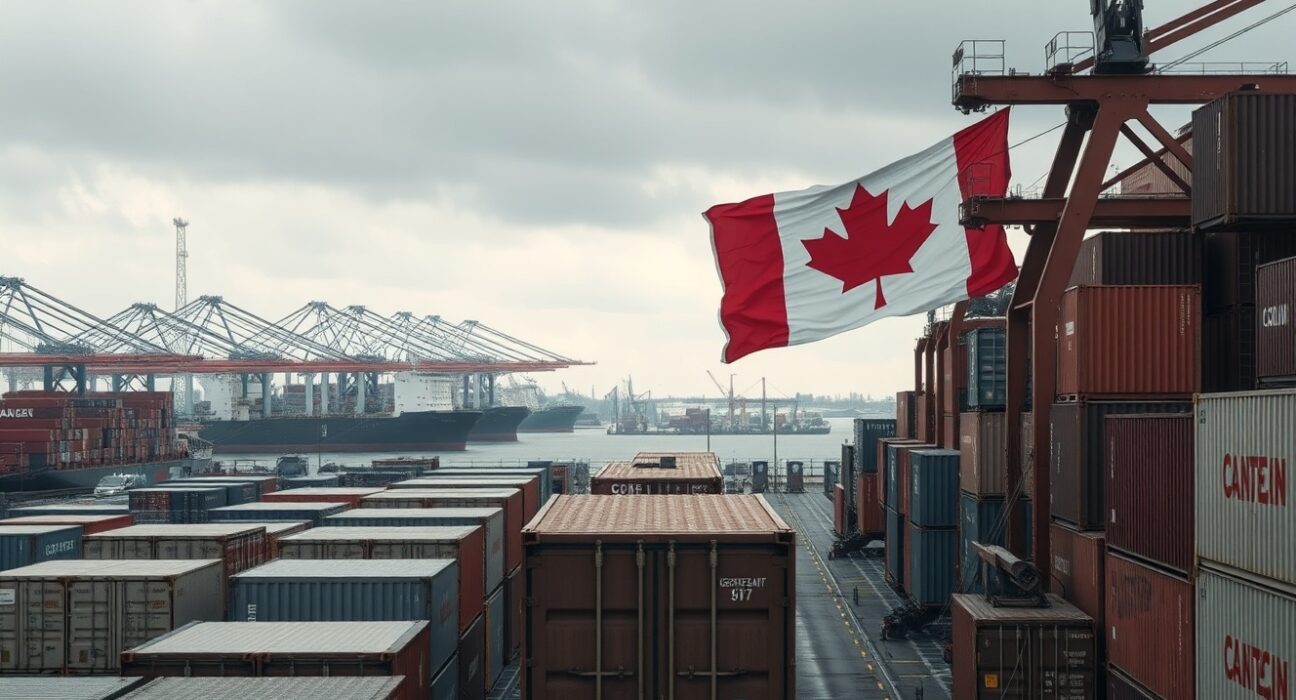
A new analysis from RBC Economics highlights ongoing and persistent trade risks for Canada, driven largely by policy uncertainty emanating from the United States and structural vulnerabilities in the Canadian economy. The report, which relies on a series of charts to illustrate key trends, suggests that the risks are not transient but deeply embedded in the current trade landscape.
Core Findings from RBC’s Analysis
RBC’s assessment points to several interconnected factors that are prolonging trade risks. Chief among them is the unpredictable nature of US trade policy, including potential tariff adjustments and renegotiations of existing agreements. The analysis indicates that this uncertainty is weighing on business investment decisions in Canada, as companies delay expansion plans and cross-border supply chain commitments. Furthermore, the report notes that Canada’s reliance on a narrow range of export sectors, particularly energy and autos, amplifies its vulnerability to sector-specific disruptions.
Structural Vulnerabilities and Global Context
The report contextualizes Canada’s position within broader global trade realignments. While the US remains Canada’s dominant trading partner, shifts in global demand and the rise of protectionist measures in other major economies are adding layers of complexity. RBC’s charts reportedly show a divergence between Canadian export performance and that of other G7 nations, suggesting a loss of competitive edge in certain markets. The analysis also flags risks related to supply chain diversification, noting that while some firms are moving operations to Mexico or Asia, Canada has not yet established a clear strategy to attract new investment in critical sectors like battery manufacturing and semiconductors.
Implications for Businesses and Policymakers
For Canadian businesses, the key takeaway is the need to build resilience into their operations. This includes diversifying export markets, investing in technology to improve productivity, and hedging against currency fluctuations. For policymakers, RBC’s analysis underscores the urgency of reducing internal trade barriers within Canada, streamlining regulatory processes, and negotiating more predictable trade terms with the US. The report implicitly suggests that waiting for clarity from Washington is a risky strategy; proactive domestic reforms are essential to mitigate external shocks.
Conclusion
RBC’s warning is a sobering reminder that trade risks for Canada are not a temporary phenomenon. The combination of US policy unpredictability, structural economic weaknesses, and a shifting global order requires a strategic, long-term response. While the analysis does not predict an immediate crisis, it emphasizes that the cost of inaction could be significant, particularly for export-dependent industries. The message is clear: Canada must adapt to a new normal of persistent trade uncertainty.
FAQs
Q1: What are the main trade risks for Canada identified by RBC?
A1: The primary risks include ongoing US policy uncertainty (tariffs, trade agreement reviews), Canada’s heavy reliance on a few export sectors (energy, autos), and slower adaptation to global supply chain shifts compared to peers.
Q2: How does US policy uncertainty specifically affect Canadian businesses?
A2: It creates a climate of unpredictability that discourages long-term investment and capital expenditure. Companies may delay hiring, postpone factory upgrades, or shift supply chain operations to other countries to avoid potential tariff impacts.
Q3: What can Canada do to reduce its trade vulnerability?
A3: Experts recommend reducing interprovincial trade barriers, diversifying export markets beyond the US, investing in high-growth sectors like clean technology and digital services, and negotiating more stable bilateral trade frameworks.
Disclaimer: The information provided is not trading advice, Bitcoinworld.co.in holds no liability for any investments made based on the information provided on this page. We strongly recommend independent research and/or consultation with a qualified professional before making any investment decisions.
