

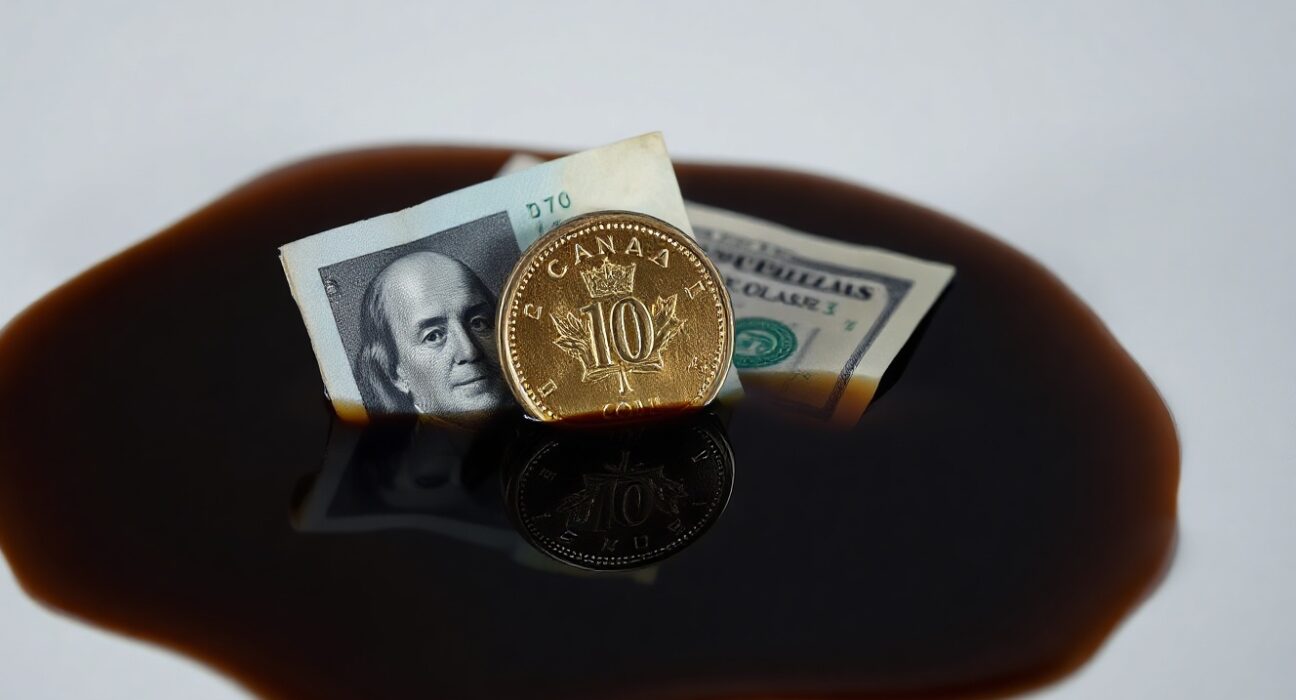
The Canadian dollar edged lower against its US counterpart on Wednesday, pressured by a combination of declining crude oil prices and stronger-than-expected inflation data from the United States. The loonie, as Canada’s currency is commonly known, gave up early session gains as market participants reassessed the interest rate outlook on both sides of the border.
Oil Prices Weigh on Commodity-Linked Currency
Crude oil, one of Canada’s largest exports, fell sharply during the session. West Texas Intermediate (WTI) crude dropped more than 2% amid reports of rising US inventories and concerns about global demand growth. The decline in oil prices directly impacts the Canadian dollar because lower export revenues can reduce demand for the currency. Analysts noted that the correlation between oil and the loonie has strengthened in recent weeks as traders focus on commodity price dynamics.
US Inflation Data Surprises to the Upside
Adding to the pressure on the Canadian dollar, the US Bureau of Labor Statistics reported that the Consumer Price Index (CPI) rose 0.4% month-over-month in January, exceeding the consensus estimate of 0.3%. On an annual basis, headline inflation came in at 3.1%, above the 2.9% forecast. Core inflation, which excludes volatile food and energy prices, also beat expectations, rising 0.4% month-over-month.
The hotter-than-expected inflation data prompted a swift repricing of Federal Reserve interest rate expectations. Markets now see a lower probability of rate cuts in the first half of the year, which boosted the US dollar broadly. A stronger greenback typically weighs on the Canadian dollar, as it makes US-denominated assets more attractive relative to Canadian ones.
Impact on Bank of Canada Policy
The divergence in monetary policy expectations is a key factor for USD/CAD. While the Federal Reserve may now hold rates higher for longer, the Bank of Canada is widely expected to begin cutting rates later this year as the Canadian economy shows signs of slowing. This policy gap could keep the Canadian dollar under pressure in the near term. However, some analysts caution that the market may be overreacting to a single data point and that the overall trend in inflation remains downward.
Technical Outlook for USD/CAD
From a technical perspective, USD/CAD has broken above its 50-day moving average, a signal that short-term momentum favors further upside for the pair. The next resistance level is seen near 1.3600, followed by the 1.3650 area. On the downside, support is located at 1.3450 and then 1.3400. Traders will be watching upcoming Canadian employment data and further US inflation reports for directional cues.
Conclusion
The combination of softer oil prices and robust US inflation has created a challenging environment for the Canadian dollar. While the loonie has been resilient in recent months, the latest data suggests that headwinds are building. Investors should monitor commodity price trends and central bank communications closely, as these will likely determine the next major move in USD/CAD.
FAQs
Q1: Why does oil price affect the Canadian dollar?
Canada is a major oil exporter, so higher oil prices generally increase export revenues and demand for Canadian dollars, strengthening the loonie. Conversely, falling oil prices tend to weaken the currency.
Q2: How does US inflation impact USD/CAD?
Higher US inflation can lead the Federal Reserve to keep interest rates elevated, making the US dollar more attractive to investors. This typically pushes USD/CAD higher (meaning the Canadian dollar weakens).
Q3: What is the Bank of Canada’s current stance on interest rates?
The Bank of Canada has held its key interest rate at 5.0% since July 2023. While the bank has signaled that it is monitoring economic conditions, most economists expect the first rate cut to occur in the second half of 2024, later than previously anticipated due to persistent inflation.
Disclaimer: The information provided is not trading advice, Bitcoinworld.co.in holds no liability for any investments made based on the information provided on this page. We strongly recommend independent research and/or consultation with a qualified professional before making any investment decisions.
