

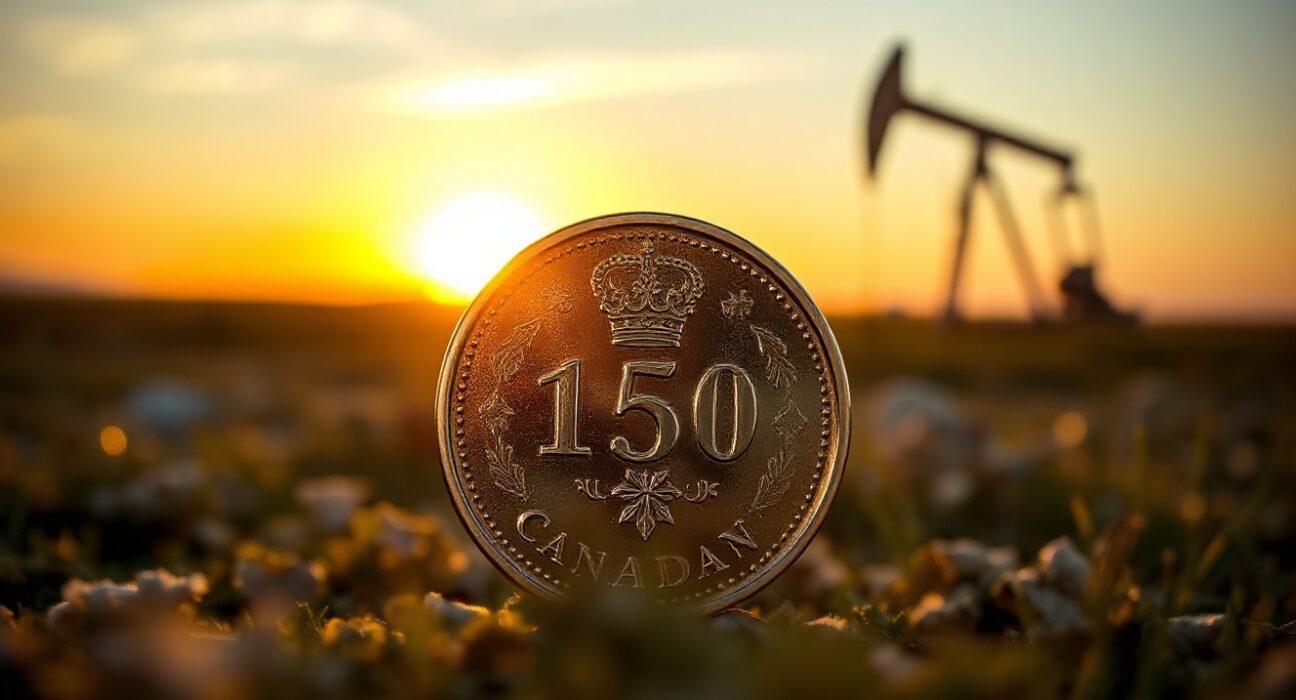
The Canadian dollar weakened against its U.S. counterpart on [date of publication], pressured by a decline in crude oil prices as markets weighed the possibility of renewed diplomatic talks between the United States and Iran that could increase global supply.
Oil Price Decline Weighs on the Loonie
Oil is one of Canada’s largest exports, and the currency often tracks crude prices. As of [date], West Texas Intermediate (WTI) crude fell [percentage]% to trade around $[price] per barrel, while Brent crude slipped to $[price]. The drop followed reports that Washington and Tehran may resume negotiations over Iran’s nuclear program, a scenario that could lead to the lifting of sanctions and a return of Iranian barrels to the market.
According to the U.S. Energy Information Administration, Iran holds some of the world’s largest proven oil reserves, and even a modest increase in its exports could add to a global supply glut that has kept prices under pressure.
Market Reaction and USD/CAD Movement
The U.S. dollar, meanwhile, found support from safe-haven flows and expectations that the Federal Reserve will keep interest rates higher for longer. As a result, USD/CAD rose to [specific level], up [percentage]% on the day. Traders noted that the pair’s movement was largely driven by the oil price slide rather than any domestic Canadian economic data.
Analysts at [bank/firm] said in a note that the Canadian dollar’s near-term direction will hinge on oil price stability and any progress in U.S.-Iran talks. “If negotiations gain traction, we could see further downside for crude and, consequently, for the loonie,” they wrote.
Implications for Consumers and Businesses
A weaker Canadian dollar makes imported goods more expensive, potentially feeding into inflation. For businesses that rely on cross-border trade, the exchange rate affects profit margins and pricing strategies. However, exporters may benefit from a more competitive currency, as their goods become cheaper for foreign buyers.
For Canadian travelers and online shoppers, a softer loonie means less purchasing power abroad. The Bank of Canada’s monetary policy decisions will also be influenced by currency movements, as a sustained decline could complicate its efforts to bring inflation back to target.
Conclusion
The Canadian dollar’s slide reflects the complex interplay between oil prices, geopolitical developments, and monetary policy expectations. While the immediate trigger is the prospect of U.S.-Iran talks, the broader trend will depend on global supply dynamics and the Federal Reserve’s next moves. Investors and consumers alike should monitor these factors closely, as they have direct implications for the economy and household finances.
FAQs
Q1: Why does the Canadian dollar move with oil prices?
Canada is a major oil exporter, and crude is one of its largest export commodities. When oil prices rise, export revenues increase, boosting demand for the Canadian dollar. Conversely, falling oil prices reduce export earnings and can weaken the currency.
Q2: What are US-Iran talks and how do they affect oil?
The U.S. and Iran have been in discussions over Iran’s nuclear program. If an agreement is reached, sanctions on Iranian oil exports could be lifted, allowing more supply into the global market. Increased supply typically pushes oil prices down.
Q3: How does a weaker Canadian dollar impact consumers?
A weaker loonie raises the cost of imported goods, including electronics, clothing, and food items that are not produced domestically. It also makes travel abroad and online purchases from foreign retailers more expensive. However, it can boost export-oriented industries and tourism.
Disclaimer: The information provided is not trading advice, Bitcoinworld.co.in holds no liability for any investments made based on the information provided on this page. We strongly recommend independent research and/or consultation with a qualified professional before making any investment decisions.
