

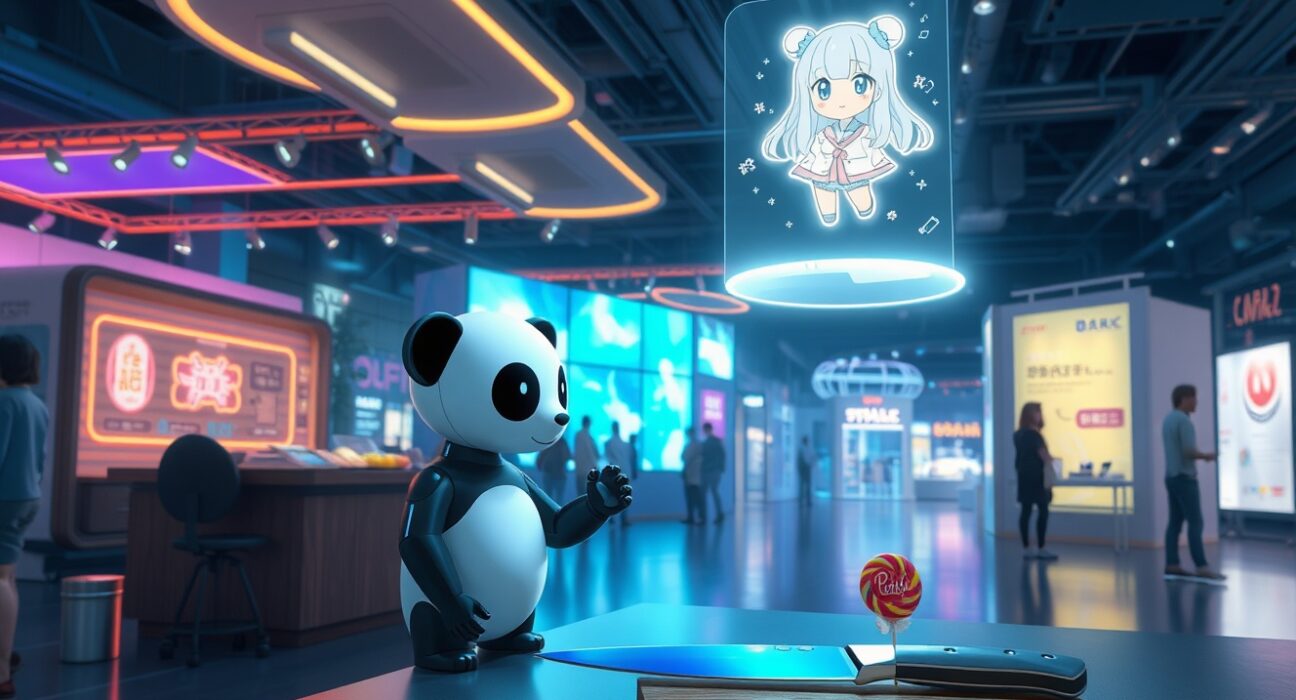
LAS VEGAS, JANUARY 2026 – The Consumer Electronics Show 2026 has once again transformed the Las Vegas Convention Center into a global stage for technological revelation. While major corporations showcase predictable iterations of smartphones and televisions, the true heartbeat of innovation often pulses within the halls dedicated to the unconventional. This year, a collection of truly bizarre tech gadgets has captured global attention, challenging our perceptions of utility and design. These unexpected CES 2026 announcements reveal a fascinating trend toward hyper-personalized, emotionally intelligent, and curiously niche devices.
CES 2026 Showcases Bizarre Tech Frontier
The annual CES event serves as a critical barometer for industry direction. Analysts from firms like Gartner and IDC consistently note that fringe concepts showcased here frequently predict mainstream adoption within five to seven years. The bizarre tech on display in 2026, therefore, is not merely entertainment. It represents serious R&D investment into new human-machine interaction paradigms. This year’s standout theme is the fusion of advanced artificial intelligence with tangible, often whimsical, physical forms. The goal is moving beyond screens to create ambient, empathetic digital experiences.
The Evolution of Digital Companionship
Two products exemplify this shift with particular clarity. First, Razer’s Project AVA has evolved from an esports AI coach into a holographic desk companion. This 5.5-inch device projects animated characters like ‘Kira’ or ‘Zane’ who offer gaming advice, productivity tips, and personal coaching. The technology utilizes advanced eye-tracking and lip-syncing for realistic interaction. However, its persistent camera-based monitoring of users and their screens introduces complex questions about privacy and digital intimacy that ethicists are already debating.
In a contrasting approach, Mind with Heart Robotics presents An’An, an AI-powered panda robot. Designed for elderly care, its core innovation lies in a sensor-rich fur-like exterior. This allows it to respond naturally to touch. Its emotional AI engine builds a memory of user interactions, tailoring its companionship over time. Developers cite peer-reviewed studies on geriatric loneliness and cognitive engagement, positioning An’An as a therapeutic tool rather than a toy. The table below contrasts these two companion approaches.
| Feature | Razer Project AVA | Mind with Heart An’An |
|---|---|---|
| Primary Form | Holographic Animation | Tactile Robot |
| Core Tech | Camera, Eye-Tracking, Holography | Touch Sensors, Emotional AI |
| Target User | Gamers & Productivity Seekers | Older Adults & Care Networks |
| Key Function | Strategy, Organization, Coaching | Emotional Support, Memory Aid |
| Privacy Consideration | Constant Visual Monitoring | Personal Interaction Data |
Redefining Everyday Tools with AI and Sonic Tech
Beyond companionship, CES 2026 bizarre tech infiltrates mundane domestic spheres. GoveeLife’s Smart Nugget Ice Maker Pro, priced at $499.99, employs a proprietary AI system called NoiseGuard. This software predicts mechanical freeze cycles and initiates quiet defrosting sequences automatically. The result is a significant reduction in operational decibels, a common complaint with traditional ice makers. This application of predictive AI to manage acoustic pollution represents a subtle but meaningful quality-of-life innovation.
Similarly, Seattle Ultrasonics reimagines a fundamental kitchen tool. Its ultrasonic chef’s knife vibrates at over 30,000 Hz. This high-frequency motion reduces friction, allowing the blade to glide through food with minimal pressure. The physics principle, known as ultrasonic cutting, is common in industrial manufacturing but novel for consumer kitchens. The company claims the vibrations are imperceptible to sight, sound, and touch. At $399, it targets culinary enthusiasts seeking ergonomic efficiency.
- GoveeLife Ice Maker: AI noise reduction, 6-minute ice production, 60-lb daily capacity.
- Ultrasonic Knife: 30,000 Hz vibration, reduces cutting force, pre-order available.
The Sensory Experience of Bizarre Consumer Tech
Perhaps the most unusual sensory product is the Lollipop Star musical lollipop. It uses bone conduction audio technology, transmitting sound vibrations through the skull to the inner ear. Available in flavors linked to artists like Ice Spice (peach) and Akon (blueberry), it merges taste with private audio playback. While seemingly frivolous, it demonstrates the miniaturization and consumerization of bone conduction tech, previously reserved for high-end headphones and hearing aids.
High-Concept Robotics and Health Tech Breakthroughs
The bizarre tech spectrum extends to ambitious robotics and intimate health monitoring. Zeroth Robotics unveiled the W1, a $4,999 mobile robot inspired by WALL-E. It promises dual functionality: a home security sentinel with 360-degree surveillance and AI alert systems, and an outdoor adventure companion capable of carrying gear and serving as a mobile power bank. This dual-purpose design highlights a trend toward versatile, context-aware robots, though its premium price places it in a niche market.
In health tech, Mira’s $249 Ultra4 Hormone Monitor adopts a discreet, egg-shaped design for at-home urinalysis. It tracks four key reproductive hormones—FSH, LH, E3G, and PdG—providing data for fertility windows and conditions like PCOS and perimenopause. By making complex hormone monitoring accessible and private, it empowers individuals with detailed, cycle-based health insights previously requiring clinical visits.
Expert Analysis on Market Viability
Technology analysts provide crucial context for these announcements. Dr. Elena Rodriguez, a senior analyst at Futuresource Consulting, notes, “CES has always been a lab for the improbable. The bizarre gadgets of 2026, particularly those integrating affective AI, are testing consumer comfort with persistent, emotionally intelligent machines. Their success won’t hinge on specs alone, but on solving genuine human needs—combating loneliness, reducing domestic stress, or providing personal health sovereignty.” She emphasizes that while not all concepts will achieve mass production, they collectively pressure-test market readiness and ethical boundaries.
Conclusion
The bizarre tech of CES 2026 offers a compelling glimpse into a near-future where technology becomes more intimate, ambient, and strangely personal. From holographic coaches and cuddly AI pandas to silent ice makers and hormonal egg monitors, these innovations push beyond incremental upgrades. They explore how AI, robotics, and advanced materials can address nuanced human desires for companionship, convenience, and health awareness. While their commercial futures are uncertain, each product serves as a vital data point in the ongoing conversation about our technological trajectory. The most unexpected announcements at CES 2026 may well define the user experience standards of 2030.
FAQs
Q1: What is the most unusual gadget at CES 2026?
The Lollipop Star musical lollipop, which uses bone conduction to play music directly into the user’s head while providing a flavored experience, stands out for its unique fusion of confectionery and audio technology.
Q2: Are any of these bizarre CES 2026 gadgets available for purchase now?
Some, like the GoveeLife Smart Nugget Ice Maker Pro and the Mira Ultra4 Hormone Monitor, have immediate or imminent retail availability. Others, such as Razer’s Project AVA, remain conceptual prototypes with no guaranteed production date.
Q3: What is the purpose of the AI panda robot An’An?
An’An is designed by Mind with Heart Robotics to provide emotional support and cognitive engagement for older adults. Its touch-sensitive fur and emotional AI aim to combat loneliness and assist with daily task reminders.
Q4: How does the ultrasonic knife work?
The knife from Seattle Ultrasonics vibrates its blade at an ultrasonic frequency (over 30,000 times per second). This dramatically reduces friction and drag, making cutting require less force and potentially keeping food textures more intact.
Q5: Why is there so much bizarre tech at CES?
CES serves as a global platform for companies to test radical ideas, gauge media and public reaction, and attract investor or partner interest. These unconventional gadgets often explore new markets and human-computer interactions before technologies mature and costs decrease for mainstream adoption.
Disclaimer: The information provided is not trading advice, Bitcoinworld.co.in holds no liability for any investments made based on the information provided on this page. We strongly recommend independent research and/or consultation with a qualified professional before making any investment decisions.
