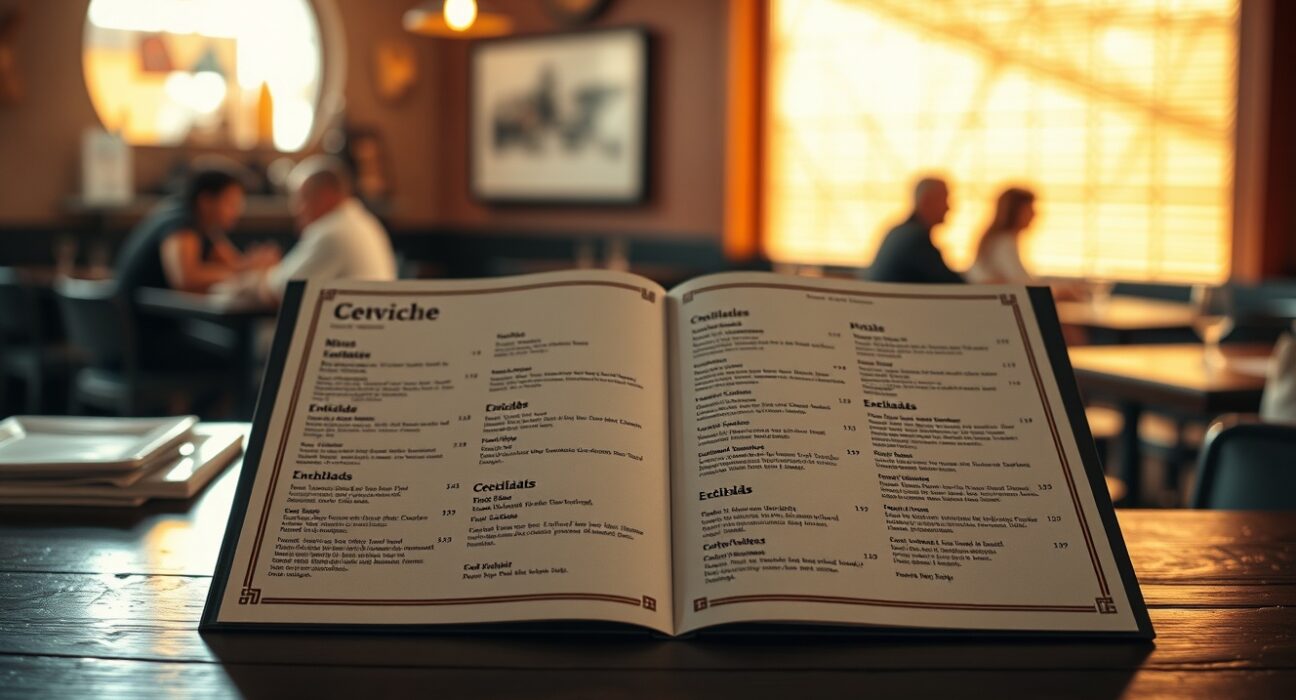
San Francisco, CA – April 30, 2025 – OpenAI has unveiled a significant leap in artificial intelligence with ChatGPT Images 2.0, a model that finally overcomes one of the most persistent flaws in AI image generation: the accurate rendering of text. Historically, AI models have notoriously struggled with spelling and legible typography, often producing garbled nonsense on signs, menus, and documents. However, this new iteration demonstrates a surprising and robust capability to generate coherent, correctly spelled text within images, effectively blurring the line between human-designed and AI-generated professional graphics.
ChatGPT Images 2.0 Solves a Historic AI Challenge
For years, distinguishing AI-generated imagery was often as simple as reading the text. Early models like DALL-E 2 and Midjourney v4 would invent words like “churiros” or “burrto” when tasked with creating a simple restaurant menu. This fundamental weakness stemmed from the core architecture of diffusion models, which dominated the field. These models work by reconstructing images from random noise, learning patterns of pixels rather than understanding semantic content like language.
Asmelash Teka Hadgu, founder and CEO of Lesan AI, explained the technical hurdle in 2024. He noted that text on an image constitutes a very small portion of the total pixels. Consequently, the image generator prioritizes learning the broader visual patterns that cover more area, often at the expense of fine-grained details like accurate letterforms. This limitation confined AI image generation to conceptual art and illustrations, making it unreliable for practical applications requiring precise text, such as marketing materials, UI mockups, or informational posters.
The Technical Evolution Behind the Breakthrough
While OpenAI has not disclosed the specific architecture powering Images 2.0, the industry has been exploring alternatives to pure diffusion models. Researchers have investigated autoregressive models, which function more like large language models (LLMs). Instead of de-noising an image, these models predict what should come next in a sequence, potentially allowing for a more structured and coherent generation of elements like text.
OpenAI did confirm that the new model possesses “thinking capabilities.” This suggests a multi-step reasoning process where the model can search its knowledge base, plan an image composition, and crucially, double-check its output. This internal verification loop is likely key to its newfound accuracy with text. The company also emphasized the model’s improved understanding of non-Latin scripts, including Japanese, Korean, Hindi, and Bengali, marking a step toward global usability.
From Comic Strips to Marketing Kits: Practical Applications
The implications of this advancement are immediately practical. OpenAI states that Images 2.0 can follow complex instructions to create multi-panel comic strips with consistent characters and legible dialogue bubbles. Furthermore, it can generate marketing assets in various sizes and aspect ratios—a common requirement for social media campaigns—while preserving requested branding details and text.
Key new capabilities include:
- Generation of legible small text, iconography, and UI elements.
- Adherence to subtle stylistic constraints and dense compositions.
- Output at resolutions up to 2K for high-fidelity use.
- Creation of multiple related images from a single, complex prompt.
This shift transforms the tool from a novelty into a viable assistant for designers, content creators, and small businesses needing rapid prototyping of visual assets. However, this enhanced capability comes with a computational cost; generating these complex images is not as instantaneous as receiving a text response from ChatGPT, though a multi-panel comic reportedly takes only a few minutes.
The Competitive Landscape and Industry Impact
The release of Images 2.0 intensifies competition in the generative AI space. Other players like Midjourney, Adobe Firefly, and startups like Ideogram have also been racing to solve the text-generation problem. OpenAI’s integration of this advanced model directly into the ubiquitous ChatGPT interface gives it a significant distribution advantage. All ChatGPT users gained access to the basic version starting April 29, with paid subscribers receiving higher limits and more advanced output options.
Concurrently, OpenAI announced the gpt-image-2 API, allowing developers to build the technology into their own applications. Pricing will scale based on output quality and resolution, creating a new enterprise revenue stream. It is important to note the model’s knowledge cutoff is December 2025, which may limit its accuracy for prompts involving very recent events or newly released products.
Ethical and Societal Considerations
This progress inevitably raises new questions. The ability to generate flawless, text-heavy images like official-looking notices, branded documents, or fake signage with ease lowers the barrier to creating convincing misinformation. While OpenAI implements safeguards, the core technology’s increased fidelity demands greater media literacy from the public. Furthermore, the professional quality of the output brings AI tools closer to competing directly with human graphic designers for certain templated tasks, potentially impacting freelance markets.
Conclusion
The launch of ChatGPT Images 2.0 represents a pivotal moment in AI development, moving image generation beyond artistic impressionism into the realm of practical, detail-oriented graphic design. By solving the long-standing text-generation problem, OpenAI has not just improved a model but expanded the viable use cases for generative AI as a whole. The technology’s integration into ChatGPT and its new API will likely accelerate adoption across industries, forcing competitors to respond and pushing the entire field toward greater precision and utility. The era of spotting AI images by their garbled text may be coming to an end.
FAQs
Q1: What is the main improvement in ChatGPT Images 2.0?
The primary breakthrough is its ability to generate accurate, legible text within images, a task where previous AI image models consistently failed.
Q2: How does Images 2.0 generate text better than older models?
While the exact architecture is undisclosed, it uses “thinking capabilities” for internal planning and verification. This differs from older diffusion models that reconstructed images from noise and often ignored fine text details.
Q3: Can anyone use ChatGPT Images 2.0?
Yes. All free and paid ChatGPT users have access as of April 29, 2025. Paid subscribers (ChatGPT Plus, Team, Enterprise) receive higher usage limits and access to more advanced features.
Q4: What are some real-world uses for this technology?
Practical applications now include creating marketing materials with correct branding text, designing UI/UX mockups with readable labels, generating comic strips with dialogue, and producing informational posters or menus.
Q5: Does the model have any limitations?
Yes. Its knowledge is current only up to December 2025. Generating complex, high-resolution images also takes longer than text responses, and creating perfectly accurate text for highly specialized or novel prompts is not guaranteed.
Disclaimer: The information provided is not trading advice, Bitcoinworld.co.in holds no liability for any investments made based on the information provided on this page. We strongly recommend independent research and/or consultation with a qualified professional before making any investment decisions.