

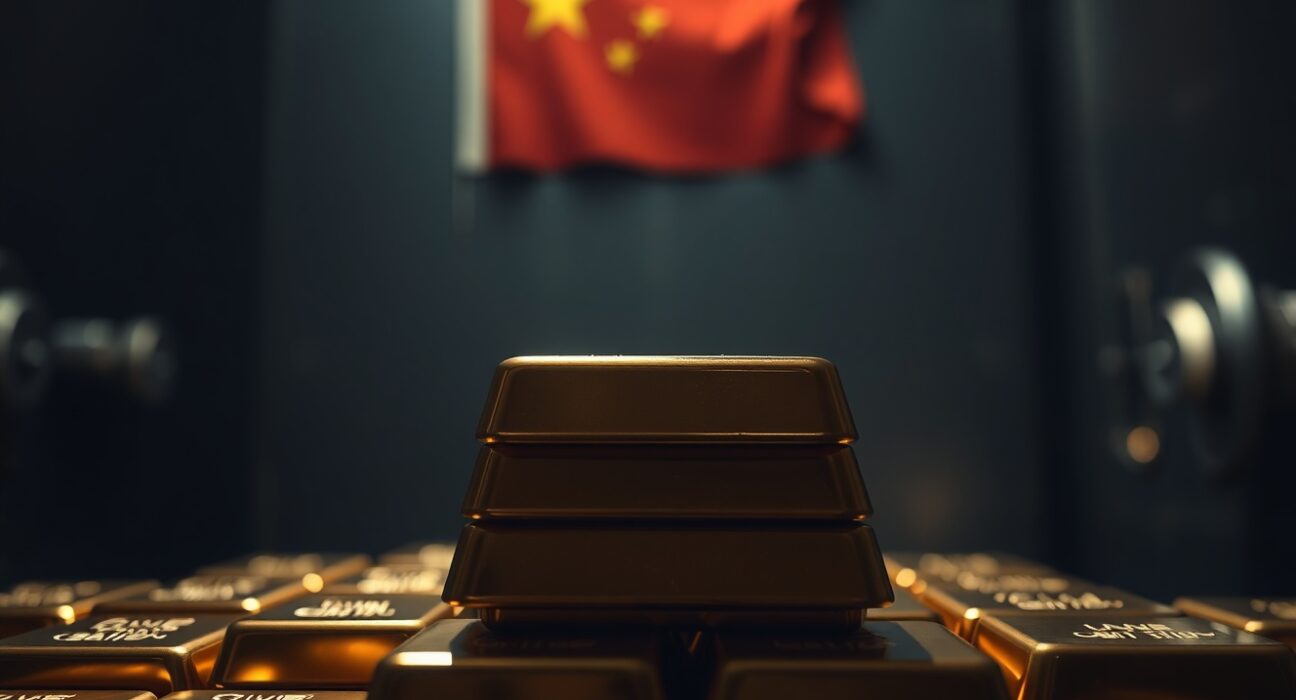
China has reemerged as a significant buyer of gold, adding to its official reserves for the third consecutive month, according to the latest data from the People’s Bank of China (PBOC). The move marks a notable shift in the country’s reserve management strategy and reinforces a broader trend among central banks to diversify away from the US dollar.
China’s Gold Accumulation Resumes
After a brief pause in late 2025, the PBOC resumed gold purchases in December, adding 10 tonnes to its reserves. January and February 2026 saw continued accumulation, with a combined 25 tonnes added. China’s total official gold holdings now stand at approximately 2,280 tonnes, solidifying its position as one of the world’s largest holders of the precious metal.
The timing of these purchases is significant. Gold prices have remained relatively stable in early 2026, trading around $2,050 per ounce, after a volatile 2025 that saw prices swing between $1,800 and $2,400. Analysts suggest that China is taking advantage of the price consolidation to build its reserves at a lower average cost.
Strategic Implications for Global Markets
China’s renewed gold buying is widely interpreted as a strategic move to reduce dependence on the US dollar, especially amid ongoing geopolitical tensions and trade uncertainties. The PBOC has been steadily increasing its gold reserves since 2018, with periodic pauses, as part of a long-term de-dollarization strategy.
This trend is not unique to China. Central banks in emerging economies, including Turkey, India, and Poland, have also been net buyers of gold in recent years. According to the World Gold Council, central bank net purchases reached 1,037 tonnes in 2025, the second-highest annual total on record. China’s latest activity is expected to contribute to another strong year for official sector demand.
Impact on Gold Prices and Investor Sentiment
Market analysts view China’s purchases as a bullish signal for gold prices. Institutional investors often follow central bank activity, and sustained buying from the PBOC could reinforce confidence in gold as a safe-haven asset. However, some caution that the impact on prices may be gradual, given the size of the overall market.
“Central bank buying provides a solid floor under gold prices, but it’s not a catalyst for a sharp rally,” said a senior commodities strategist at a European bank. “The market is also watching US interest rate decisions and inflation data, which remain key drivers.”
Conclusion
China’s return as a consistent gold buyer underscores the ongoing shift in global reserve management. For investors, the trend signals continued support for gold demand, while for policymakers, it highlights the gradual move away from dollar-centric systems. As the PBOC continues its purchases, the precious metal is likely to remain a cornerstone of global financial stability strategies.
FAQs
Q1: Why is China buying gold now?
China is buying gold as part of a long-term strategy to diversify its foreign exchange reserves away from the US dollar, reduce geopolitical risk, and enhance financial stability.
Q2: How much gold does China currently hold?
As of February 2026, China’s official gold reserves are approximately 2,280 tonnes, making it one of the largest holders globally, behind the United States and Germany.
Q3: Does China’s gold buying affect the price of gold?
Yes, sustained central bank buying, including from China, supports gold prices by adding a consistent source of demand. However, price movements are also influenced by interest rates, inflation, and investor sentiment.
Disclaimer: The information provided is not trading advice, Bitcoinworld.co.in holds no liability for any investments made based on the information provided on this page. We strongly recommend independent research and/or consultation with a qualified professional before making any investment decisions.
