
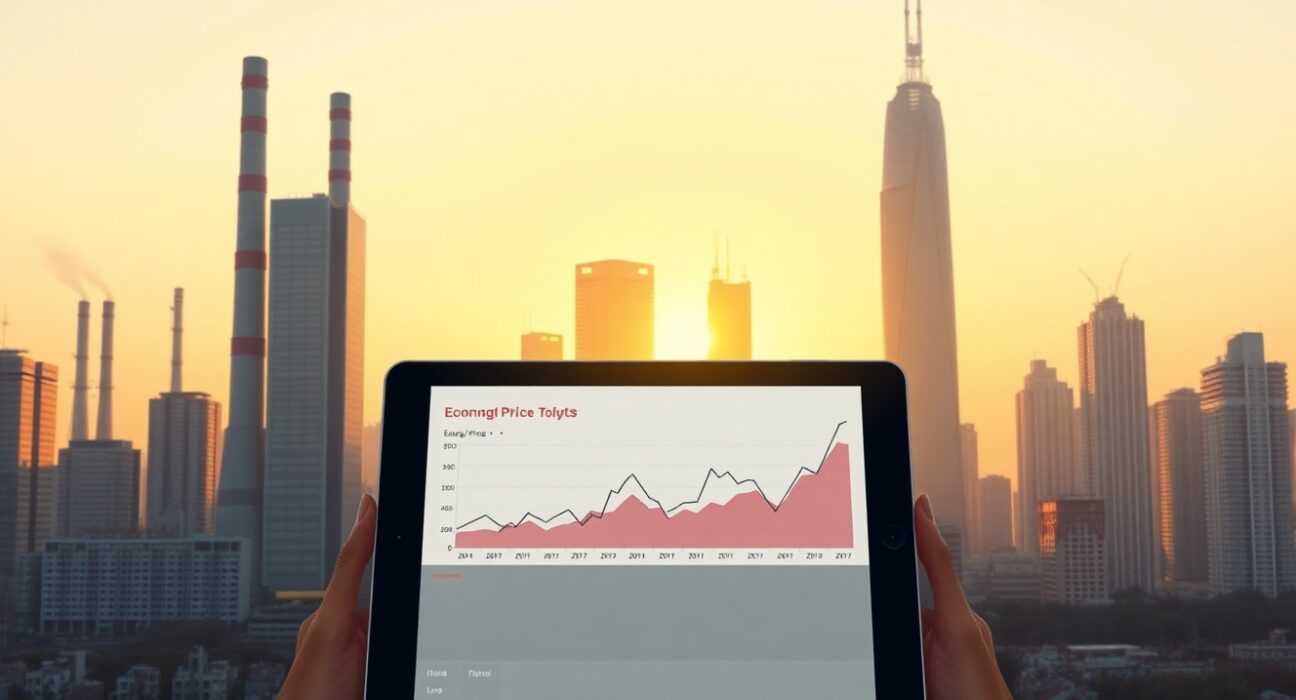
BEIJING, March 2025 – China faces mounting inflation pressures as rising global energy costs and domestic supply dynamics converge, according to a recent analysis by ING Bank. This development marks a significant shift for the world’s second-largest economy, which has historically maintained relatively stable consumer prices. The interplay between energy markets and broader price stability now presents a complex challenge for policymakers.
China Inflation Dynamics and the Energy Catalyst
China’s consumer price index (CPI) shows clear upward momentum, primarily driven by energy components. Economists at ING highlight how transportation fuel and household utility costs are transmitting inflationary shocks through the economy. Furthermore, these pressures are not isolated. They interact with post-pandemic recovery patterns and strategic commodity stockpiling.
Global crude oil benchmarks directly influence domestic fuel pricing mechanisms in China. Consequently, households and businesses experience immediate cost increases. The National Bureau of Statistics (NBS) reports these trends monthly. Their data provides the foundation for the ING assessment. Analysts compare current figures to pre-pandemic baselines to gauge the pressure’s intensity.
Structural Factors and Supply Chain Impacts
Several structural factors amplify the energy-inflation link in China. The nation’s manufacturing sector remains heavily energy-intensive. Therefore, higher input costs quickly affect producer prices. These increases often pass through to consumer goods over subsequent quarters.
The following table outlines key energy-related components in China’s inflation basket:
| Component | Weight in CPI | Recent Price Trend | Primary Driver |
|---|---|---|---|
| Transportation Fuel | ~2.5% | Sharply Higher | Global Oil Prices |
| Household Utilities | ~4.0% | Moderately Higher | Coal & Gas Contracts |
| Food Transport Costs | Indirect | Increasing | Logistics & Diesel |
Additionally, China’s ongoing transition to renewable energy sources creates short-term cost pressures. Investment in green infrastructure requires substantial capital. Meanwhile, traditional energy systems still require maintenance. This dual burden can contribute to higher utility tariffs for end-users.
Expert Analysis from ING Economists
ING’s research team applies decades of macroeconomic expertise to this situation. Their analysis references historical episodes of commodity-driven inflation. For instance, they compare current data to the 2007-2008 and 2011-2012 energy price spikes. The current scenario differs due to China’s altered economic structure and debt levels.
The People’s Bank of China (PBOC) monitors these developments closely. Monetary policy must balance growth support with price stability. ING suggests that targeted measures, rather than broad rate hikes, might be the initial response. Their reasoning hinges on the imported nature of the inflation. Domestic demand conditions remain relatively subdued.
Broader Economic Consequences and Policy Pathways
Persistent energy-led inflation carries several risks for the Chinese economy. First, it erodes household purchasing power. This effect can dampen consumer confidence and spending. Second, it squeezes corporate profit margins, especially for small and medium enterprises. Third, it complicates fiscal planning for local governments subsidizing energy costs.
Policy responses may involve a multi-pronged approach:
- Strategic Reserve Releases: Tapping state oil and coal reserves to increase supply.
- Price Controls: Temporary administrative measures on key utilities, though used sparingly.
- Subsidy Adjustments: Refining subsidy programs for vulnerable groups and industries.
- Currency Management: Allowing modest yuan appreciation to lower import costs.
International markets watch these developments intently. China’s inflation trajectory influences global commodity demand forecasts. It also affects the policy stance of major trading partners. A significant tightening by the PBOC could have ripple effects across emerging markets.
Conclusion
China’s inflation landscape is undergoing a critical stress test, with energy prices acting as the primary catalyst. The ING analysis provides a clear, evidence-based framework for understanding this complex economic shift. While the immediate pressures are evident, the long-term outcome depends on policy agility and global market conditions. Monitoring China’s consumer price index and policy announcements remains essential for gauging the broader economic impact.
FAQs
Q1: What is the main cause of inflation pressure in China according to ING?
The primary driver is rising global and domestic energy costs, which increase prices for transportation, utilities, and industrial production, feeding into broader consumer prices.
Q2: How does energy inflation affect ordinary Chinese consumers?
It directly increases household expenses for fuel, heating, and electricity. Indirectly, it raises the cost of goods and services due to higher production and transportation costs passed on by businesses.
Q3: What tools does the Chinese government have to combat energy-driven inflation?
Authorities can use strategic commodity reserve releases, targeted subsidies, temporary price controls on utilities, and monetary policy tools to manage liquidity and the exchange rate.
Q4: Is this inflation likely to lead to significant interest rate hikes by the People’s Bank of China?
Analysts like those at ING suggest targeted measures are more likely initially, as the inflation is largely imported and supply-driven, while domestic demand growth remains moderate.
Q5: How does China’s inflation situation compare to other major economies?
Many economies faced post-pandemic inflation, but China’s experience has been more muted until recently. Its current pressures are more narrowly tied to specific commodity shocks rather than broad-based overheating.
Disclaimer: The information provided is not trading advice, Bitcoinworld.co.in holds no liability for any investments made based on the information provided on this page. We strongly recommend independent research and/or consultation with a qualified professional before making any investment decisions.