

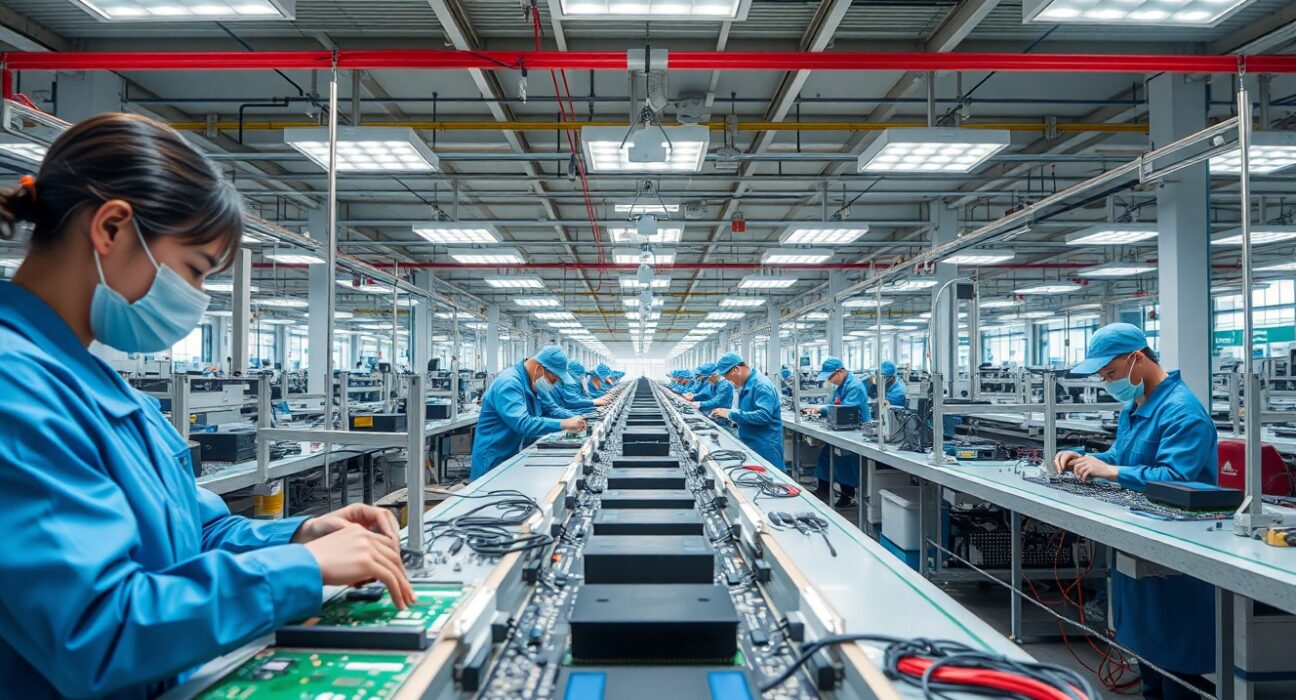
China’s manufacturing sector hit a standstill in May, with the official Purchasing Managers’ Index (PMI) from the National Bureau of Statistics (NBS) holding at 50.0. This reading marks the boundary between expansion and contraction, signaling no growth in factory activity. In contrast, the non-manufacturing PMI, which covers services and construction, inched up to 50.1 from 50.0 in April, suggesting a marginal improvement in the broader economy.
What the Numbers Reveal
The NBS Manufacturing PMI, a key gauge of industrial health, fell from 50.1 in April to exactly 50.0 in May. A reading above 50 indicates expansion; below 50 signals contraction. The flat result suggests that while factories are not shrinking, they are also not gaining momentum. Analysts had expected a modest improvement, but persistent weakness in domestic demand and external trade headwinds appear to be weighing on output.
The Non-Manufacturing PMI rose slightly to 50.1, driven by a pickup in services activity. Construction also showed resilience, supported by government infrastructure spending. However, the services sector remains fragile, with consumer confidence still below pre-pandemic levels.
Context and Implications
These figures come as China’s economy faces a complex mix of challenges: a prolonged property sector downturn, sluggish consumer spending, and geopolitical tensions affecting trade. The NBS data aligns with other indicators, such as the Caixin Manufacturing PMI, which also hovered near the 50 mark in recent months.
For global markets, the reading reinforces expectations that Beijing may need to roll out more stimulus measures. The People’s Bank of China has already cut key interest rates and reduced bank reserve requirements, but the impact on real economic activity has been gradual.
Why This Matters to Investors
The PMI data is a leading indicator of economic health. A sustained reading at or below 50 often precedes slower corporate earnings, reduced commodity demand, and weaker export growth. For investors tracking Chinese equities, the yuan, or emerging market exposure, these numbers provide a cautious signal.
Conclusion
China’s economy is treading water. The manufacturing sector shows no clear direction, while services offer only a faint glimmer of improvement. Policymakers face growing pressure to deliver more targeted support, especially for small and medium enterprises and the beleaguered property market. The coming months will be critical in determining whether the current stagnation deepens into a contraction or gives way to a modest recovery.
FAQs
Q1: What does a PMI of 50.0 mean?
A PMI of exactly 50.0 indicates that the manufacturing sector is neither expanding nor contracting — it is flat compared to the previous month. It is a neutral reading.
Q2: Why is the non-manufacturing PMI important?
The non-manufacturing PMI covers services, construction, and other sectors beyond factories. Since services account for over half of China’s GDP, this index provides a broader view of economic health.
Q3: How does China’s PMI affect global markets?
China is the world’s largest manufacturer and a major consumer of commodities. A weak PMI can signal lower demand for raw materials like copper and oil, and may dampen investor sentiment toward emerging markets and Chinese stocks.
Disclaimer: The information provided is not trading advice, Bitcoinworld.co.in holds no liability for any investments made based on the information provided on this page. We strongly recommend independent research and/or consultation with a qualified professional before making any investment decisions.
