

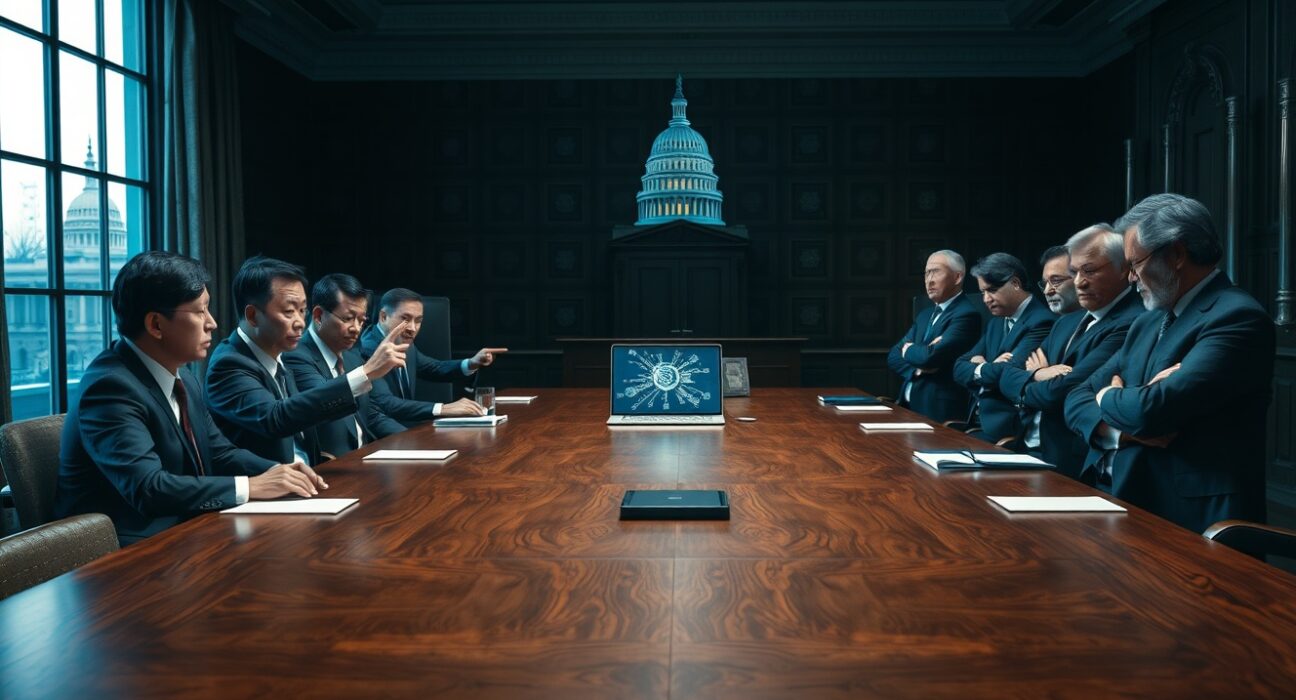
The launch of Moonshot AI’s latest model, Kimi, has reignited a familiar cycle of panic in the U.S. tech industry, sparking debates about American competitiveness, the risks of open-weight AI models, and the role of regulation. As of April 2026, this recurring pattern — where a Chinese AI model matches frontier benchmarks at a fraction of the cost — is once again prompting heated discussions on social media and behind closed doors in Washington, D.C.
The Pattern of Panic
On a recent episode of Bitcoin World’s Equity podcast, editors Kirsten Korosec, Sean O’Kane, and Anthony Ha dissected why the industry reacts so intensely to each new Chinese AI release. Sean O’Kane noted that many elements of the current debate feel like “repeats of prior freakouts,” with the tech industry perpetually expecting a game-changing breakthrough. He pointed to the example of users claiming Kimi replicated macOS in 30 minutes, clarifying that the model produced a graphical reproduction, not a functional operating system.
Open vs. Proprietary: The Core Tension
The debate centers on whether Chinese open-weight models — which allow developers to inspect, modify, and build upon the underlying code — pose unique security risks or simply threaten the business models of U.S. frontier labs like OpenAI and Anthropic. According to the podcast discussion, these companies have reportedly lobbied regulators, expressing concern about the competitive threat posed by open Chinese models. Kirsten Korosec highlighted a key question: “Are we accelerating and ensuring that Americans win the AI race, or are we ensuring that certain frontier labs do better than others?”
Regulatory FUD and Protectionism
The conversation revealed that a significant driver of the panic is protectionism. Anthony Ha noted that the word “China” adds a level of hysteria to any discussion, drawing parallels to the TikTok debate. He observed that arguments for aggressive regulation often serve pre-existing policy goals: “My gosh, if China beats us, that’s unthinkable, so you have to do what I want to do anyway.” The discussion also touched on a controversial post by OpenAI’s Dean Ball, who initially suggested the U.S. should create regulatory “FUD” — fear, uncertainty, and doubt — to hinder open-weight models. (Ball later distanced himself from that argument.)
Why This Matters
For readers, this debate has real consequences. The outcome of regulatory decisions in Washington could determine which AI models are available to enterprises and developers, potentially limiting access to cheaper, open alternatives. It also raises questions about whether U.S. policy is designed to foster broad innovation or to protect a handful of dominant companies. The recurring nature of these panics suggests the industry has yet to find a stable equilibrium between competition, security, and openness.
Conclusion
The panic over Chinese AI, as exemplified by the Kimi launch, reflects deeper anxieties about technological sovereignty, market dominance, and the future of open research. While concerns about security and bias are valid, the editorial team at Bitcoin World emphasized that much of the reaction is driven by protectionist impulses and a tendency toward overreaction. As Sean O’Kane advised, sometimes the best response is to “touch grass” and wait for the facts to settle.
FAQs
Q1: What is Moonshot AI’s Kimi model?
Kimi is the latest large language model from Chinese company Moonshot AI. It has shown competitive performance on certain benchmarks compared to U.S. frontier models, sparking debate about cost efficiency and open-weight accessibility.
Q2: Why are U.S. companies concerned about open Chinese AI models?
Concerns include potential security risks, lack of guardrails, and implicit bias toward China. However, critics argue that some of the fear is driven by protectionism, as open models could undercut the business models of proprietary U.S. frontier labs.
Q3: What does “regulatory FUD” mean in this context?
It refers to creating fear, uncertainty, and doubt about Chinese AI models to influence regulators into imposing restrictions that would benefit U.S. companies. The term was used in a now-revised argument by an OpenAI executive.
Disclaimer: The information provided is not trading advice, Bitcoinworld.co.in holds no liability for any investments made based on the information provided on this page. We strongly recommend independent research and/or consultation with a qualified professional before making any investment decisions.
