

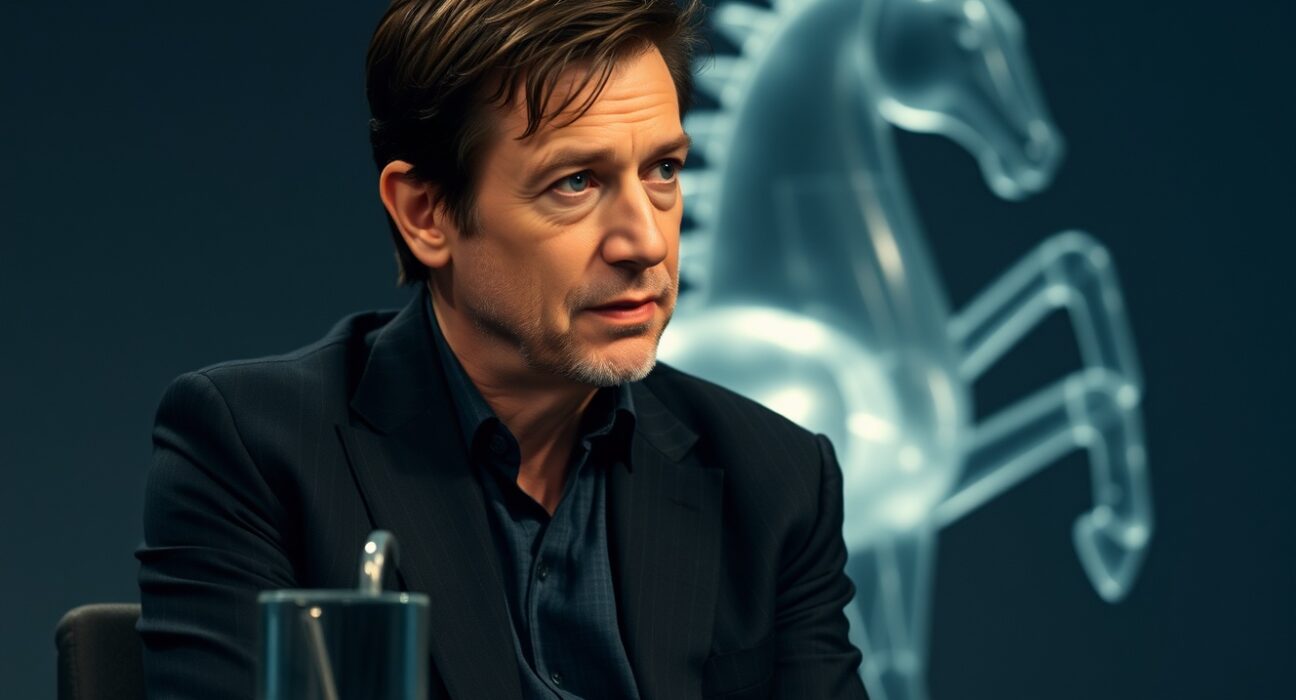
Oscar-winning director Christopher Nolan, whose epic adaptation of The Odyssey is currently dominating the global box office, has described artificial intelligence as a “Trojan horse” — one that everyone already knows is carrying a hidden threat. In a new interview published this week, Nolan said he finds it “pretty encouraging” that young people in particular have met the rapid rise of AI with deep suspicion, coining terms like “AI slop” to dismiss low-quality generated content.
Nolan’s Trojan Horse Analogy for AI
During a conversation with French interviewer Hugo Travers, who publishes under the handle HugoDécrypte, the director was asked whether AI might be like the legendary Trojan horse — a gift that conceals something far more dangerous. Nolan laughed and responded: “I think AI is a Trojan horse that everybody knows the Greeks are inside.” He went further, calling the technology “a transparent horse, it’s made of glass.”
Nolan emphasized that he has never seen a technology advance so quickly while being so widely rejected by the public. “Everybody’s suspicion of it is so extreme, particularly young people,” he said. “The reaction to AI videos online and people my children’s age immediately calling it ‘AI slop’ and coining that term and just putting it in a box.”
In his view, this widespread skepticism is a healthy corrective to the tech industry’s typical hype cycle. “Technology is always going to give us great gifts, but it has to be viewed with skepticism,” Nolan said. “The motives of the people giving it to us also have to be viewed with skepticism. That’s when we’ll get the best out of a new technology, rather than just blind faith that everything’s going to be great.”
Hollywood’s Ongoing Struggle With AI
Nolan did not detail specific threats he sees from AI, but the technology has become a flashpoint across the entertainment industry. It was a central issue during the 2023 Writers Guild of America and SAG-AFTRA strikes, with creators demanding protections against the use of generative AI to replace human labor. The Directors Guild of America, where Nolan serves as president, also secured some generative AI protections in its most recent collective bargaining agreement.
The director’s comments arrive as major studios and tech companies race to integrate AI into production workflows, sparking debates over copyright, creative credit, and job displacement. Nolan’s position as a high-profile filmmaker and union leader gives his words weight in an industry still navigating the technology’s implications.
Nolan’s Broader Techno-Skepticism
The director’s caution around AI fits a longer pattern of measured resistance to new technology. Nolan has famously avoided smartphones and remains a vocal advocate for shooting on film. The Odyssey became the first feature film shot entirely on IMAX film and IMAX cameras, a technical achievement that underscores his preference for analog methods.
When The New York Times recently asked if he considers himself a technophobe, Nolan replied: “I think of myself as a techno-skeptic.” He explained that his love of film comes from the fact that it is “better in terms of representing the way the eye sees the world than any digital imaging system I’ve seen.” He added: “I embrace new technology all the time, but it tends to be sold to people at the expense of systems that might still be valid and viable. That’s what I saw in my industry — throwing the baby out with the bath water. We almost lost film!”
Why This Matters for Readers
Nolan’s comments resonate beyond Hollywood. As generative AI tools become embedded in everyday products — from search engines to creative software — public trust remains low. Surveys consistently show that a majority of consumers are wary of AI-generated content, and terms like “AI slop” reflect a growing cultural rejection of low-quality automated output. For readers, Nolan’s perspective offers a reminder that skepticism toward powerful new technologies is not Luddism, but a rational response to an opaque and rapidly evolving landscape.
Conclusion
Christopher Nolan’s characterization of AI as a transparent Trojan horse captures a moment of unusual public consensus: the technology is advancing faster than society’s ability to understand or regulate it. His praise for young people’s instinctive distrust, combined with his own track record of techno-skepticism, positions him as a prominent voice urging caution without rejecting innovation outright. As the debate over AI’s role in media, labor, and daily life intensifies, Nolan’s framing is likely to resonate with audiences already primed to question the motives of those delivering the gift.
FAQs
Q1: What exactly did Christopher Nolan say about AI being a Trojan horse?
Nolan said AI is “a Trojan horse that everybody knows the Greeks are inside,” and called it “a transparent horse, it’s made of glass,” meaning the danger is obvious to most people.
Q2: Why does Nolan think public skepticism of AI is healthy?
He believes skepticism forces a more honest evaluation of new technology, ensuring society gets the best out of it rather than accepting it with blind faith. He noted that young people’s immediate dismissal of AI-generated content as “slop” is a positive sign.
Q3: How does Nolan’s view on AI fit with his broader relationship with technology?
Nolan describes himself as a “techno-skeptic” rather than a technophobe. He embraces new tools selectively but resists the wholesale abandonment of older, proven systems — such as shooting on film instead of digital.
Disclaimer: The information provided is not trading advice, Bitcoinworld.co.in holds no liability for any investments made based on the information provided on this page. We strongly recommend independent research and/or consultation with a qualified professional before making any investment decisions.
