

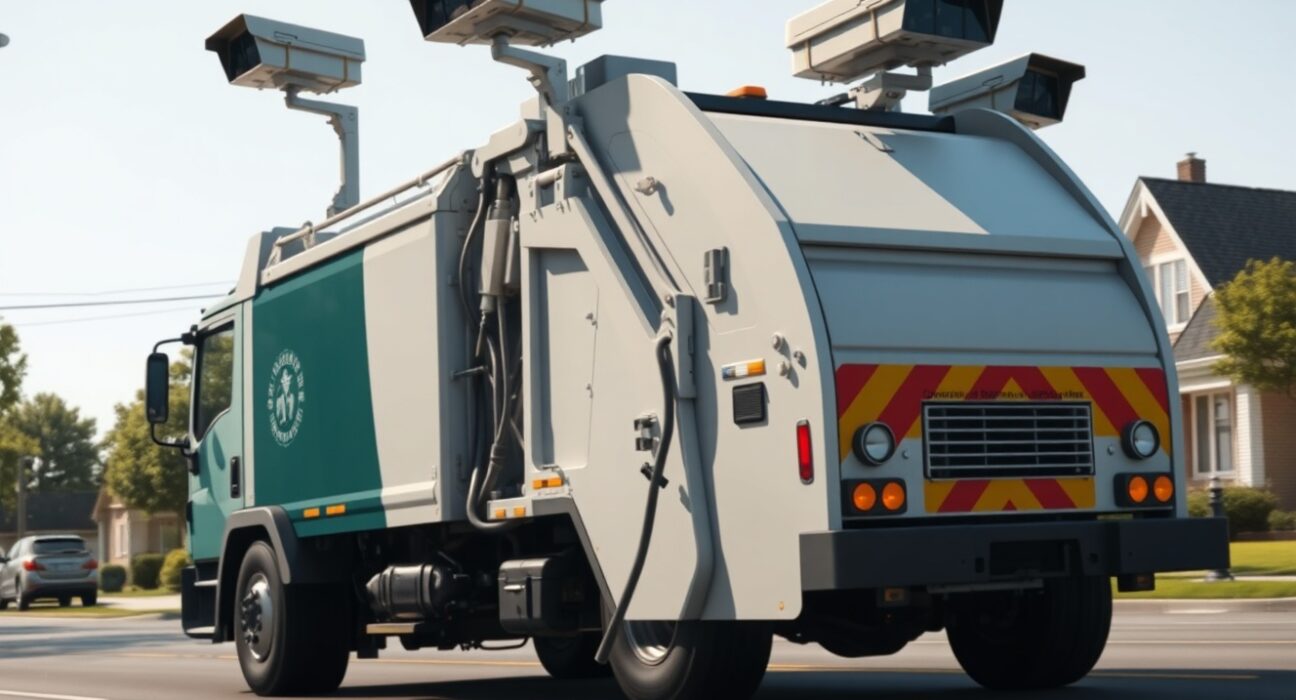
In a significant development for municipal technology, City Detect has successfully closed a $13 million Series A funding round to expand its artificial intelligence platform that helps cities monitor building health and neighborhood conditions. The San Francisco-based startup, founded in 2021, represents a growing trend of AI applications addressing urban infrastructure challenges through automated monitoring systems.
City Detect AI Transforms Urban Maintenance
City Detect employs advanced computer vision technology mounted on public service vehicles to capture and analyze urban environments systematically. The company’s innovative approach addresses what CEO Gavin Baum-Blake describes as persistent challenges with “urban blight and decay” that many municipalities struggle to manage effectively. Unlike traditional manual inspection methods, City Detect’s automated system can process thousands of properties weekly, compared to approximately fifty properties that human inspectors typically manage.
The technology operates through cameras installed on garbage trucks, street sweepers, and other municipal vehicles that regularly traverse city streets. As these vehicles complete their daily routes, they capture comprehensive visual data of surrounding buildings and public spaces. Subsequently, the system employs sophisticated AI algorithms to identify various issues including structural problems, graffiti, illegal dumping, litter accumulation, and maintenance violations.
Funding and Strategic Expansion Plans
The $13 million Series A round was led by Prudence Venture Capital, with participation from Zeal Capital Partners, Knoll Ventures, and Las Olas Venture Capital. This brings City Detect’s total funding to $15 million since its inception. According to company leadership, the new capital will primarily support engineering team expansion and technological advancement, particularly in storm damage detection capabilities.
Baum-Blake emphasized the funding will accelerate national expansion efforts across the United States. Currently operational in at least seventeen cities including Dallas and Miami, the company has demonstrated measurable efficiency improvements in municipal operations. “We are seeing huge efficiency gains across the departments that we work with,” Baum-Blake noted, highlighting reduced response times for addressing issues like illegal dumping and litter accumulation.
Privacy and Ethical AI Implementation
City Detect has implemented several privacy protection measures that distinguish its technology from conventional surveillance systems. The platform automatically blurs faces and license plates in all captured imagery, addressing growing public concerns about privacy in smart city applications. Furthermore, the company has developed proprietary algorithms capable of distinguishing between artistic street murals and vandalism, demonstrating nuanced understanding of urban aesthetics.
The company maintains SOC 2 Type II compliance, indicating independent certification of its privacy and data security protocols. Additionally, City Detect has published a formal Responsible AI policy developed in consultation with municipal partners. “We committed to this policy so that our local government partners could know what to expect from us,” Baum-Blake explained, referencing increasing demand for ethical AI frameworks in government contracting.
Market Position and Competitive Landscape
City Detect occupies a unique position in the govtech market, with Baum-Blake identifying the “status quo” of manual inspection processes as the company’s primary competition. The traditional approach to building code enforcement and urban maintenance typically involves complaint-driven systems or periodic manual inspections, both of which suffer from scalability limitations and inconsistent coverage.
| Metric | Traditional Inspection | City Detect System |
|---|---|---|
| Properties Inspected Weekly | ~50 | Thousands |
| Detection Method | Reactive/Complaint-Based | Proactive/Systematic |
| Data Collection | Manual Documentation | Automated Imaging |
| Issue Resolution Time | Weeks to Months | Days to Weeks |
The company’s patented technology offers several distinctive features:
- Automated priority assessment for detected issues
- Historical comparison capabilities to track deterioration over time
- Landlord accountability tools for property maintenance tracking
- Storm damage detection algorithms for rapid disaster response
Industry Context and Future Implications
City Detect’s funding announcement arrives during a period of increased investment in municipal AI solutions. The global smart city market is projected to exceed $1 trillion by 2025, with AI-powered infrastructure monitoring representing one of the fastest-growing segments. This growth reflects broader recognition that traditional urban management approaches require technological augmentation to address modern challenges.
The company’s membership in the GovAI Coalition positions it within a network of organizations committed to ethical AI implementation in government contexts. This affiliation provides access to best practices and standardization efforts that are increasingly important as municipalities develop procurement frameworks for AI technologies. Furthermore, City Detect’s focus on predictive analytics aligns with emerging trends in municipal operations, where data-driven decision-making is becoming standard practice.
Baum-Blake expressed particular enthusiasm about working with “technology-forward municipalities” that are embracing predictive AI models. The executive noted that early adopter cities have demonstrated improved outcomes across multiple metrics, including increased compliance through voluntary correction rather than punitive enforcement. This collaborative approach between technology providers and municipal governments represents an evolving model for public-private partnership in urban management.
Conclusion
City Detect’s successful $13 million Series A funding round signals growing investor confidence in AI solutions for urban infrastructure management. The company’s vision AI platform addresses genuine municipal challenges while incorporating essential privacy protections and ethical frameworks. As cities worldwide grapple with aging infrastructure and limited inspection resources, technologies like City Detect’s automated monitoring system offer scalable solutions for maintaining urban health and safety. The expansion of such AI-powered tools will likely transform how municipalities approach code enforcement, maintenance prioritization, and neighborhood quality management in coming years.
FAQs
Q1: What specific problems does City Detect’s AI technology identify?
City Detect’s computer vision system detects multiple urban issues including structural roof problems, storm damage, graffiti, illegal dumping, litter accumulation, and building maintenance violations. The technology can distinguish between artistic street murals and vandalism through advanced image analysis algorithms.
Q2: How does City Detect protect citizen privacy with its camera systems?
The platform automatically blurs all faces and license plates in captured imagery before analysis. The company maintains SOC 2 Type II compliance for data security and has published a formal Responsible AI policy governing ethical technology use.
Q3: Which cities currently use City Detect’s technology?
The company operates in at least seventeen municipalities across the United States, including Dallas and Miami. The new funding will support expansion to additional cities throughout the country.
Q4: How does City Detect’s approach differ from traditional building inspection methods?
Traditional methods typically involve manual inspections of approximately fifty properties weekly, while City Detect’s automated system can process thousands of properties in the same timeframe. The technology enables proactive, systematic monitoring rather than reactive, complaint-based approaches.
Q5: What will City Detect do with the $13 million in Series A funding?
The capital will primarily support engineering team expansion and technological advancement, particularly in storm damage detection capabilities. Funds will also accelerate national expansion efforts and further development of the company’s predictive AI models for urban monitoring.
Disclaimer: The information provided is not trading advice, Bitcoinworld.co.in holds no liability for any investments made based on the information provided on this page. We strongly recommend independent research and/or consultation with a qualified professional before making any investment decisions.
