

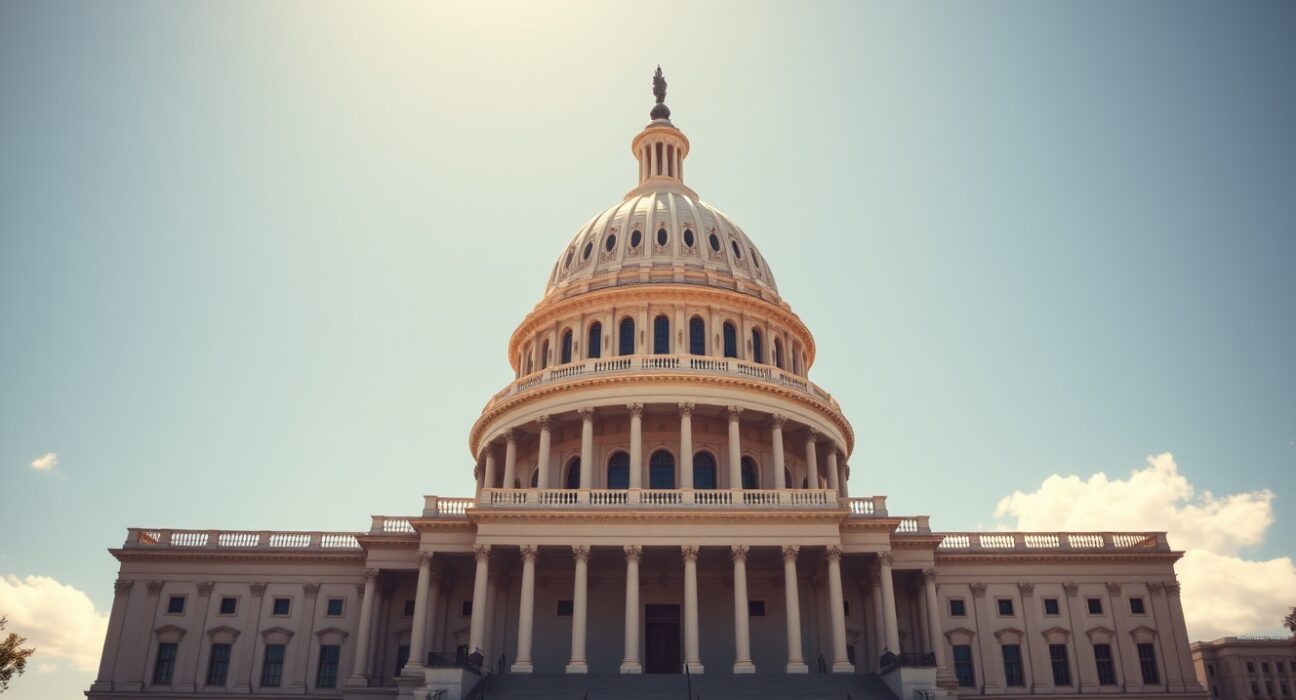
U.S. Senator Kevin Cramer, a Republican from North Dakota, has called on Congress to pass the Clarity Act, warning that the nation’s position as a global leader in cryptocurrency and blockchain innovation is at risk. In an interview with Fox Business, Cramer argued that the stakes extend far beyond Bitcoin, framing the debate as a fundamental question of who will control the future of global finance.
What is the Clarity Act?
The Clarity Act is a proposed piece of legislation aimed at establishing a clear federal regulatory framework for digital assets. Currently, the U.S. crypto industry operates under a patchwork of state laws and conflicting guidance from agencies like the Securities and Exchange Commission (SEC) and the Commodity Futures Trading Commission (CFTC). This uncertainty, Cramer contends, is driving innovation and investment overseas to jurisdictions with more predictable rules, such as the European Union, Singapore, and the United Arab Emirates.
The bill seeks to delineate which digital assets are securities and which are commodities, assign regulatory responsibilities, and provide consumer protections without stifling technological growth. While the exact text has not been finalized, Cramer emphasized that the legislation is designed to offer the regulatory certainty that businesses and investors have been demanding for years.
The Stakes for U.S. Leadership
Cramer’s warning comes at a critical juncture. The United States has long been the epicenter of financial innovation, from Wall Street to Silicon Valley. However, the rapid growth of the global crypto market—valued at over $2 trillion at its peak—has created a competitive landscape where nations are vying to attract blockchain talent, mining operations, and digital asset exchanges.
According to Cramer, the U.S. is already falling behind. He pointed to the European Union’s Markets in Crypto-Assets (MiCA) regulation, which came into effect in 2023, as an example of a comprehensive framework that provides clarity for businesses. Without similar action, he warned, the U.S. risks losing its competitive edge in a sector that could define the next era of financial infrastructure.
“This is not just about Bitcoin,” Cramer said in the interview. “It’s about who will control the future of finance. If we don’t act, other countries will set the standards, and we will be forced to follow.”
Why This Matters to Investors and Consumers
For everyday investors and crypto users, the lack of regulatory clarity has real-world consequences. It creates uncertainty about the legality of certain assets, complicates tax reporting, and leaves consumers vulnerable to fraud without clear recourse. A stable regulatory environment would not only protect users but also encourage institutional investment, which could stabilize markets and foster innovation in areas like decentralized finance (DeFi) and tokenized assets.
Furthermore, clear rules could help integrate digital assets into the traditional banking system, making it easier for consumers to buy, sell, and use cryptocurrencies for everyday transactions. Without such a framework, the U.S. risks pushing these activities into unregulated or offshore markets, reducing consumer protections and tax revenues.
Political and Industry Reactions
Cramer’s comments reflect a growing bipartisan concern in Washington. Several lawmakers from both parties have introduced bills aimed at regulating digital assets, though progress has been slow due to disagreements over the scope of SEC authority and investor protections. Industry groups, including the Blockchain Association and Coin Center, have praised Cramer’s efforts, urging Congress to prioritize the legislation.
However, critics argue that the Clarity Act, depending on its final form, could over-regulate the industry or favor established financial players over startups. Consumer advocacy groups have also called for stronger anti-fraud measures and protections against market manipulation.
Conclusion
Senator Cramer’s call to action highlights a pivotal moment for U.S. crypto policy. As other nations move forward with clear regulatory frameworks, the United States faces a choice: adapt and lead, or hesitate and follow. The outcome of the Clarity Act debate will likely shape the trajectory of the domestic digital asset industry for years to come, influencing everything from job creation to global financial competitiveness.
FAQs
Q1: What is the main goal of the Clarity Act?
The Clarity Act aims to establish a clear federal regulatory framework for digital assets, defining which are securities and which are commodities, and assigning oversight responsibilities to agencies like the SEC and CFTC.
Q2: Why does Senator Cramer believe the U.S. is losing crypto leadership?
Cramer argues that the lack of regulatory certainty is driving innovation and investment to countries with clearer rules, such as those in the European Union, threatening the U.S.’s historical role as a leader in financial innovation.
Q3: How would the Clarity Act affect everyday crypto users?
If passed, the act could provide clearer tax guidelines, stronger consumer protections against fraud, and easier integration of digital assets into the traditional banking system, making crypto use safer and more accessible.
Disclaimer: The information provided is not trading advice, Bitcoinworld.co.in holds no liability for any investments made based on the information provided on this page. We strongly recommend independent research and/or consultation with a qualified professional before making any investment decisions.
