
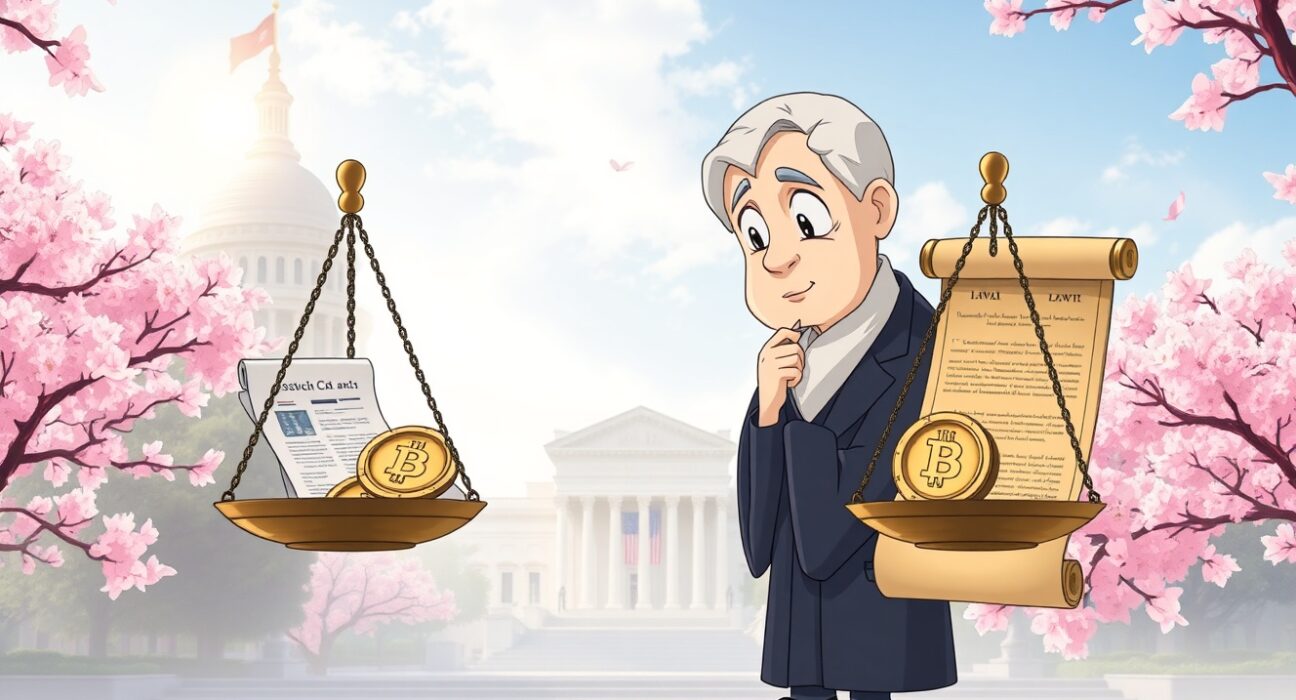
WASHINGTON, D.C., January 2025 – The recent postponement of a crucial crypto bill markup session represents more than a scheduling change. Investment bank Benchmark characterizes this crypto bill markup delay as a constructive opportunity for legislative refinement. This development allows lawmakers to address complex issues like stablecoin revenue and tokenized securities with greater precision.
Crypto Bill Markup Delay Creates Legislative Space
The Senate Banking Committee initially scheduled the markup session for January 15. However, committee members postponed the proceedings to allow additional deliberation time. Benchmark analysts immediately recognized the strategic value of this postponement. Consequently, they published their constructive opportunity assessment within hours of the announcement.
Markup sessions typically represent the final legislative stage before committee voting. During these sessions, lawmakers propose, debate, and vote on amendments. The crypto market structure bill addresses multiple regulatory gaps in digital asset oversight. Therefore, thorough preparation becomes essential for effective legislation.
Historical context reveals similar legislative delays often produced stronger outcomes. For instance, the Dodd-Frank Act underwent multiple postponements before passage. Each delay allowed for technical refinements that improved the final legislation. The current crypto bill markup delay follows this established legislative pattern.
Benchmark’s Constructive Opportunity Analysis
Benchmark’s financial analysts specialize in regulatory impact assessment. Their team includes former SEC officials and blockchain technology experts. This combination provides unique insight into legislative processes affecting digital assets. Their analysis emphasizes three key benefits from the postponement.
First, additional time allows for narrowing fundamental disagreements. Stablecoin revenue distribution represents one contentious issue. Various stakeholders propose different models for revenue allocation between federal and state authorities. The delay enables more stakeholder consultations and compromise development.
Second, clearer regulations for tokenized securities require careful drafting. Traditional securities laws often conflict with blockchain-based token characteristics. The extra time helps legislators create more precise definitions and compliance frameworks.
Third, international regulatory alignment becomes more achievable. The European Union recently implemented Markets in Crypto-Assets (MiCA) regulations. Asian jurisdictions have advanced their own digital asset frameworks. The delay allows U.S. lawmakers to consider these global developments.
Expert Perspectives on Legislative Timing
Financial regulation experts generally support measured legislative approaches. Dr. Eleanor Vance, former Federal Reserve economist, explains the importance of timing. “Rushed financial legislation often creates unintended consequences,” she notes. “The 2008 financial crisis response demonstrated both the necessity and challenges of rapid regulation.”
Blockchain industry representatives express cautious optimism about the delay. Maya Rodriguez, CEO of Digital Asset Alliance, emphasizes collaboration opportunities. “This additional time enables more productive dialogue between regulators and innovators,” Rodriguez states. “We can address technical complexities that might otherwise create compliance obstacles.”
The following table compares key provisions requiring additional deliberation:
| Provision Area | Key Issues | Potential Solutions |
|---|---|---|
| Stablecoin Revenue | Federal vs. state allocation, issuer requirements | Tiered system based on stablecoin size |
| Tokenized Securities | Definition clarity, custody requirements | Technology-neutral definitions |
| Market Structure | Exchange classification, investor protections | Hybrid regulatory approach |
Stablecoin Revenue Regulation Complexities
Stablecoin revenue distribution represents perhaps the most contentious issue. These digital assets maintain price stability by backing each token with reserves. Revenue generated from these reserves creates allocation challenges. Federal regulators seek oversight authority, while states emphasize their traditional financial regulatory roles.
The delay allows examination of various revenue models. Potential approaches include:
- Percentage-based allocation: Fixed percentages distributed between federal and state authorities
- Tiered system: Different allocations based on stablecoin market capitalization
- Dedicated fund: Revenue directed toward specific financial innovation or consumer protection programs
International precedents offer valuable guidance. The European approach centralizes oversight while allowing national implementation. Singapore’s model emphasizes coordination between monetary authority and financial regulators. U.S. lawmakers can analyze these systems during the extended timeline.
Tokenized Securities Framework Development
Tokenized securities represent traditional financial instruments recorded on blockchain networks. These digital assets combine characteristics of conventional securities with blockchain efficiency. Current U.S. securities regulations struggle with this hybrid nature. The Howey Test, established in 1946, provides limited guidance for blockchain applications.
The postponement enables more precise definition development. Key considerations include:
- Technology-neutral regulatory language
- Custody requirements for digital assets
- Secondary market trading protocols
- Investor disclosure standards
Market participants emphasize the importance of regulatory clarity. Clear rules reduce compliance uncertainty and encourage institutional participation. The additional deliberation time helps address these complex technical and legal questions.
Historical Parallels in Financial Regulation
Financial market history reveals patterns in regulatory development. The Securities Act of 1933 emerged from extensive congressional debate. Similarly, the Sarbanes-Oxley Act of 2002 followed prolonged deliberation after accounting scandals. Each major financial regulation required careful balancing between innovation and protection.
The current crypto bill markup delay continues this historical pattern. Digital assets represent unprecedented technological innovation. Therefore, regulatory frameworks must accommodate both current applications and future developments. The additional time supports this forward-looking approach.
Market data indicates institutional interest in clearer regulations. A recent Digital Asset Institutional Survey shows 78% of respondents cite regulatory clarity as their primary concern. Furthermore, 65% indicate they would increase digital asset allocations with improved regulatory frameworks.
Conclusion
The crypto bill markup delay represents a strategic opportunity for legislative refinement. Benchmark’s constructive opportunity assessment highlights the potential benefits of additional deliberation time. Stablecoin revenue distribution and tokenized securities regulation require careful consideration. Historical parallels demonstrate how legislative delays often produce stronger outcomes. The extended timeline allows for stakeholder consultation and technical refinement. Consequently, the final legislation may better balance innovation and protection. This crypto bill markup delay could ultimately strengthen the regulatory foundation for digital asset markets.
FAQs
Q1: What is a markup session in legislative terms?
A markup session is when a congressional committee debates, amends, and votes on proposed legislation before sending it to the full chamber for consideration.
Q2: Why is stablecoin revenue distribution controversial?
Stablecoin revenue distribution involves complex questions about federal versus state authority, with different stakeholders advocating for different allocation models based on their regulatory priorities.
Q3: How do tokenized securities differ from traditional securities?
Tokenized securities are traditional financial instruments recorded on blockchain networks, offering increased efficiency and transparency but creating regulatory challenges under existing securities laws.
Q4: What is Benchmark’s expertise in cryptocurrency regulation?
Benchmark employs financial analysts with backgrounds in regulatory agencies and blockchain technology, providing unique insight into how legislation affects digital asset markets.
Q5: How might this delay affect cryptocurrency markets?
While creating short-term uncertainty, the delay could produce clearer long-term regulations, potentially increasing institutional participation and market stability.
Disclaimer: The information provided is not trading advice, Bitcoinworld.co.in holds no liability for any investments made based on the information provided on this page. We strongly recommend independent research and/or consultation with a qualified professional before making any investment decisions.