
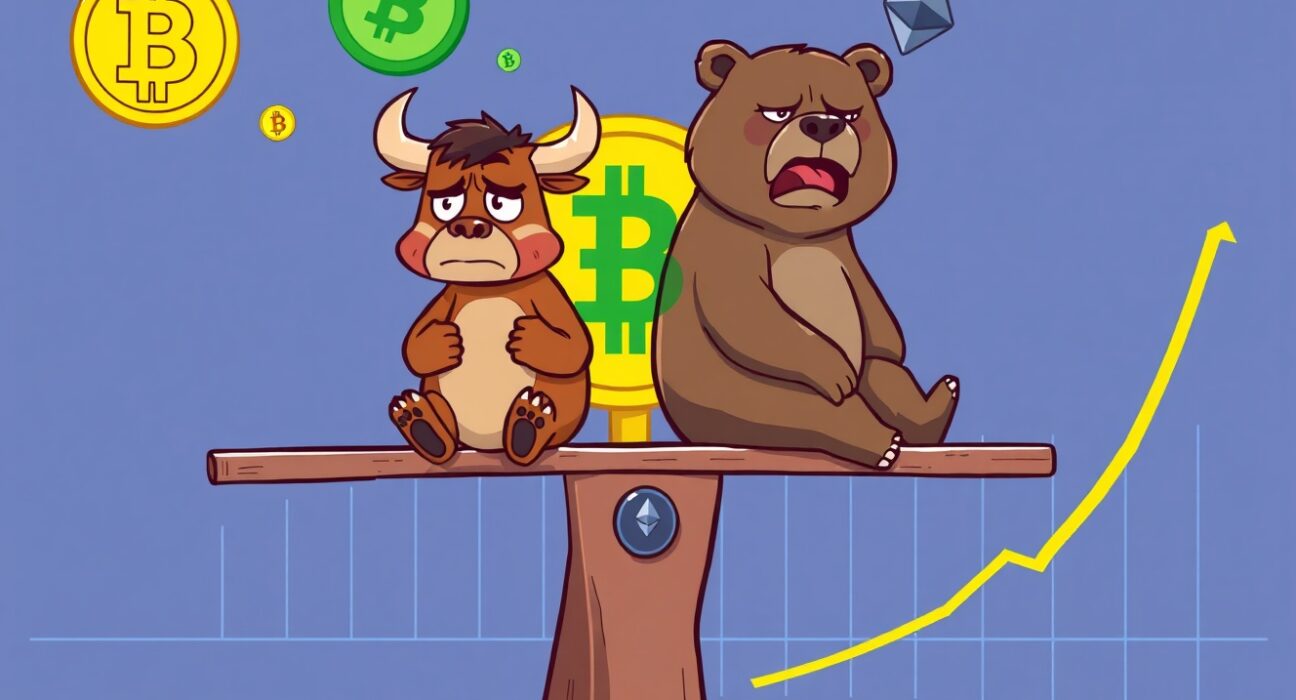
Global cryptocurrency markets entered a pronounced state of anxiety this week as the widely monitored Crypto Fear & Greed Index plunged to a reading of 25, officially categorizing current investor sentiment as ‘Extreme Fear’. This significant drop, reported by data provider Alternative.me, represents a critical shift in market psychology with potential implications for trading strategies and asset valuations across the digital asset ecosystem. The index’s descent into this deeply bearish territory often precedes heightened volatility and can signal potential inflection points for savvy market observers.
Understanding the Crypto Fear & Greed Index and Its 25 Reading
The Crypto Fear & Greed Index serves as a crucial behavioral finance tool, quantifying the emotional temperature of the cryptocurrency market on a scale from 0 to 100. A reading of 25, as recorded, sits firmly within the ‘Extreme Fear’ band, which spans from 0 to 25. This metric aggregates data from multiple sources to create a composite snapshot of crowd psychology. Consequently, it provides a counterpoint to purely fundamental or technical analysis. Market historians often note that sustained periods of extreme fear have, in the past, created contrarian buying opportunities, although this is never a guarantee of future performance.
Analysts emphasize that the index is a lagging indicator, reflecting sentiment that has already been expressed through market actions. The current reading suggests a market dominated by risk-off behavior, where the primary motivations are capital preservation and loss avoidance rather than growth speculation. This environment typically sees reduced trading volumes on decentralized exchanges and a flight to more stable assets, including stablecoins or even exits to fiat currency.
The Six Pillars of Market Sentiment
The index’s calculation is methodical and transparent, based on six weighted components. This multi-factor approach aims to prevent any single data point from skewing the overall sentiment score.
- Volatility (25%): This component measures the rate and magnitude of price changes, particularly for Bitcoin. Increased volatility, especially to the downside, directly feeds into fear.
- Market Momentum/Volume (25%): Trading volume and price momentum are analyzed. High volume during downturns exacerbates fear, while low volume can indicate apathy or caution.
- Social Media (15%): Sentiment analysis on platforms like Twitter and Reddit gauges public conversation tone, tracking mentions of keywords associated with fear or greed.
- Surveys (15%): Periodic polls of the retail and professional investor community provide direct insight into prevailing moods.
- Dominance (10%): Bitcoin’s share of the total cryptocurrency market cap is tracked. Rising dominance often signals a ‘flight to safety’ within crypto, as investors abandon altcoins for the perceived security of Bitcoin.
- Trends (10%): Search engine data, particularly Google Trends for terms like ‘Bitcoin crash’ or ‘crypto bull market,’ reveals public interest and underlying concern.
Historical Context and Comparative Analysis of Extreme Fear
To fully grasp the significance of a ’25’ reading, one must examine historical precedents. The index has entered the Extreme Fear zone numerous times throughout cryptocurrency’s volatile history, often correlating with major market drawdowns. For instance, readings near single digits were recorded during the March 2020 COVID-induced market crash and the cascading liquidations following the collapse of the Terra/Luna ecosystem in May 2022. Conversely, the index soared above 90 during the peak euphoria of late 2017 and again in early 2021.
The table below provides a quick reference for interpreting index ranges:
| Index Value Range | Sentiment Label | Typical Market Behavior |
|---|---|---|
| 0-25 | Extreme Fear | Panic selling, high volatility, negative news dominance. |
| 26-46 | Fear | Cautious selling, risk aversion, reduced speculation. |
| 47-54 | Neutral | Balanced buying and selling, consolidation phases. |
| 55-75 | Greed | Increasing FOMO, aggressive buying, bullish news flow. |
| 76-100 | Extreme Greed | Market tops, irrational exuberance, leverage buildup. |
Therefore, the current positioning indicates a market under significant stress. However, veteran traders often reference the adage, ‘Be fearful when others are greedy, and greedy when others are fearful,’ highlighting the contrarian signal such readings can provide. It is essential to remember that the index measures sentiment, not valuation, and extreme fear can persist or deepen if underlying market issues are not resolved.
Potential Market Impacts and Trader Psychology
A prolonged period of extreme fear, as signaled by the Crypto Fear & Greed Index, triggers specific and observable market mechanics. Firstly, funding rates for perpetual swap contracts on major exchanges often turn deeply negative. This means traders holding short positions pay those holding long positions, reflecting a overwhelming bearish bias in the derivatives market. Secondly, the put/call ratio for Bitcoin options tends to spike, showing more traders are buying downside protection (puts) than betting on rallies (calls).
Furthermore, on-chain data frequently shows an increase in coins moving from ‘hot’ exchange wallets to ‘cold’ long-term storage. This movement suggests that despite the fear, long-term holders (often called ‘HODLers’) are using the price drop as an accumulation opportunity, withdrawing coins to secure custody. This divergence between short-term trader panic and long-term holder conviction is a key dynamic analysts watch closely.
Expert Perspectives on Sentiment Indicators
Financial psychologists note that sentiment indices like this one are powerful because they make the often-irrational emotion of the crowd visible and quantifiable. ‘Markets are driven by two primary emotions: fear and greed,’ explains a behavioral finance researcher from a major university. ‘An index that captures this in real-time is invaluable for understanding market phases. Extreme readings often mark emotional exhaustion, which can be a precursor to a change in trend, though timing that change remains the great challenge.’
Portfolio managers often incorporate sentiment data into a broader risk-management framework. They might use an Extreme Fear reading not as a standalone buy signal, but as a condition that prompts them to check other metrics like network fundamentals, miner health, and macroeconomic correlations. If those other factors are stable or improving while sentiment is poor, it may strengthen a case for strategic, phased accumulation.
Conclusion
The Crypto Fear & Greed Index’s decline to a reading of 25 provides a clear, data-driven confirmation that extreme fear has gripped the cryptocurrency market. This sentiment shift, driven by volatility, trading patterns, and social discourse, offers critical context for the current price action. While historically such depths of pessimism have sometimes preceded market recoveries, they also underscore the high-stress environment for participants. Investors and traders are advised to consider this sentiment data as one crucial piece of a much larger analytical puzzle, combining it with rigorous fundamental and technical research. The index’s journey out of the ‘Extreme Fear’ zone will be a key narrative to watch, as it will signal a potential restoration of market confidence and risk appetite.
FAQs
Q1: What does a Crypto Fear & Greed Index score of 25 mean?
A score of 25 means the index is in the ‘Extreme Fear’ zone (0-25). This indicates that current market data and sentiment analysis point to widespread panic, risk aversion, and negative outlook among cryptocurrency investors.
Q2: Who creates the Crypto Fear & Greed Index and how often is it updated?
The index is created and published by Alternative.me. It is updated daily, providing a near-real-time gauge of market sentiment based on the previous 24 hours of data.
Q3: Is the Fear & Greed Index a reliable buy or sell signal?
While not a direct timing signal, it is a reliable sentiment indicator. Extreme readings (like 25) often highlight maximum emotional stress, which contrarian investors view as a potential area for opportunity, but it should never be used in isolation without other analysis.
Q4: Has the index been this low before?
Yes. The index has reached similar or lower levels during major crypto market crises, such as the March 2020 global market crash and the May 2022 Terra/Luna collapse. These periods were marked by severe price declines and high volatility.
Q5: Does the index only measure sentiment for Bitcoin?
Primarily, yes. The index’s components (volatility, dominance, search trends) are heavily weighted toward Bitcoin due to its market leadership. However, since Bitcoin sentiment heavily influences the broader crypto market, the index is generally applied to the entire asset class.
Disclaimer: The information provided is not trading advice, Bitcoinworld.co.in holds no liability for any investments made based on the information provided on this page. We strongly recommend independent research and/or consultation with a qualified professional before making any investment decisions.