

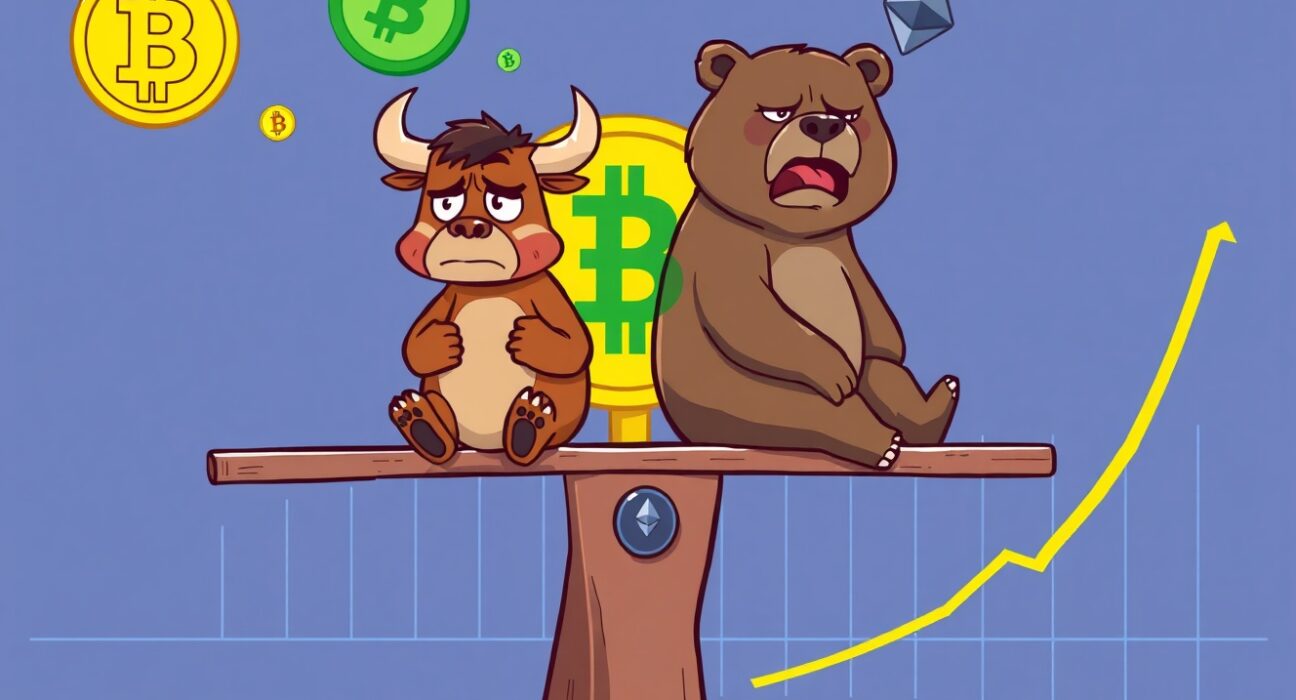
Global cryptocurrency markets continue to exhibit profound caution, as evidenced by the latest reading from a key sentiment indicator. The Crypto Fear & Greed Index, a widely monitored barometer of investor psychology, has inched upward to a score of 25. Despite this minor gain, the index firmly remains in the “Extreme Fear” territory, highlighting the persistent anxiety clouding digital asset investments. This reading, recorded on April 10, 2025, follows a period of significant market turbulence and regulatory scrutiny worldwide.
Decoding the Crypto Fear & Greed Index Score of 25
The Crypto Fear & Greed Index serves as a crucial thermometer for market emotion. Developed by data provider Alternative, it quantifies sentiment on a scale from 0 to 100. A score of 0 represents maximum fear, while 100 signifies unbridled greed. The current score of 25, though a one-point improvement from the previous day, sits deep within the red zone defined as “Extreme Fear.” This metric is not a simple survey; it is a composite index derived from multiple market data points. The calculation incorporates six core components, each weighted to reflect its influence on overall sentiment.
- Volatility (25%): Measures price swings, with high volatility often correlating with fear.
- Market Volume (25%): Analyzes trading activity; suppressed volume can indicate investor hesitation.
- Social Media (15%): Tracks sentiment and volume of discussion on platforms like Twitter and Reddit.
- Surveys (15%): Incorporates data from periodic polls of market participants.
- Dominance (10%): Assesses Bitcoin’s share of the total crypto market cap.
- Trends (10%): Evaluates search interest via platforms like Google Trends.
Therefore, the index provides a multi-faceted, data-driven snapshot of collective market psychology.
Historical Context and Market Impact of Extreme Fear
Understanding the significance of a score of 25 requires examining historical patterns. The index has fluctuated dramatically since its inception. For instance, it plummeted to single digits during the market capitulation events of late 2022. Conversely, it soared above 80 during the bull market peaks of 2021. Periods of “Extreme Fear” have historically presented complex dynamics for investors. On one hand, they often coincide with market bottoms or consolidation phases, potentially signaling a buying opportunity for contrarian investors. On the other hand, prolonged fear can lead to reduced liquidity, suppressed asset prices, and a general slowdown in ecosystem development and investment.
| Date | Index Score | Sentiment | Key Market Event |
|---|---|---|---|
| Nov 2021 | 84 | Extreme Greed | Bitcoin All-Time High (~$69,000) |
| Jun 2022 | 6 | Extreme Fear | Terra/LUNA Collapse Aftermath |
| Jan 2023 | 31 | Fear | Market Recovery Begins |
| Apr 2025 | 25 | Extreme Fear | Current Reading |
Market analysts frequently compare current readings to these historical benchmarks to gauge relative sentiment.
Expert Analysis on the Current Sentiment Landscape
Financial analysts point to several concurrent factors sustaining the extreme fear sentiment. Firstly, macroeconomic uncertainty regarding interest rates and inflation continues to pressure risk assets globally. Secondly, the regulatory environment for digital assets remains in flux across major economies like the United States and the European Union, creating hesitation among institutional investors. Thirdly, on-chain data shows a reduction in active addresses and network activity for several major blockchains, indicating lower retail participation. Experts from firms like Glassnode and CoinMetrics often correlate these on-chain metrics with sentiment index readings to build a more complete picture. They note that while fear dominates, the slight uptick to 25 could suggest the initial phase of panic selling has subsided, potentially giving way to a period of cautious accumulation or sideways movement.
The Role of Bitcoin Dominance in Sentiment Calculation
Bitcoin’s market cap dominance, accounting for 10% of the index, plays a pivotal role. Currently, a high dominance figure often reflects a “flight to safety” within crypto, where investors move capital from altcoins into Bitcoin, perceived as a more established store of value during turmoil. This behavior directly feeds into the fear metric. Conversely, when dominance falls and altcoins gain market share, it typically signals higher risk appetite and greed. The interplay between Bitcoin’s price stability, its dominance ratio, and the broader index score is a critical relationship for traders to monitor. Recent data shows dominance holding at elevated levels, reinforcing the risk-off narrative captured by the Extreme Fear reading.
Conclusion
The Crypto Fear & Greed Index reading of 25 offers a clear, quantitative measure of the prevailing market mood. It confirms that despite a marginal daily improvement, extreme fear continues to govern cryptocurrency investor sentiment. This environment, shaped by macro pressures, regulatory developments, and technical market factors, presents both challenges and opportunities. Historically, such periods have preceded significant market inflection points. For market participants, this index serves as a vital tool for contextualizing price action within the broader spectrum of human emotion and market structure, reminding everyone that data-driven analysis is crucial in navigating the volatile crypto landscape.
FAQs
Q1: What does a Crypto Fear & Greed Index score of 25 mean?
It indicates the market is in a state of “Extreme Fear.” The scale runs from 0 (maximum fear) to 100 (maximum greed), placing 25 deep within the fear zone, suggesting high investor anxiety and risk aversion.
Q2: Who creates the Crypto Fear & Greed Index and how is it calculated?
Data provider Alternative.me calculates the index. It uses six weighted factors: volatility (25%), trading volume (25%), social media (15%), surveys (15%), Bitcoin dominance (10%), and search trends (10%).
Q3: Is extreme fear always bad for cryptocurrency investors?
Not necessarily. While it indicates negative sentiment and often lower prices, extreme fear has historically sometimes marked potential buying opportunities for long-term investors, as prices may be undervalued relative to future potential.
Q4: How often does the Crypto Fear & Greed Index update?
The index updates daily, providing a near real-time snapshot of shifting market sentiment based on the previous 24 hours of data.
Q5: Can the index predict future Bitcoin or crypto prices?
The index is a sentiment indicator, not a direct price predictor. It shows current market emotion, which can be a contrarian signal at extremes. However, prices are influenced by many other fundamental and technical factors beyond sentiment alone.
Disclaimer: The information provided is not trading advice, Bitcoinworld.co.in holds no liability for any investments made based on the information provided on this page. We strongly recommend independent research and/or consultation with a qualified professional before making any investment decisions.
