
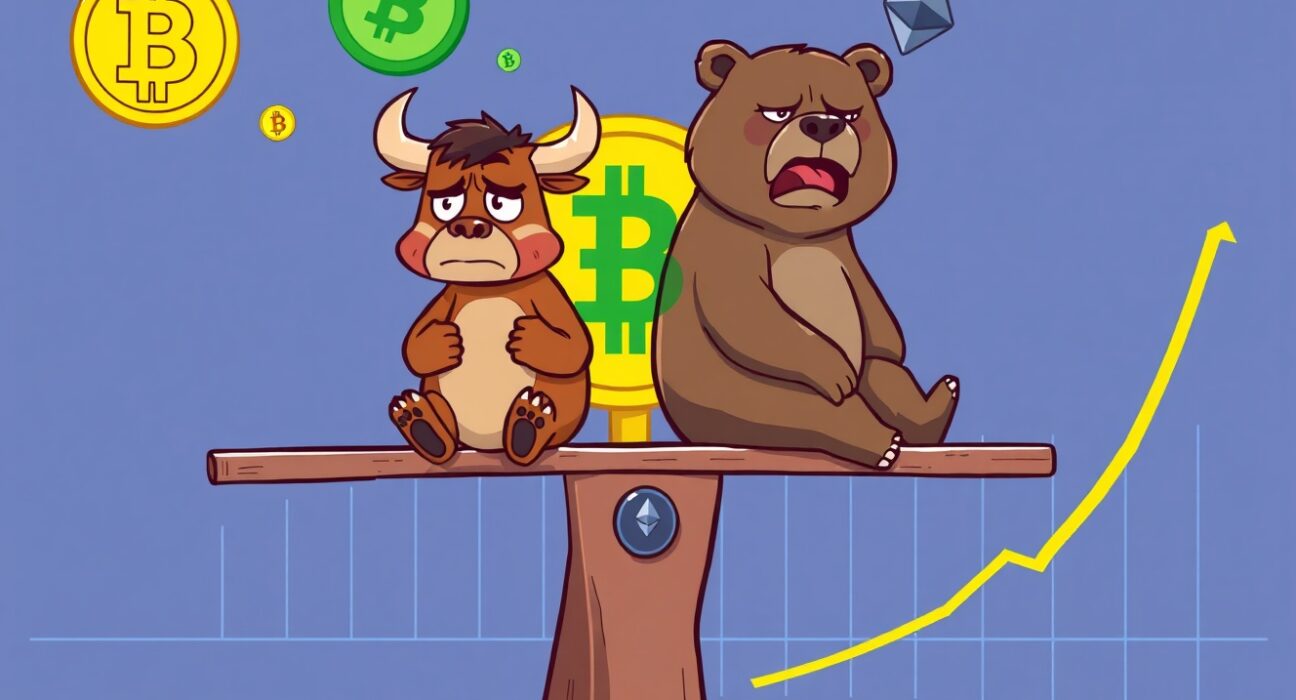
The cryptocurrency market is currently gripped by a profound sense of apprehension, as evidenced by the Crypto Fear & Greed Index registering a reading of 12. This metric, a crucial barometer of investor psychology, indicates the market remains entrenched in a state of ‘Extreme Fear,’ having risen only one point from the previous day. Such persistently low readings historically correlate with periods of significant price stress and heightened volatility across digital asset markets.
Decoding the Crypto Fear & Greed Index
Alternative.me’s Crypto Fear & Greed Index provides a quantifiable snapshot of market sentiment. The index operates on a scale from 0 to 100. Consequently, a reading of 0 signifies maximum fear, while 100 represents maximum greed. The current value of 12 sits alarmingly close to the extreme fear threshold. This tool synthesizes data from multiple sources to avoid reliance on any single metric.
The index’s calculation employs a weighted model based on six core components. Market volatility and current trading volume each contribute 25% to the final score. Social media sentiment, measured through social media mentions, and surveys of market participants each account for 15%. Finally, Bitcoin’s market dominance and trends in Google search volume for cryptocurrency terms each make up the remaining 10%.
This multi-faceted approach aims to capture both on-chain behavior and broader public interest. For instance, high volatility combined with surging search volume might indicate panic selling. Conversely, low volatility with rising social media buzz could signal growing speculative interest.
Historical Context of Extreme Fear Readings
Readings in the ‘Extreme Fear’ zone, typically below 20, are relatively rare but carry significant historical weight. They often coincide with major market capitulation events. For example, the index plunged to single digits during the market troughs following the 2018 bear market and the COVID-19-induced crash of March 2020. Subsequently, these periods frequently preceded substantial market recoveries, though the timing was unpredictable.
A comparative analysis of recent index behavior reveals telling patterns. The table below shows key sentiment readings from notable market events:
| Period | Fear & Greed Index Reading | Market Context |
|---|---|---|
| November 2021 | 84 (Extreme Greed) | Bitcoin’s all-time high near $69,000 |
| June 2022 | 6 (Extreme Fear) | Collapse of Terra/LUNA and Celsius |
| January 2023 | 31 (Fear) | Market beginning recovery from FTX collapse |
| Current (2025) | 12 (Extreme Fear) | Persistent macroeconomic uncertainty |
This historical perspective is crucial for investors. While extreme fear signals high risk, it also suggests potential opportunity for those with a long-term horizon. However, the index is a sentiment indicator, not a price predictor.
Expert Analysis on Current Market Drivers
Market analysts point to a confluence of factors sustaining the current fearful sentiment. Firstly, macroeconomic headwinds, including persistent inflation concerns and restrictive monetary policy from central banks globally, continue to pressure risk assets like cryptocurrency. Secondly, regulatory developments in major jurisdictions remain a source of uncertainty for institutional and retail investors alike.
Furthermore, on-chain data often reflects this sentiment. Analysts observe patterns such as increased movement of coins to exchanges, which can signal selling intent, alongside a decline in active addresses for certain networks. The dominance of Bitcoin often rises during fearful periods as investors flee to the perceived relative safety of the largest cryptocurrency.
Industry commentators frequently describe the Fear & Greed Index as a contrarian indicator. Therefore, sustained periods of extreme fear can sometimes foreshadow a market bottom, though this is never guaranteed. The key lesson is that mass psychology often drives markets to overshoot in both directions.
Practical Implications for Crypto Investors
For participants in the digital asset space, understanding this index is vital for risk management. A reading of 12 suggests several actionable insights:
- Heightened Volatility: Investors should prepare for wider price swings and potential flash crashes.
- Emotional Discipline: This environment tests investor psychology, making disciplined strategy adherence essential.
- Due Diligence: Market stress can expose fundamental weaknesses in projects, highlighting the need for rigorous research.
Seasoned investors often use such periods for strategic portfolio reviews. They may assess asset allocation or consider dollar-cost averaging into positions. However, the index should never be used in isolation. It must be combined with fundamental and technical analysis for informed decision-making.
Conclusion
The Crypto Fear & Greed Index reading of 12 serves as a stark reminder of the prevailing negative sentiment engulfing the cryptocurrency market. This state of extreme fear, derived from volatility, volume, social media, and search data, reflects deep-seated investor anxiety. Historically, such extremes have marked pivotal moments, though they offer no certainty about short-term price direction. Ultimately, the index provides a valuable, data-driven gauge of market psychology. Investors should interpret it as one tool among many, using its signal to inform a cautious, research-driven approach during this period of significant market stress.
FAQs
Q1: What does a Crypto Fear & Greed Index score of 12 mean?
A score of 12 indicates the market is experiencing ‘Extreme Fear.’ This sentiment is derived from analyzing volatility, trading volume, social media, surveys, Bitcoin dominance, and search trends. It suggests widespread pessimism and risk aversion among investors.
Q2: Who creates the Crypto Fear & Greed Index and how often is it updated?
The index is created and maintained by the data provider Alternative.me. It updates the reading daily, providing a near real-time snapshot of shifting market sentiment based on its proprietary multi-factor model.
Q3: Is the Fear & Greed Index a reliable buy or sell signal?
No, the index is not a direct trading signal. It is a sentiment indicator. While extreme readings can signal potential market turning points, they do not guarantee price direction. It should be used for context alongside other fundamental and technical analyses.
Q4: Has the index ever been lower than 12?
Yes. The index has reached single-digit readings during severe market crises, such as the collapse of the Terra ecosystem in mid-2022, when it hit 6. These periods represent peak fear and maximum psychological stress in the market.
Q5: Why does Bitcoin’s market dominance affect the Fear & Greed Index?
Bitcoin’s market dominance—its share of the total cryptocurrency market capitalization—is included because a rising dominance often occurs during fearful markets. Investors tend to sell riskier altcoins and may flock to Bitcoin, perceived as a more established ‘digital gold,’ during times of uncertainty.
Disclaimer: The information provided is not trading advice, Bitcoinworld.co.in holds no liability for any investments made based on the information provided on this page. We strongly recommend independent research and/or consultation with a qualified professional before making any investment decisions.