
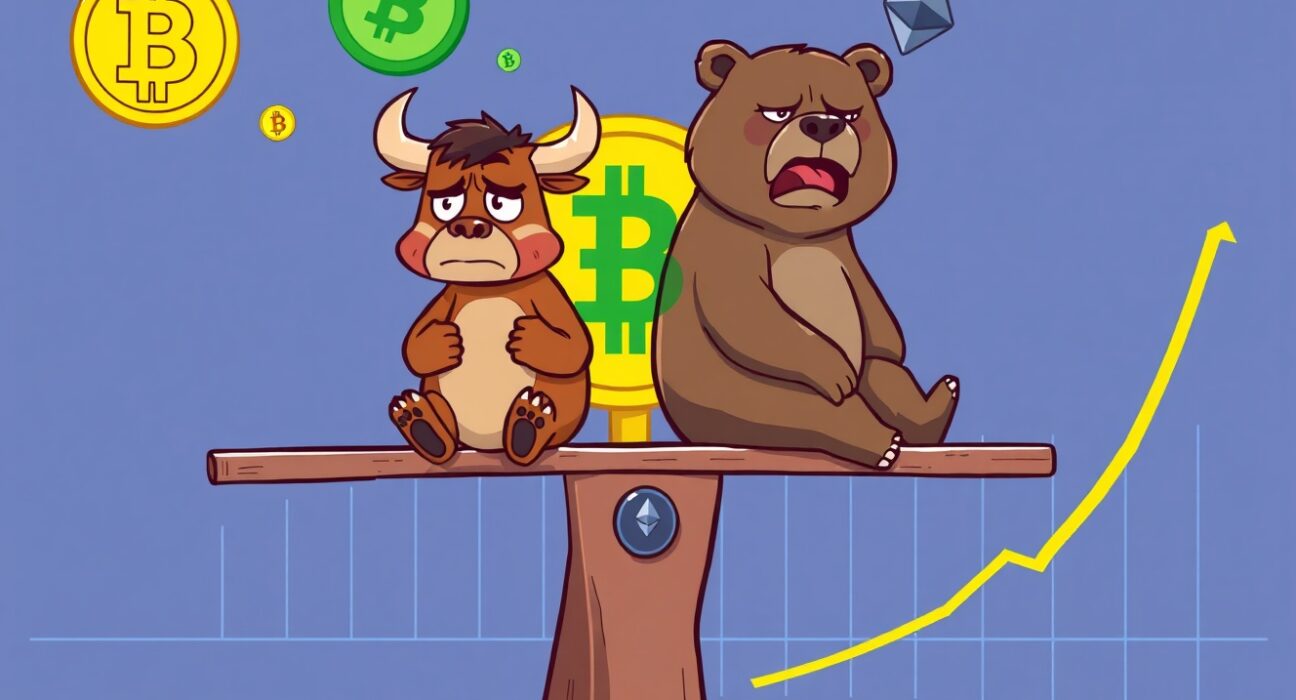
Global cryptocurrency markets entered a state of pronounced anxiety this week as the widely monitored Crypto Fear & Greed Index plunged to a critical reading of 8, signaling extreme fear among investors. This significant drop, recorded on April 10, 2025, represents one of the lowest readings in the benchmark’s history and underscores the prevailing negative sentiment across digital asset markets. Market analysts immediately scrutinized the data from Alternative, the index’s compiler, to understand the multifaceted pressures driving this pervasive caution.
Crypto Fear & Greed Index Reaches Extreme Fear Territory
The Crypto Fear & Greed Index serves as a crucial barometer for overall market sentiment. It operates on a scale from 0 to 100. Consequently, a score of 0 indicates maximum fear, while 100 represents extreme greed. The current reading of 8 sits deep within the “Extreme Fear” zone, a classification reserved for scores below 25. This metric aggregates data from six distinct sources to provide a holistic view. For instance, market volatility and trading volume each contribute 25% to the final score. Additionally, social media sentiment and survey data each account for 15%. Finally, Bitcoin’s dominance share and Google search trends each provide the remaining 10% of the weighting.
This multi-factor approach prevents any single data point from skewing the results. Therefore, the current low score reflects a broad-based retreat in optimism. Historically, periods of extreme fear have often preceded market bottoms, presenting potential opportunities for contrarian investors. However, they also frequently correlate with heightened volatility and significant price corrections across major cryptocurrencies like Bitcoin and Ethereum.
Analyzing the Drivers Behind the Market Pessimism
Several concurrent factors have converged to depress the Crypto Fear & Greed Index to its current level. Firstly, increased regulatory scrutiny from multiple global jurisdictions has introduced uncertainty. Secondly, macroeconomic pressures, including persistent inflation and rising interest rates, have reduced risk appetite among institutional investors. Thirdly, a noticeable decline in trading volume suggests a withdrawal of capital and a wait-and-see approach from major market participants.
The 25% weighting for volatility has been a major contributor to the low score. Recent weeks have seen larger-than-average daily price swings in Bitcoin and other major altcoins. This instability discourages new investment and can trigger automated selling from algorithmic trading systems. Meanwhile, social media analysis reveals a significant shift in tone. Conversations on platforms like X (formerly Twitter) and Reddit show a marked increase in cautionary language and bearish predictions compared to just one month prior.
Historical Context and Expert Perspectives
To understand the gravity of an 8 reading, historical comparison is essential. The index previously reached similar depths during major market events. For example, it fell to single digits during the COVID-19 market crash of March 2020 and again following the collapse of several crypto lending platforms in 2022. Each period was characterized by panic selling and a liquidity crunch. However, market structure today differs significantly, with more robust institutional infrastructure and derivative markets.
Financial analysts emphasize that the index is a sentiment tool, not a direct price predictor. “Extreme fear readings can indicate capitulation, which is often a necessary phase before a sustainable recovery can begin,” notes a market strategist from a major financial data firm. “The key is to watch for a divergence where prices stabilize or begin to rise while sentiment remains low. That can signal a shift in momentum.” This perspective highlights the index’s role in identifying potential market inflection points rather than dictating future movement.
The Technical Composition and Calculation Methodology
The transparency of the index’s calculation lends it credibility. The following table breaks down its six components:
| Component | Weighting | Description |
|---|---|---|
| Volatility | 25% | Measures current price swings against historical averages. |
| Market Volume | 25% | Analyzes trading activity and momentum. |
| Social Media | 15% | Scans sentiment on major platforms for bullish/bearish buzz. |
| Surveys | 15% | Aggregates data from periodic polls of market participants. |
| BTC Dominance | 10% | Tracks Bitcoin’s share of total crypto market capitalization. |
| Google Trends | 10% | Monitors search volume for specific crypto-related terms. |
This methodology ensures the index captures both on-chain and off-chain behavioral data. A low score across multiple components, as seen currently, indicates a synchronized downturn in sentiment. For instance, declining Google search interest often correlates with reduced retail investor engagement. Similarly, falling Bitcoin dominance can signal a “flight to safety” within the crypto ecosystem or a loss of confidence in the leading asset.
Potential Market Impacts and Trajectory
The immediate impact of an extreme fear reading typically manifests in several ways. Trading activity often becomes more reactive to negative headlines. Furthermore, leveraged positions may face increased liquidation risk during volatile spikes. Market participants also tend to favor stablecoins and cash holdings over volatile crypto assets. This behavior can create a self-reinforcing cycle of low volume and high volatility, making recovery challenging.
However, seasoned investors monitor these conditions for signs of change. Key indicators to watch include:
- Exchange Outflows: Large movements of assets to private wallets can signal long-term holding.
- Derivatives Data: Shifts in funding rates and open interest can show changing trader positioning.
- On-chain Activity: Metrics like network growth and active addresses provide fundamental health checks.
Ultimately, the Crypto Fear & Greed Index provides a valuable snapshot of collective psychology. It does not operate in a vacuum but interacts with broader financial markets and global economic conditions. The path from extreme fear back to neutrality or greed requires a catalyst, often in the form of positive regulatory clarity, institutional adoption news, or a shift in macroeconomic policy.
Conclusion
The Crypto Fear & Greed Index reading of 8 delivers a clear, data-driven message of extreme fear permeating cryptocurrency markets. This sentiment stems from a combination of regulatory, macroeconomic, and technical factors measured across volatility, volume, and social discourse. While historically such depths have marked periods of significant stress, they have also occasionally preceded major market recoveries. Investors and analysts will now watch closely for stabilization in the index’s underlying components as the first sign of sentiment improvement. The index remains an essential tool for gauging the market’s emotional temperature amidst complex and rapidly evolving digital asset landscapes.
FAQs
Q1: What does a Crypto Fear & Greed Index score of 8 mean?
A score of 8 falls into the “Extreme Fear” classification. It indicates that current market data from volatility, volume, social media, surveys, Bitcoin dominance, and search trends collectively reflect maximum pessimism and risk aversion among cryptocurrency investors.
Q2: Who creates the Crypto Fear & Greed Index and how often is it updated?
The data provider Alternative.me compiles and publishes the index. It updates the reading daily, providing a near real-time gauge of shifting market sentiment based on its multi-factor model.
Q3: Has the index been this low before?
Yes, the index has reached single-digit “Extreme Fear” readings during previous major market crises, including the March 2020 global market crash and the crypto market contagion events of 2022. Each period reflected widespread panic and selling pressure.
Q4: Is the Crypto Fear & Greed Index a reliable predictor of future Bitcoin price?
The index measures current sentiment, not future price. It is a contrarian indicator often used to identify potential market extremes. Historically, prolonged periods of extreme fear have sometimes coincided with market bottoms, but it is not a direct timing tool for investment decisions.
Q5: What would need to happen for the index to move out of “Extreme Fear”?
A sustained improvement would require positive shifts in its core components. This could include reduced price volatility, increased trading volume with positive momentum, more bullish social media discourse, and rising Bitcoin dominance or search interest, often driven by clarifying regulatory news or positive macroeconomic developments.
Disclaimer: The information provided is not trading advice, Bitcoinworld.co.in holds no liability for any investments made based on the information provided on this page. We strongly recommend independent research and/or consultation with a qualified professional before making any investment decisions.