

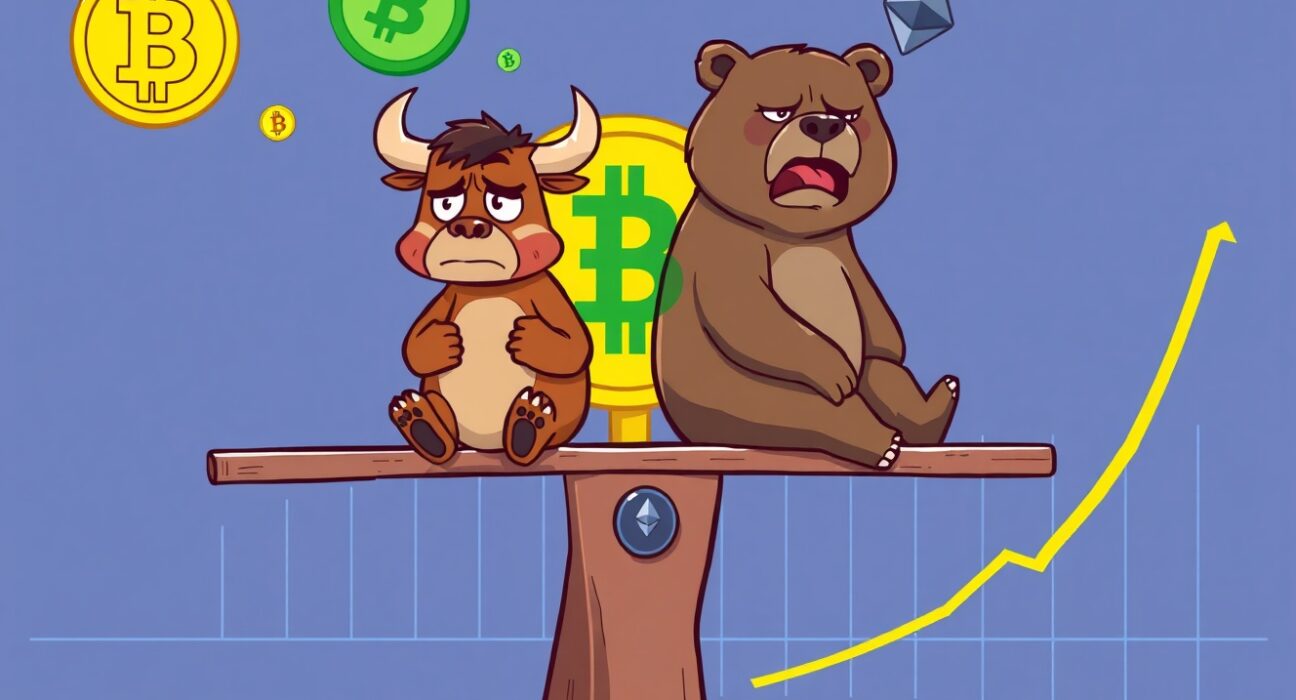
The cryptocurrency market sentiment gauge, a critical barometer for investor psychology, has plunged to a level of extreme fear, with the Crypto Fear & Greed Index hitting 10 this week. This significant drop from the previous day’s reading signals deepening anxiety among market participants globally. The index, a composite measure developed by data provider Alternative, now sits firmly in its lowest possible territory, historically a zone that precedes both continued sell-offs and potential market inflection points.
Crypto Fear & Greed Index Drops to Extreme Fear Territory
The Crypto Fear & Greed Index serves as a quantified snapshot of market emotion. It operates on a scale from 0 to 100, where 0 represents maximum fear and 100 signifies extreme greed. Consequently, a reading of 10 places the market deep within the “Extreme Fear” classification. This measurement is not a simple survey. Instead, it aggregates data from six distinct market dimensions to calculate its daily score.
Analysts compile the index using a weighted formula. This methodology ensures a multi-faceted view of sentiment. The calculation breaks down as follows:
- Volatility (25%): This component measures current price swings against historical averages. Notably, heightened volatility often correlates with fear.
- Market Volume (25%): Trading volume, especially during downtrends, indicates the intensity of selling pressure.
- Social Media (15%): Sentiment analysis of crypto-related discussions on platforms like Twitter and Reddit.
- Surveys (15%): Direct polling of market participants provides qualitative sentiment data.
- Bitcoin Dominance (10%): Bitcoin’s share of the total crypto market cap. Rising dominance can signal a “flight to safety.”
- Trends (10%): Analysis of Google search volume for cryptocurrency-related terms.
The recent four-point decline to 10 suggests a simultaneous deterioration across several of these metrics. Market data from the past week shows increased selling volume alongside sharp price corrections in major assets like Bitcoin and Ethereum. Furthermore, social media analysis reveals a notable shift toward negative commentary and uncertainty.
Historical Context and Market Sentiment Analysis
Extreme fear readings have occurred at pivotal moments in cryptocurrency history. For instance, the index touched similar lows during the March 2020 COVID-19 market crash and the late 2022 FTX collapse. These periods were characterized by massive liquidations, contagion fears, and a broad loss of investor confidence. However, they also frequently marked cyclical bottoms, after which sustained recoveries began.
A comparative analysis of index levels and subsequent market performance reveals an interesting pattern. Periods of extreme fear often create conditions for contrarian buying opportunities. This concept, known as “buying when there’s blood in the streets,” is a common strategy among long-term value investors. The table below shows notable historical lows for the index:
| Date | Index Reading | Market Context |
|---|---|---|
| March 2020 | 8 | Global Pandemic Liquidity Crisis |
| June 2022 | 6 | Terra/LUNA Collapse Aftermath |
| November 2022 | 6 | FTX Bankruptcy |
| January 2023 | 25 | Post-FTX Contagion Fears |
It is crucial to understand that the index is a lagging indicator. It reflects sentiment that has already manifested in market prices and behavior. Therefore, while a reading of 10 confirms pervasive fear, it does not by itself predict the timing or direction of the next market move. Other fundamental factors, including macroeconomic interest rate policy, regulatory developments, and blockchain adoption metrics, must also inform any comprehensive analysis.
Expert Insights on Sentiment Extremes
Market psychologists and behavioral finance experts often reference sentiment indicators like the Fear & Greed Index. They note that crowd psychology moves in cycles between euphoria and despair. When sentiment reaches an extreme, the probability of a mean-reverting move increases. However, experts caution that “extreme” can become more extreme during black swan events or prolonged bear markets.
Data from on-chain analytics firms provides a complementary view. Metrics such as exchange net flows, dormant coin movement, and realized profit/loss ratios show whether the fear is driving actual capitulation. For example, large volumes of Bitcoin moving from private wallets to exchanges can indicate readiness to sell. Conversely, accumulation by long-term holders during fear periods can signal underlying strength.
The current macroeconomic backdrop adds another layer of complexity. Rising interest rates, persistent inflation concerns, and geopolitical tensions have created a risk-off environment across all asset classes. Cryptocurrencies, often perceived as higher-risk assets, typically experience amplified selling pressure in such conditions. This macro overlay explains why the current fear may be more entrenched than during isolated crypto-specific crises.
Impact on Different Market Participants
The extreme fear reading affects various investor groups differently. Retail investors, who are often more influenced by sentiment, may panic sell or cease dollar-cost averaging. Institutional investors, meanwhile, may use quantitative models that incorporate sentiment data to adjust portfolio risk or identify entry points. Miners and network validators face pressure from declining asset prices impacting their operational profitability.
Market structure also feels the impact. Derivatives markets see shifts in funding rates and open interest. Spot markets experience lower liquidity, which can exacerbate price moves. Project development and funding in the decentralized finance (DeFi) and non-fungible token (NFT) sectors can slow as attention and capital retreat. This environment tests the fundamental resilience of blockchain networks and applications.
Conclusion
The Crypto Fear & Greed Index reading of 10 provides a clear, data-driven confirmation that extreme fear currently dominates cryptocurrency market sentiment. This gauge synthesizes volatility, volume, social buzz, and search trends into a single, understandable number. While historically such extremes have sometimes preceded market recoveries, they also confirm periods of significant stress and capitulation. Investors and observers should monitor subsequent shifts in the index’s components for early signs of sentiment change, while always balancing this sentiment data with rigorous fundamental and technical analysis. The path forward for digital assets will likely depend on a combination of improving macro conditions, positive regulatory clarity, and sustained on-chain utility growth.
FAQs
Q1: What does a Crypto Fear & Greed Index score of 10 mean?
A score of 10 means the index is in “Extreme Fear” territory. It indicates that current market data from volatility, volume, social media, surveys, Bitcoin dominance, and search trends collectively reflect maximum levels of investor anxiety and pessimism.
Q2: How often does the Crypto Fear & Greed Index update?
The index updates daily. Data providers continuously gather and process information from its six source components to calculate a new value each day, providing a near real-time pulse on market sentiment.
Q3: Is the Fear & Greed Index a good predictor of Bitcoin’s price?
The index is a sentiment indicator, not a direct price predictor. It shows the emotional state of the market, which can be contrarian. Extreme fear can sometimes indicate a potential buying opportunity, but it does not guarantee an immediate price reversal, as fear can persist or intensify.
Q4: What is the difference between ‘Fear’ and ‘Extreme Fear’ on the index?
The index has five general zones: Extreme Fear (0-24), Fear (25-49), Neutral (50), Greed (51-75), and Extreme Greed (76-100). “Extreme Fear” represents the most severe quartile of negative sentiment, often associated with panic selling and capitulation events.
Q5: Can the Fear & Greed Index be manipulated?
Manipulating the composite index is highly difficult because it derives from multiple, diverse public data streams (volatility, volume, social media, searches, etc.). While isolated components like social media buzz could theoretically be influenced, the weighted combination of six factors provides robustness against manipulation of any single source.
Disclaimer: The information provided is not trading advice, Bitcoinworld.co.in holds no liability for any investments made based on the information provided on this page. We strongly recommend independent research and/or consultation with a qualified professional before making any investment decisions.
