

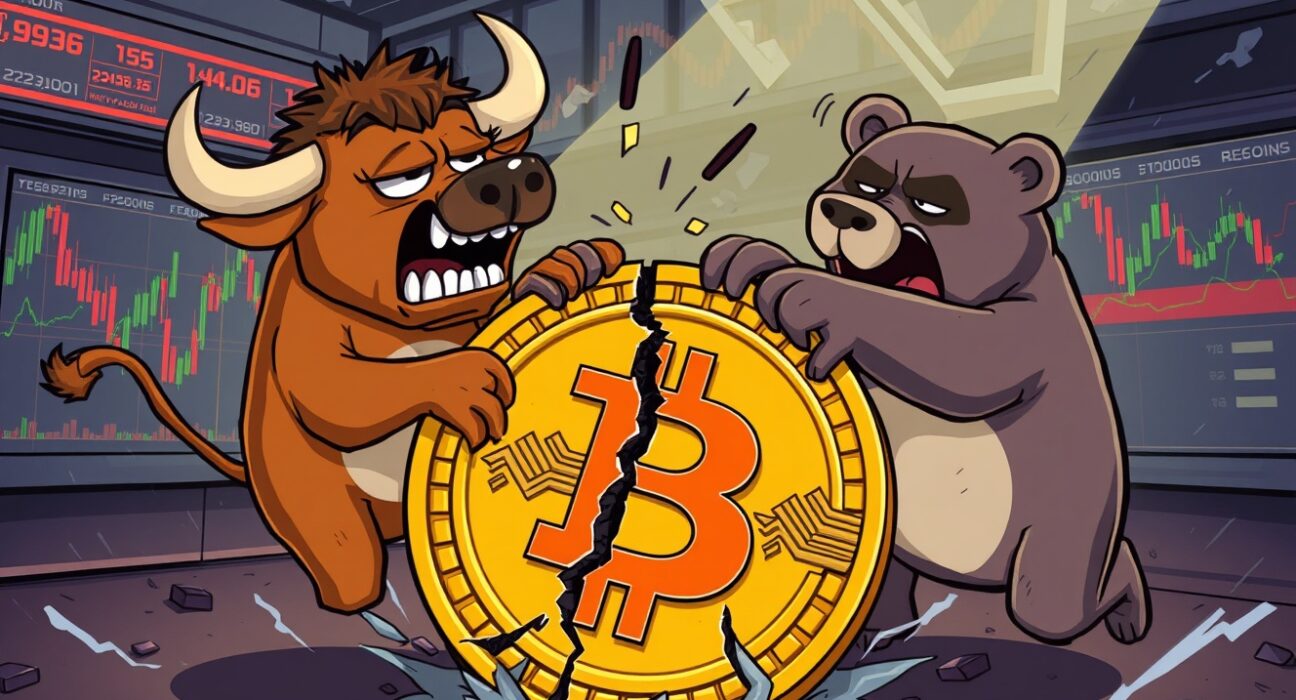
Global cryptocurrency markets experienced significant turbulence today as major exchanges reported $119 million in futures liquidated within a single hour, highlighting extreme volatility in digital asset derivatives trading. According to real-time data from leading market analytics platforms, this substantial liquidation event occurred during Asian trading hours and contributed to a 24-hour total of $363 million in futures positions being forcibly closed. Market analysts immediately noted the concentrated nature of these liquidations, which primarily affected leveraged Bitcoin and Ethereum positions across multiple trading platforms. The rapid price movements triggering these events demonstrate the inherent risks in cryptocurrency derivatives markets, where high leverage amplifies both potential gains and losses. Furthermore, this liquidation wave follows recent regulatory discussions about derivative product oversight in several jurisdictions.
Futures Liquidated: Understanding the Market Mechanics
Cryptocurrency futures contracts represent agreements to buy or sell assets at predetermined prices on specific future dates. Traders frequently use leverage, borrowing funds to amplify their position sizes. However, exchanges implement liquidation protocols when positions approach total loss thresholds. Consequently, these automated systems forcibly close positions to prevent negative balances. The recent $119 million liquidation event primarily involved long positions during a sudden price decline. Market data indicates Bitcoin dropped approximately 4.2% during the critical hour, triggering cascading liquidations across multiple exchanges. Additionally, Ethereum experienced similar pressure with a 5.1% decline. These coordinated movements often create feedback loops where liquidations drive further price declines.
Major exchanges including Binance, Bybit, and OKX reported the highest liquidation volumes. Specifically, Binance accounted for approximately 42% of the hourly total. The distribution across assets showed Bitcoin comprising 58% of liquidated value, while Ethereum represented 27%. Altcoins collectively accounted for the remaining 15%. This pattern reflects typical market behavior during volatility events. Historical comparison reveals this as the third-largest hourly liquidation event in the past six months. The table below illustrates the exchange distribution:
| Exchange | Liquidation Percentage | Primary Asset |
|---|---|---|
| Binance | 42% | Bitcoin |
| Bybit | 28% | Bitcoin/Ethereum |
| OKX | 19% | Ethereum |
| Others | 11% | Various Altcoins |
Market infrastructure automatically executes these liquidations through sophisticated risk engines. These systems monitor collateral ratios in real-time. When maintenance margins breach protocol thresholds, positions enter liquidation. Exchange order books then absorb the resulting market orders. Sometimes, this process creates temporary liquidity gaps. Therefore, traders employing high leverage face substantial risks during volatile periods.
Crypto Derivatives Market Context and Evolution
The cryptocurrency derivatives market has expanded dramatically since 2020. Current estimates place daily volumes between $80-120 billion across all platforms. Futures products dominate this landscape, offering traders various contract types. Perpetual futures, which lack expiration dates, represent the most popular instrument. These contracts utilize funding rate mechanisms to maintain price alignment with spot markets. Recent volatility has increased funding rates significantly. For instance, Bitcoin perpetual funding rates reached 0.05% per eight hours before the liquidation event. Such elevated rates indicate extreme long positioning. Consequently, market corrections trigger disproportionate liquidation cascades.
Regulatory developments continue shaping derivatives markets globally. The European Union’s Markets in Crypto-Assets (MiCA) framework imposes strict requirements on derivative providers. Similarly, United States regulators maintain ongoing scrutiny. These developments influence market structure and participant behavior. Institutional participation has grown substantially despite regulatory uncertainties. Major financial firms now offer cryptocurrency derivative products to qualified clients. This institutionalization introduces different trading patterns compared to retail-dominated markets. However, retail traders still contribute significantly to liquidation events through high-leverage strategies.
Expert Analysis of Market Conditions
Financial analysts identify several contributing factors to the liquidation event. Macroeconomic indicators showed weakness in traditional markets preceding the crypto decline. Additionally, cryptocurrency-specific news flows included exchange reserve discussions. Technical analysis reveals Bitcoin approached critical support levels around $58,000. The breach of this level triggered automated selling algorithms. Market sentiment indicators also showed extreme greed readings before the correction. The Crypto Fear & Greed Index registered 78 (Extreme Greed) for five consecutive days. Historically, such readings often precede corrections. Derivatives data revealed unusually high open interest before the decline. This created conditions for substantial liquidations when prices moved against positioned traders.
Risk management experts emphasize several protective measures for derivatives traders:
- Position Sizing: Allocate only limited capital to leveraged positions
- Stop-Loss Orders: Implement automated exit points before liquidation levels
- Collateral Diversification: Use multiple asset types as margin collateral
- Leverage Limitation: Avoid maximum available leverage during high volatility
- Market Monitoring: Track funding rates and open interest changes
Exchange risk engineering teams continuously refine liquidation mechanisms. Recent upgrades include partial liquidation systems and cross-margin improvements. These developments aim to reduce market impact during volatility events. However, complete elimination of liquidation cascades remains technically challenging. Market participants must therefore understand these inherent risks.
Historical Comparison and Market Impact
The $119 million hourly liquidation ranks among significant historical events. The largest recorded hourly liquidation occurred in June 2022, totaling $286 million during the Celsius collapse. Another major event in November 2021 saw $254 million liquidated following Bitcoin’s all-time high. Comparative analysis shows current leverage levels remain elevated but below 2021 extremes. The estimated average leverage across major platforms currently stands at 12x for retail traders. Institutional traders typically employ 3-5x leverage. This differential explains why retail positions dominate liquidation statistics. Market impact extends beyond immediate price movements. Liquidation events often reduce overall market leverage temporarily as traders reduce positions. Funding rates typically normalize within 24-48 hours after major events. However, sentiment damage may persist longer.
Spot market correlations remain strong during derivative liquidations. The recent event saw spot volumes increase approximately 40% during the liquidation hour. This indicates derivative activity influencing underlying asset markets. Market makers and arbitrageurs bridge these markets through sophisticated strategies. Their activity helps maintain price efficiency but cannot prevent all dislocation. Exchange reserves data shows stable Bitcoin holdings across major platforms during the event. This suggests the liquidation derived from leveraged positions rather than fundamental outflows. Network fundamentals including hash rate and transaction counts remained stable. Therefore, the event appears driven by technical factors rather than protocol issues.
Conclusion
The $119 million futures liquidation event demonstrates cryptocurrency market volatility and derivative trading risks. This substantial hourly loss, contributing to a $363 million 24-hour total, highlights how leveraged positions amplify market movements. Analysis reveals the event resulted from technical factors including breached support levels and excessive leverage. Market participants should note these dynamics when engaging in derivatives trading. Furthermore, ongoing regulatory developments may alter market structures in coming months. The cryptocurrency derivatives landscape continues evolving with increasing institutional participation. However, risk management remains paramount for all market participants. Future market stability may improve through technological enhancements and participant education. Ultimately, understanding liquidation mechanisms helps traders navigate volatile conditions more effectively.
FAQs
Q1: What causes futures liquidations in cryptocurrency markets?
Exchanges automatically liquidate futures positions when collateral values fall below maintenance margin requirements. This occurs during rapid price movements against positioned traders, particularly those using high leverage.
Q2: How does the $119 million liquidation compare to historical events?
This represents the third-largest hourly liquidation in six months but remains below record levels. The largest occurred in June 2022 with $286 million liquidated during major market stress.
Q3: Which cryptocurrencies experienced the most liquidations?
Bitcoin accounted for 58% of liquidated value, Ethereum represented 27%, and various altcoins comprised the remaining 15% during this event.
Q4: Do liquidations affect spot market prices?
Yes, derivative liquidations often influence spot markets through connected trading activity. The recent event correlated with increased spot volumes and accelerated price declines.
Q5: How can traders reduce liquidation risks?
Effective strategies include conservative leverage usage, diversified collateral, stop-loss orders, careful position sizing, and monitoring funding rates and open interest levels.
Disclaimer: The information provided is not trading advice, Bitcoinworld.co.in holds no liability for any investments made based on the information provided on this page. We strongly recommend independent research and/or consultation with a qualified professional before making any investment decisions.
