

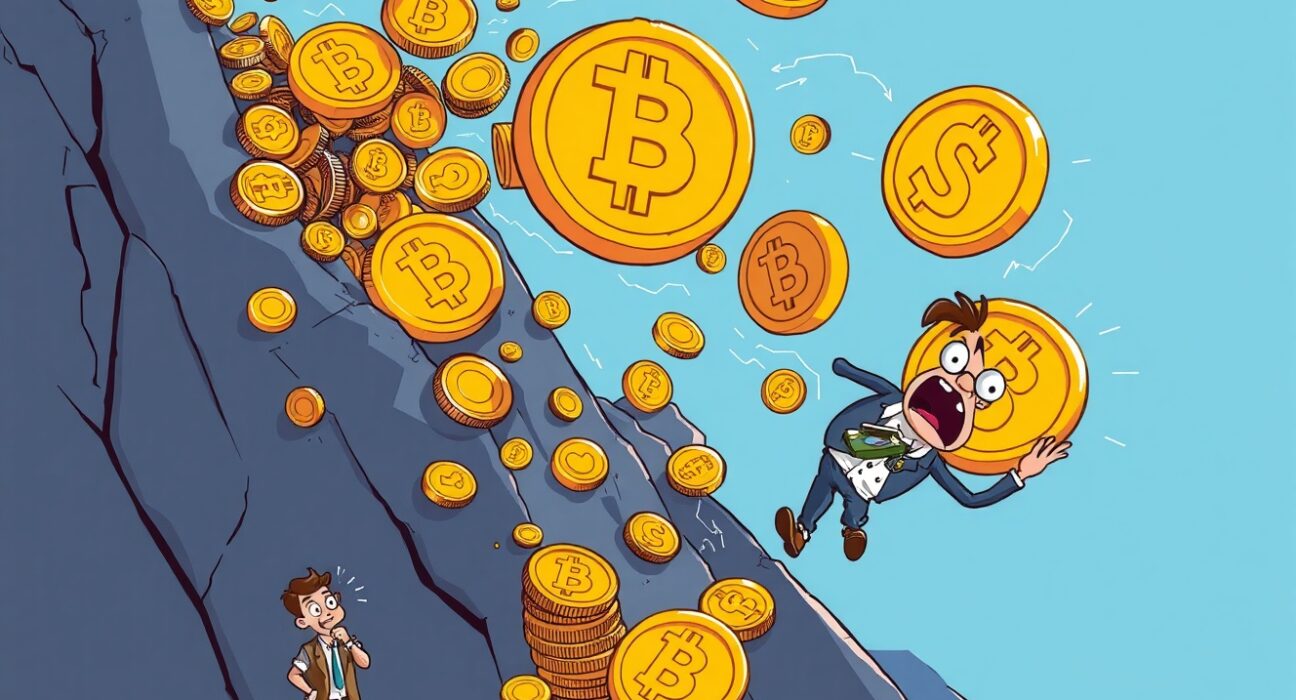
Global cryptocurrency markets experienced a severe contraction on March 15, 2025, triggering over $260.8 million in futures liquidations within a single 24-hour period. This substantial deleveraging event primarily impacted short positions across major digital assets, signaling a sharp reversal that caught many traders off guard. Market analysts immediately began scrutinizing the cascading effect across perpetual futures contracts, particularly for Bitcoin and Ethereum.
Crypto Futures Liquidated in Unprecedented Market Move
The cryptocurrency derivatives market witnessed one of its most significant liquidation events of the year. According to aggregated data from major exchanges including Binance, Bybit, and OKX, total liquidations reached $260.8 million between March 14 and March 15, 2025. This figure represents a substantial percentage of the total open interest across these platforms. Consequently, the market experienced increased volatility as forced selling amplified price movements in both directions.
Liquidation events occur when traders’ positions are automatically closed by exchanges due to insufficient margin. This mechanism protects the exchange from potential losses if a trader’s account equity falls below the maintenance margin requirement. The scale of this particular event suggests excessive leverage was prevalent in the market beforehand. Market participants often employ high leverage in futures trading to amplify potential returns, which simultaneously increases risk exposure.
Bitcoin and Ethereum Lead Liquidation Volumes
Bitcoin futures contracts accounted for the largest portion of the liquidations, with $135.05 million wiped out. Notably, 73.93% of these liquidated Bitcoin positions were short contracts, indicating that traders betting on price declines faced significant losses as the market moved against them. This data point often suggests a short squeeze scenario, where rising prices force short sellers to cover their positions, creating additional upward pressure.
Ethereum followed with $96.40 million in liquidated futures contracts. Within this total, 59.84% were short positions. The Ethereum derivatives market has grown substantially alongside the network’s development activity and the increasing adoption of its Layer 2 scaling solutions. The significant liquidation volume highlights Ethereum’s deep integration into the crypto financial ecosystem as a core asset for speculative trading and hedging strategies.
Analysis of the RAVE Token Liquidation Spike
The data reveals an outlier in the RAVE token, which saw $29.35 million liquidated with a staggering 82.02% of positions being shorts. This exceptionally high percentage suggests concentrated speculative activity or potential market manipulation around this specific asset. Tokens with smaller market capitalizations like RAVE often experience more pronounced volatility and liquidation events due to lower liquidity depths on order books.
Market structure analysis indicates that such disproportionate short liquidations can create violent upward price movements, often referred to as ‘short squeezes.’ These events can be particularly damaging in altcoin markets where liquidity is fragmented across multiple exchanges. Traders frequently monitor liquidation heatmaps to identify potential price levels where large clusters of leveraged positions might become vulnerable.
Historical Context and Market Impact
This liquidation event ranks among the top ten single-day events since the 2022 market downturn. Historical comparison shows that similar-scale liquidations in 2023 and 2024 often preceded periods of consolidation or trend reversals. The crypto derivatives market has matured significantly since the 2020-2021 bull market, with improved risk management tools and more sophisticated participants. However, the persistence of large-scale liquidations demonstrates that leverage remains a double-edged sword in digital asset trading.
The immediate market impact included increased volatility across spot markets as the liquidation cascade affected liquidity. Major exchanges reported temporary widening of bid-ask spreads during peak liquidation periods. Furthermore, funding rates for perpetual swaps fluctuated dramatically as the market sought equilibrium between long and short interest. These mechanical market responses are well-documented in academic literature on cryptocurrency market microstructure.
Regulatory and Systemic Considerations
Regulatory bodies worldwide continue to monitor cryptocurrency derivatives markets due to their potential systemic implications. The Commodity Futures Trading Commission (CFTC) in the United States and the Financial Conduct Authority (FCA) in the United Kingdom have both issued guidance on leverage limits for retail crypto derivatives. Events like the March 15 liquidations provide empirical data for ongoing policy discussions about appropriate leverage caps and investor protection measures.
From a systemic risk perspective, the interconnectedness of crypto exchanges through arbitrage bots and cross-margin accounts means liquidations on one platform can transmit volatility to others. However, the decentralized nature of the broader cryptocurrency ecosystem, with assets held across numerous wallets and protocols, has thus far prevented the type of contagion seen in traditional finance during margin crises.
Technical Analysis of Market Conditions
Technical indicators preceding the liquidation event showed several warning signs. The aggregate open interest across futures markets had reached elevated levels relative to spot market capitalization. Additionally, the estimated leverage ratio, a metric tracking the average leverage employed by futures traders, had been climbing steadily throughout early March 2025. These conditions created a fragile market structure vulnerable to a volatility shock.
On-chain data from analytics firms like Glassnode and CryptoQuant revealed simultaneous movements of Bitcoin from exchange wallets to cold storage, suggesting accumulation by long-term holders. This reduction in immediately available supply on exchanges may have contributed to the upward price pressure that triggered the short liquidations. The interplay between on-chain holder behavior and derivatives market dynamics remains a critical area of study for crypto analysts.
Conclusion
The $260.8 million crypto futures liquidation event on March 15, 2025, serves as a stark reminder of the risks inherent in leveraged digital asset trading. While the market absorbed the deleveraging without catastrophic failure, the concentration in short positions, particularly for Bitcoin and the RAVE token, highlights ongoing speculative patterns. As the cryptocurrency derivatives market continues to evolve alongside regulatory frameworks, such events provide valuable data for understanding market mechanics and developing more robust risk management practices for all participants involved in crypto futures trading.
FAQs
Q1: What causes futures liquidations in cryptocurrency markets?
Futures liquidations occur automatically when a trader’s position loses enough value that their remaining margin cannot cover potential losses. Exchanges close these positions to prevent negative account balances, often creating cascading sell or buy orders that amplify market moves.
Q2: Why were most liquidated positions short contracts?
The high percentage of short liquidations (73.93% for Bitcoin) suggests the market experienced upward price movement that triggered stop-losses on bearish bets. This pattern often indicates a short squeeze, where rising prices force short sellers to buy back assets to close positions, creating additional buying pressure.
Q3: How does this liquidation event compare to historical ones?
The $260.8 million single-day total ranks among significant events but remains below record levels seen during the 2021 bull market correction and the 2022 LUNA collapse. The market has since developed deeper liquidity and more sophisticated risk tools, potentially reducing systemic impact.
Q4: What is a perpetual futures contract?
Perpetual futures are derivative contracts without an expiration date, allowing traders to hold positions indefinitely. They use a funding rate mechanism to tether their price to the underlying spot market, typically exchanging payments between long and short positions every eight hours.
Q5: Can liquidation events predict future market direction?
While large liquidations often mark local extremes in sentiment and positioning, they don’t reliably predict long-term direction. They typically indicate excessive leverage has been flushed from the system, which can sometimes precede periods of reduced volatility or trend consolidation as the market resets.
Disclaimer: The information provided is not trading advice, Bitcoinworld.co.in holds no liability for any investments made based on the information provided on this page. We strongly recommend independent research and/or consultation with a qualified professional before making any investment decisions.
