

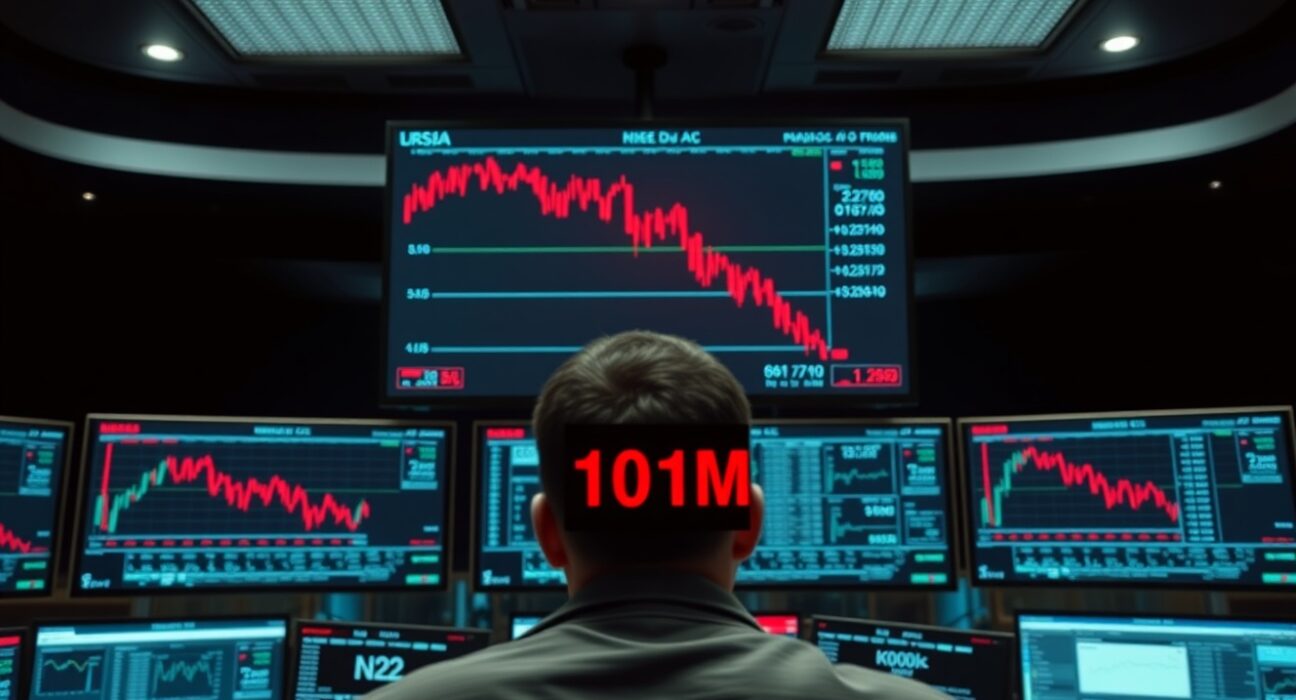
Cryptocurrency derivatives markets experienced a sharp spike in volatility over the past hour, with liquidations across major exchanges reaching $101 million. Data from multiple trading platforms shows that the total value of forced liquidations over the last 24 hours has climbed to $359 million, reflecting heightened market stress and aggressive leveraged positioning.
What Are Futures Liquidations and Why Do They Matter?
Futures liquidations occur when a trader’s position is forcibly closed by an exchange because the margin balance falls below the required maintenance level. This typically happens when the market moves sharply against the trader’s leveraged position. When a large number of liquidations happen in a short period, it can amplify price swings, creating a cascade effect that further pressures the market.
The recent figures indicate that both long and short positions have been affected, though the majority of the liquidations appear to be long positions that were caught off guard by a sudden downward price movement. Bitcoin and Ethereum, the two largest cryptocurrencies by market capitalization, have seen the most significant liquidation volumes, according to data from Coinglass and other analytics providers.
Market Context: Why the Sudden Spike?
The spike in liquidations comes amid a period of heightened uncertainty in global financial markets. Concerns over inflation, interest rate policies, and geopolitical tensions have contributed to risk-off sentiment, which has spilled over into the crypto market. Additionally, on-chain data suggests that leverage in the system had been building up over the past few weeks, making the market more susceptible to sharp corrections.
Analysts note that the current liquidation event is not unusual in the context of crypto’s history, but the speed and scale of the move have caught some traders off guard. The funding rates on major exchanges had been elevated, indicating that many traders were overly bullish and had taken on excessive leverage.
Implications for Traders and Investors
For active traders, the liquidation event serves as a reminder of the risks associated with leveraged trading. Even experienced traders can face significant losses when volatility spikes unexpectedly. For longer-term investors, the news is a signal to review risk management strategies and ensure that positions are appropriately sized.
The liquidation data also provides insight into market sentiment. When large numbers of long positions are liquidated, it often indicates that the market is in a corrective phase. Conversely, if short positions are liquidated, it can signal a potential rally. In this case, the mix suggests that the market is searching for direction amid conflicting signals.
Conclusion
The $101 million in hourly liquidations and $359 million in daily liquidations underscore the volatile nature of cryptocurrency derivatives. While such events can be unsettling, they are part of the normal market cycle and often create opportunities for disciplined traders. As always, investors should approach leveraged products with caution and maintain a clear understanding of the risks involved.
FAQs
Q1: What causes futures liquidations?
Futures liquidations happen when a trader’s margin balance falls below the maintenance level due to adverse price movements. Exchanges automatically close the position to prevent further losses, often leading to a cascade if many positions are liquidated at once.
Q2: How can I avoid being liquidated?
Traders can reduce liquidation risk by using lower leverage, setting stop-loss orders, and maintaining a sufficient margin buffer. It’s also important to monitor market conditions and adjust positions accordingly.
Q3: Do liquidations affect the spot market?
Yes, liquidations can impact the spot market. When large futures positions are closed, the underlying asset is often sold or bought on the spot market to cover the margin, which can cause price fluctuations.
Disclaimer: The information provided is not trading advice, Bitcoinworld.co.in holds no liability for any investments made based on the information provided on this page. We strongly recommend independent research and/or consultation with a qualified professional before making any investment decisions.
