
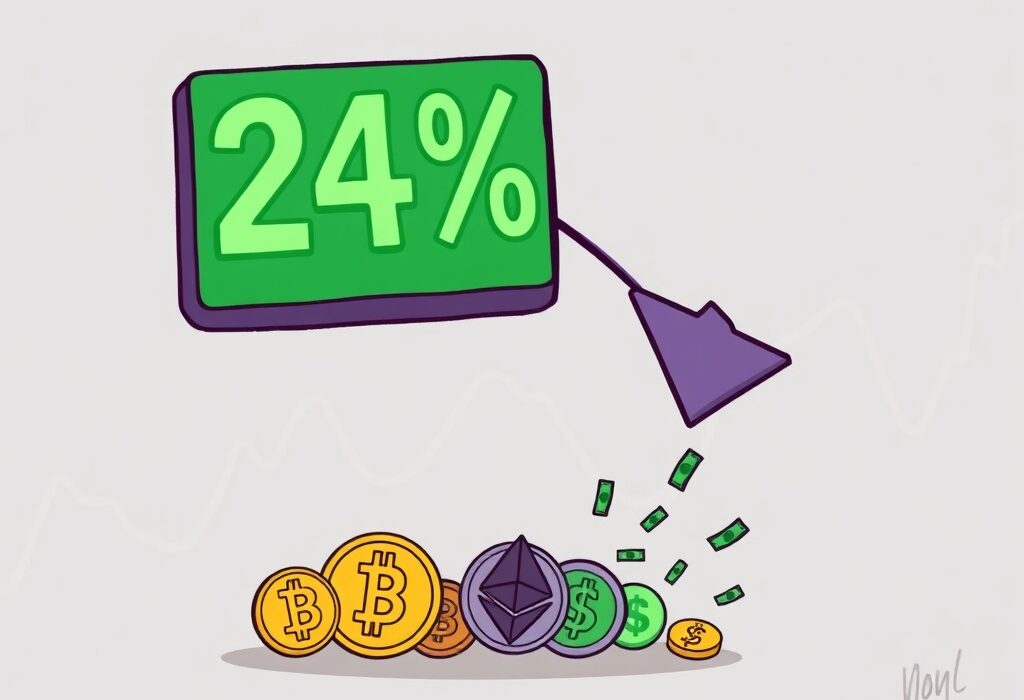
The cryptocurrency world is abuzz with recent data revealing a significant shift in investment trends. In a development that has caught the attention of many, crypto market inflows have seen a notable decline, dropping by a substantial 24% over the past three weeks. This represents a significant reduction in capital entering the digital asset space, moving from higher figures to $66.5 billion, as highlighted by prominent crypto analyst and trader Ali Martinez on X.
What’s Behind the Drop in Crypto Market Inflows?
Understanding the reasons for this pullback is crucial for anyone involved in the digital asset ecosystem. Several factors often influence the flow of capital into the crypto market. While Ali Martinez’s initial report points to the raw numbers, we can consider broader market dynamics that contribute to such shifts.
- Market Volatility: Cryptocurrencies are known for their price swings. Periods of high volatility can make investors cautious, leading them to pull back or delay new investments.
- Economic Uncertainty: Global economic indicators, such as inflation rates, interest rate hikes, or geopolitical tensions, can prompt investors to seek safer havens, reducing their appetite for riskier assets like crypto.
- Regulatory Scrutiny: Increased regulatory discussions or actions in major economies can create uncertainty, influencing institutional and retail investment decisions regarding crypto market inflows.
- Profit-Taking: After periods of significant gains, some investors naturally engage in profit-taking, withdrawing capital from the market. This is a common cycle in any asset class.
These elements collectively contribute to the ebb and flow of capital, impacting overall crypto market inflows.
How Does This Impact the Crypto Landscape?
A reduction in capital inflows, particularly one as sharp as 24%, can have various implications for the broader crypto market. It’s not just about the numbers; it’s about what these numbers signify for market sentiment and future price action.
- Reduced Liquidity: Fewer new funds entering the market can lead to lower liquidity, potentially making price movements more volatile or less stable.
- Price Pressure: Sustained lower inflows can put downward pressure on cryptocurrency prices, especially for altcoins that rely heavily on fresh capital to sustain their valuations.
- Investor Confidence: A visible drop in crypto market inflows might erode investor confidence, leading to a wait-and-see approach among potential new entrants.
- Innovation Funding: Less capital can also impact the funding available for new projects and startups within the blockchain and crypto space, potentially slowing down innovation.
However, it’s important to remember that markets are dynamic. Short-term dips in crypto market inflows do not necessarily dictate long-term trends.
Navigating the Current Crypto Market Inflows Environment
For investors and enthusiasts, understanding how to navigate periods of reduced capital influx is key. While the 24% drop might seem concerning, it also presents opportunities for those with a long-term perspective. Here are some actionable insights:
- Stay Informed: Keep a close eye on market news, economic reports, and analyst insights. Knowledge is power, especially during uncertain times.
- Re-evaluate Portfolios: Use this period to assess your current holdings. Are your investments aligned with your risk tolerance and long-term goals?
- Consider Dollar-Cost Averaging (DCA): For those looking to invest, DCA can be an effective strategy during dips. This involves investing a fixed amount regularly, regardless of price fluctuations, which can mitigate risk.
- Focus on Fundamentals: Look beyond short-term price action. Investigate projects with strong technology, clear use cases, and dedicated development teams. These fundamentals often prove resilient even when crypto market inflows are low.
The market’s health is often a reflection of investor behavior and macroeconomic factors. Adapting your strategy is vital.
In conclusion, the recent 24% drop in crypto market inflows serves as a clear indicator of shifting market dynamics. While this decline highlights increased caution among investors, it also underscores the cyclical nature of financial markets. The crypto space continues to evolve rapidly, and understanding these capital movements is essential for making informed decisions. Staying agile, informed, and focusing on long-term value will help participants navigate these fluctuations successfully.
Frequently Asked Questions (FAQs)
Q1: What does a ‘drop in crypto market inflows’ mean?
A: A drop in crypto market inflows signifies that less new capital is entering the cryptocurrency market over a specific period. This can be due to reduced new investments from individuals or institutions, or increased withdrawals.
Q2: Who is Ali Martinez and why is his report significant?
A: Ali Martinez is a recognized crypto analyst and trader. His reports are significant because they often provide data-driven insights into market trends and capital movements, helping to inform the broader crypto community.
Q3: Does this drop indicate a bear market?
A: Not necessarily. While a significant drop in crypto market inflows can be a sign of caution, it doesn’t automatically mean a prolonged bear market. It can be a temporary correction or a period of consolidation. Investors should look at a broader range of indicators.
Q4: What strategies can investors use during periods of low crypto market inflows?
A: During periods of low inflows, investors might consider strategies like dollar-cost averaging (DCA), re-evaluating their portfolios, focusing on projects with strong fundamentals, and staying informed about market news to make calculated decisions.
Q5: How do global economic factors affect crypto market inflows?
A: Global economic factors such as inflation, interest rate changes, and geopolitical events can significantly influence crypto market inflows. Economic uncertainty often leads investors to reduce exposure to riskier assets like crypto, opting for more stable investments.
If you found this article insightful, please consider sharing it with your network! Your support helps us continue to provide valuable crypto market insights and analysis.
To learn more about the latest crypto market trends, explore our article on key developments shaping Bitcoin price action.
Disclaimer: The information provided is not trading advice, Bitcoinworld.co.in holds no liability for any investments made based on the information provided on this page. We strongly recommend independent research and/or consultation with a qualified professional before making any investment decisions.