

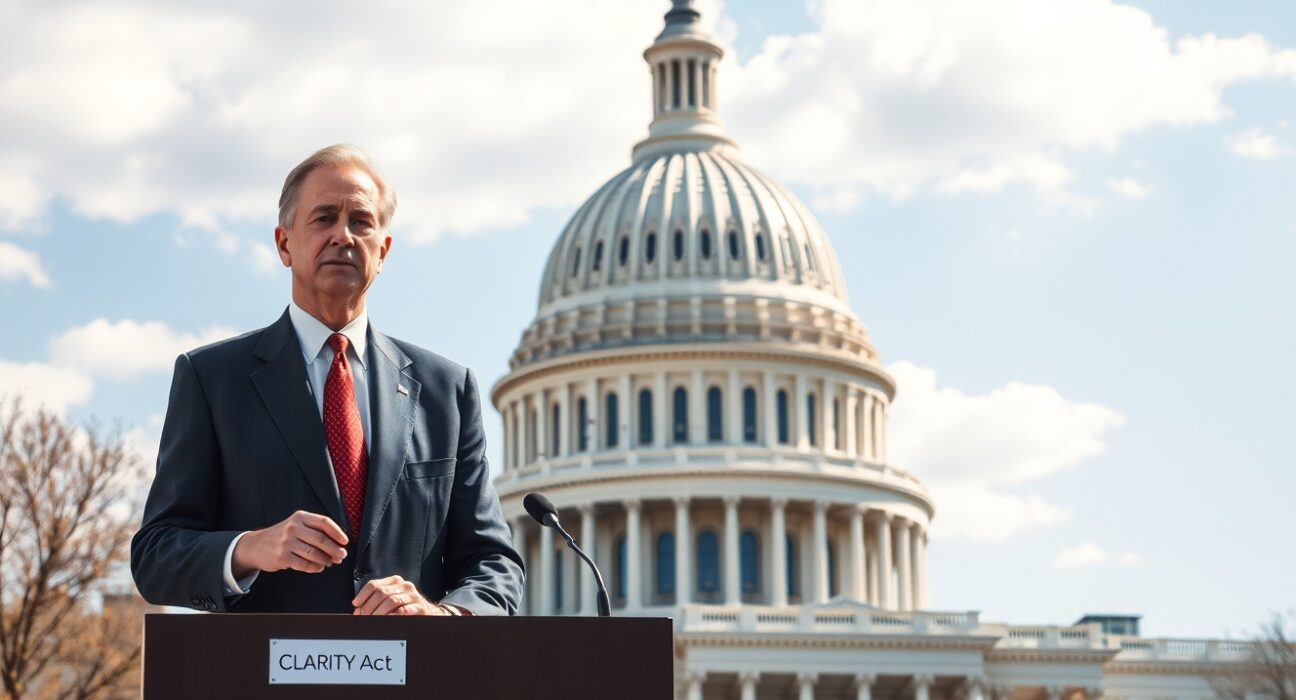
United States Senator Cynthia Lummis has stated that the crypto market structure bill, known as the CLARITY Act, is expected to be finalized in May 2025. This announcement, first reported by Watcher.Guru, signals a significant step forward for digital asset regulation in the United States.
Senator Lummis Confirms Crypto Market Structure Bill Timeline
Senator Cynthia Lummis, a Republican from Wyoming and a well-known advocate for cryptocurrency innovation, revealed the expected timeline during a recent public engagement. The CLARITY Act aims to provide a comprehensive framework for digital assets, clarifying which tokens are securities and which are commodities. This distinction has long been a source of uncertainty for investors and companies operating in the crypto space.
According to Lummis, the finalization process involves integrating feedback from various stakeholders, including industry leaders, regulators, and consumer protection groups. The bill’s May deadline represents a critical milestone after months of negotiations and revisions. Market participants view this timeline as a positive signal that lawmakers are prioritizing regulatory clarity.
Understanding the CLARITY Act and Its Purpose
The CLARITY Act, short for Crypto Asset Regulatory Transparency and Integrity Act, is designed to address the fragmented regulatory landscape for digital assets. Currently, the Securities and Exchange Commission (SEC) and the Commodity Futures Trading Commission (CFTC) have overlapping jurisdictions, creating confusion. The bill proposes clear guidelines to assign regulatory authority based on the nature of the digital asset.
Key provisions of the crypto market structure bill include:
- Clear classification of digital assets as securities, commodities, or currencies.
- Enhanced consumer protections through disclosure requirements and fraud prevention measures.
- Streamlined registration processes for crypto exchanges and custodians.
- Tax reporting simplification for digital asset transactions.
These elements aim to reduce legal risks for businesses and encourage mainstream adoption. The bill also seeks to balance innovation with investor safety, a challenge that has plagued the industry since its inception.
Timeline of US Crypto Regulation Efforts
The push for a comprehensive crypto market structure bill has been years in the making. In 2022, Senator Lummis and Senator Kirsten Gillibrand introduced the Responsible Financial Innovation Act. This earlier bill laid the groundwork but faced significant hurdles. The CLARITY Act builds on those foundations with more refined language and broader industry input.
Key milestones in US crypto regulation include:
| Year | Event |
|---|---|
| 2021 | SEC v. Ripple case highlights regulatory gaps |
| 2022 | Lummis-Gillibrand bill introduced |
| 2023 | Multiple crypto exchange collapses spur legislative action |
| 2024 | House passes FIT21 bill, Senate begins work on CLARITY |
| 2025 | CLARITY Act expected finalization in May |
This timeline demonstrates the increasing urgency among lawmakers to create a stable regulatory environment. The collapses of major platforms like FTX in 2022 highlighted the risks of operating without clear rules.
Impact on the Crypto Industry and Investors
The finalization of the crypto market structure bill in May could have profound effects on the digital asset ecosystem. For businesses, regulatory clarity reduces compliance costs and legal uncertainty. Many companies have relocated overseas due to the ambiguous US environment. A clear framework could bring these firms back, boosting domestic innovation and job creation.
For investors, the bill promises stronger protections against fraud and market manipulation. Clear rules around custody, disclosure, and trading practices would make crypto markets more transparent. This could attract institutional capital, which has been hesitant to enter the space without regulatory safeguards.
However, some critics argue that the bill may impose burdensome requirements on smaller projects. The balance between oversight and innovation remains a delicate one. Senator Lummis has emphasized that the final version will incorporate feedback to avoid stifling growth.
Expert Perspectives on the Bill’s Prospects
Industry analysts view the May deadline as realistic but ambitious. The bill must navigate a divided Congress and potential opposition from certain regulatory agencies. Senator Lummis’s experience as a former state treasurer and her deep understanding of financial markets lend credibility to her timeline. Her bipartisan approach, working with colleagues like Senator Gillibrand, increases the bill’s chances of passage.
Legal experts note that the CLARITY Act addresses many of the pain points identified in recent enforcement actions. By providing a clear legal framework, the bill could reduce the need for litigation and create a more predictable environment for innovation. The crypto industry has long called for rules of the road, and this bill represents the most concrete effort to date.
Conclusion
Senator Cynthia Lummis’s announcement that the crypto market structure bill will be finalized in May 2025 marks a pivotal moment for US digital asset regulation. The CLARITY Act promises to bring much-needed clarity to the classification and oversight of cryptocurrencies. With a clear timeline and bipartisan support, this legislation could transform the American crypto landscape. Investors, businesses, and consumers alike should watch this development closely as it unfolds.
FAQs
Q1: What is the crypto market structure bill?
The crypto market structure bill, formally known as the CLARITY Act, is a proposed US law that defines how digital assets are classified and regulated. It aims to clarify whether cryptocurrencies are securities, commodities, or currencies, and assigns regulatory authority accordingly.
Q2: When will the CLARITY Act be finalized?
Senator Cynthia Lummis expects the bill to be finalized in May 2025. This timeline is based on ongoing negotiations and stakeholder feedback sessions.
Q3: Who is Senator Cynthia Lummis?
Cynthia Lummis is a US Senator from Wyoming and a Republican. She is a prominent advocate for cryptocurrency innovation and has introduced several bills aimed at regulating digital assets.
Q4: How will the bill affect cryptocurrency investors?
The bill aims to provide stronger consumer protections, clearer tax reporting rules, and reduced legal uncertainty. This could make crypto markets safer and more attractive to institutional investors.
Q5: What happens if the bill does not pass in May?
If the bill is not finalized by May, it may face further delays or revisions. However, Senator Lummis’s statement suggests strong momentum, and the bipartisan support increases the likelihood of passage.
Disclaimer: The information provided is not trading advice, Bitcoinworld.co.in holds no liability for any investments made based on the information provided on this page. We strongly recommend independent research and/or consultation with a qualified professional before making any investment decisions.
