

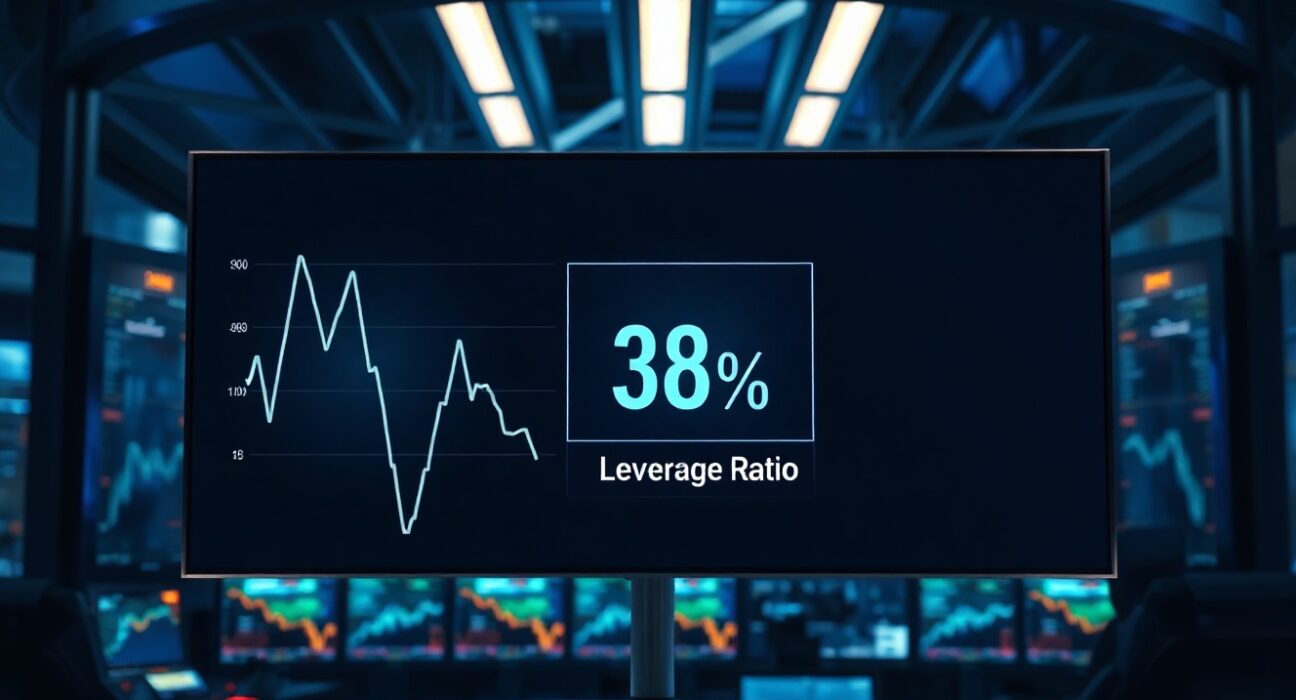
The on-chain leverage ratio across decentralized finance markets has risen to approximately 38%, a level last seen during the 2021 bull market, according to a recent report from Binance Research. However, analysts caution that the increase is largely an optical artifact caused by a sharp decline in Total Value Locked, not a resurgence in borrowing activity.
Why the Leverage Ratio Is Rising
Binance Research attributes the ratio increase primarily to a contraction in TVL, which fell by roughly $13 billion following a series of high-profile DeFi exploits in April. As the denominator in the leverage calculation shrinks, the proportion of outstanding debt automatically rises — even when no new loans are being taken out.
This distinction matters because it signals that the DeFi market is not experiencing a healthy expansion of credit. Instead, it reflects a capital flight scenario where users have withdrawn funds, either due to security concerns or falling asset prices, leaving a smaller base of locked value against existing debt.
No Significant Deleveraging Yet
Despite the market downturn and the April exploit wave, the report notes that meaningful deleveraging has not occurred. Borrowers have largely held their positions rather than repaying loans or closing leveraged positions. This behavior could indicate that many participants are waiting for a market recovery, or that they are unable to unwind positions without incurring significant losses.
The absence of deleveraging introduces a layer of fragility. If asset prices continue to decline, the market could face a cascade of liquidations, further compressing TVL and amplifying the leverage ratio in a feedback loop.
What This Means for DeFi Participants
For users and investors, the key takeaway is that the elevated leverage ratio does not signal renewed confidence or credit demand. Rather, it is a symptom of a shrinking market. The ratio should be interpreted as a risk indicator, not a bullish signal.
Projects and protocols that suffered exploit-related outflows may need to rebuild user trust through improved security audits and transparent incident responses. Meanwhile, traders should monitor liquidation thresholds closely, especially in protocols where the ratio is concentrated among a few large positions.
Conclusion
The DeFi leverage ratio at 38% is a statistic that requires careful interpretation. Binance Research’s analysis clarifies that the rise is a mechanical consequence of TVL erosion, not a reflection of new loan demand. As the market digests the impact of April’s security incidents, the lack of deleveraging remains a concern. Understanding the underlying dynamics — rather than reacting to headline numbers — will be essential for navigating the current DeFi environment.
FAQs
Q1: What is the DeFi on-chain leverage ratio?
The on-chain leverage ratio measures the total outstanding debt in DeFi protocols relative to the total value locked. A higher ratio indicates more debt relative to collateral.
Q2: Why did the ratio increase if no new loans were made?
The ratio increased because the denominator — Total Value Locked — decreased significantly due to exploit-related outflows and falling asset prices, making existing debt appear larger in proportion.
Q3: Should I be concerned about the lack of deleveraging?
Yes, the absence of deleveraging means that if asset prices fall further, the market could face a wave of liquidations, which would amplify downward pressure on prices and TVL.
Disclaimer: The information provided is not trading advice, Bitcoinworld.co.in holds no liability for any investments made based on the information provided on this page. We strongly recommend independent research and/or consultation with a qualified professional before making any investment decisions.
