
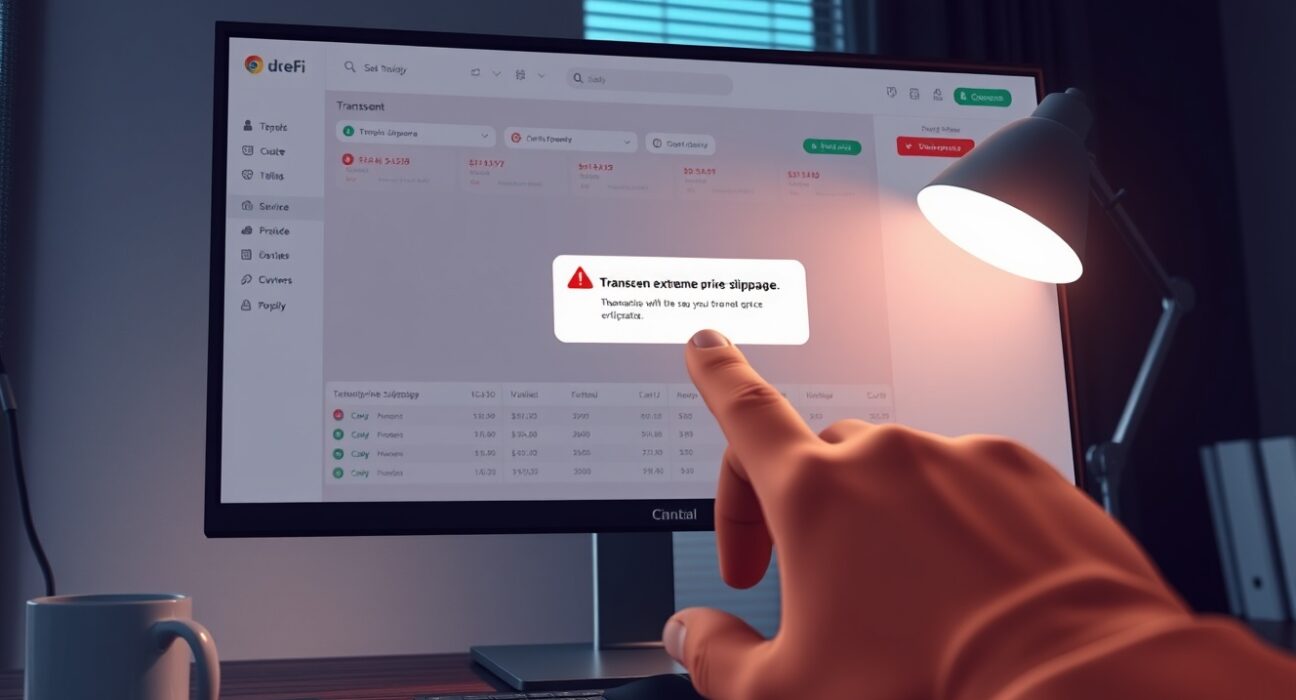
A staggering DeFi trading error has sent shockwaves through the cryptocurrency community, as an anonymous trader mistakenly swapped 50 million USDT for a mere $36,000 worth of AAVE tokens. This catastrophic loss, representing a 99.9% devaluation, occurred on the Aave lending protocol via the Cow Swap aggregator and was first highlighted by DeFiLlama founder 0xngmi. The incident, unfolding in the borderless realm of decentralized finance, starkly illustrates the persistent risks of user interface design and extreme market slippage in automated trading environments. Consequently, it raises critical questions about responsibility and safeguards within permissionless protocols.
Anatomy of a $50 Million DeFi Trading Error
The transaction executed on March 15, 2025, involved a simple but colossal mistake. The trader attempted to exchange 50 million Tether (USDT), a stablecoin pegged to the US dollar, for AAVE, the governance token of the Aave protocol. However, the swap occurred on a liquidity pool with insufficient depth to handle such an enormous order without catastrophic price impact. As a result, the trader received approximately 325 AAVE tokens, valued at roughly $36,000 at the time, instead of the expected multi-million dollar equivalent. This event immediately triggered analysis from on-chain sleuths and protocol developers.
DeFiLlama founder 0xngmi publicly dissected the transaction on social media platform X. He noted a critical failing in the process: while many decentralized exchange interfaces implement safeguards to block abnormally sized transactions, this particular trade proceeded. “Other protocols typically block such abnormal transactions at the interface level to prevent user error,” 0xngmi stated, pinpointing a potential point of failure in the user experience flow that connects the trader to the underlying blockchain liquidity.
Aave Protocol’s Response and the Slippage Warning Debate
Aave founder Stani Kulechov swiftly addressed the incident, providing crucial context from the protocol’s perspective. Kulechov confirmed that the Aave interface did detect the anomaly and presented the user with explicit warnings. “The order size was unusually large and the protocol had warned the trader about the potential for extreme slippage, requiring an additional confirmation to proceed,” Kulechov explained. This indicates the trader actively bypassed at least one safety checkpoint designed to prevent such outcomes.
Kulechov expressed regret over the financial loss but emphasized the trader’s agency in accepting the high-risk parameters. “He suggested the trader must have accepted the high slippage risk,” the statement continued. In a significant gesture, Kulechov added that Aave would attempt to contact the affected trader and refund the substantial $600,000 in fees generated by the transaction. This fee refund, while not recouping the principal loss, represents a notable act of goodwill and highlights the protocol’s focus on user protection despite the non-custodial nature of DeFi.
The Mechanics of Slippage and Liquidity Pools
This incident serves as a brutal case study in automated market maker (AMM) economics. Slippage refers to the difference between the expected price of a trade and the price at which it actually executes. In deep, liquid markets, slippage is minimal. However, for an order constituting tens of millions of dollars against a pool with limited liquidity, the slippage can be extreme. The protocol’s algorithm simply follows its bonding curve, progressively offering worse exchange rates as it depletes the pool of the desired asset. The table below contrasts typical versus extreme slippage scenarios:
| Trade Size | Liquidity Depth | Expected Slippage | Outcome |
|---|---|---|---|
| $1,000 USDT to AAVE | High ($50M pool) | < 0.5% | Routine execution |
| $50M USDT to AAVE | Low ($5M pool) | > 99% | Catastrophic loss |
Key factors that amplified this error include:
- Order Size Disproportion: The trade likely dwarfed the available AAVE liquidity in the specific route used.
- Aggregator Routing: Cow Swap, as an aggregator, seeks the best price across multiple pools but cannot create liquidity where none exists.
- User Interface (UI) Design: The presentation of complex financial risk in a simple confirmation dialog remains a profound challenge.
Broader Implications for DeFi Security and UX
This multi-million dollar error transcends a single trader’s misfortune. It acts as a stress test for the philosophical and practical foundations of decentralized finance. Proponents of absolute permissionlessness argue that users bear full responsibility for their transactions. Conversely, advocates for improved safety argue that protocols and front-ends have an ethical duty to implement robust, fool-resistant safeguards. This incident will undoubtedly fuel ongoing debates about:
- Standardized Warning Systems: Could a more forceful, multi-step confirmation process for large trades become an industry norm?
- Liquidity Oracle Integration: Should interfaces integrate real-time liquidity depth oracles to hard-block economically irrational trades?
- Insurance and Recourse: What role, if any, should decentralized insurance protocols or emergency community funds play in such black-swan user errors?
Historically, similar incidents have prompted upgrades. Past exchange errors and smart contract exploits have led to the development of time-lock mechanisms, multi-signature governance, and improved audit standards. The Aave team’s decision to refund fees suggests a recognition of shared ecosystem responsibility, potentially setting a new precedent for protocol conduct in the wake of clear, non-malicious user error.
Conclusion
The $50 million DeFi trading error on Aave stands as one of the most expensive simple mistakes in cryptocurrency history. It underscores the fragile intersection between human error, interface design, and immutable blockchain execution. While the Aave protocol issued warnings and the trader confirmed the high-slippage transaction, the devastating outcome highlights an urgent need for more intelligent, preventive safeguards at the application layer. As decentralized finance continues to mature and attract larger capital, the industry must evolve beyond simple confirmation dialogs to build systems that are not only permissionless but also profoundly protective of user assets. The refund of fees by Aave marks a positive step toward a more user-centric DeFi ethos.
FAQs
Q1: How did the trader lose $50 million in this DeFi trading error?
The trader swapped 50 million USDT for AAVE on a liquidity pool that could not handle the order size. This caused extreme slippage, meaning each subsequent unit of AAVE cost exponentially more USDT, resulting in only $36,000 worth of AAVE being received.
Q2: Did the Aave protocol try to stop the transaction?
Yes. According to Aave founder Stani Kulechov, the interface detected the unusually large order, warned the trader about extreme slippage, and required an additional confirmation. The trader proceeded despite this warning.
Q3: What is slippage in decentralized trading?
Slippage is the difference between a trade’s expected price and its execution price. It occurs when a trade is so large it moves the market price within an automated liquidity pool, resulting in a worse rate for the trader.
Q4: Is the trader’s money gone forever?
The lost principal from the bad swap is likely irrecoverable due to the immutable nature of blockchain transactions. However, Aave has pledged to refund the $600,000 in fees generated by the transaction to the trader if contact can be established.
Q5: What can DeFi users do to avoid such errors?
Users should always: 1) Check liquidity depth before large trades, 2) Use a conservative, custom slippage tolerance (not ‘auto’), 3) Split large orders into smaller batches, and 4) Carefully read all warnings, especially for transactions involving significant sums.
Disclaimer: The information provided is not trading advice, Bitcoinworld.co.in holds no liability for any investments made based on the information provided on this page. We strongly recommend independent research and/or consultation with a qualified professional before making any investment decisions.