
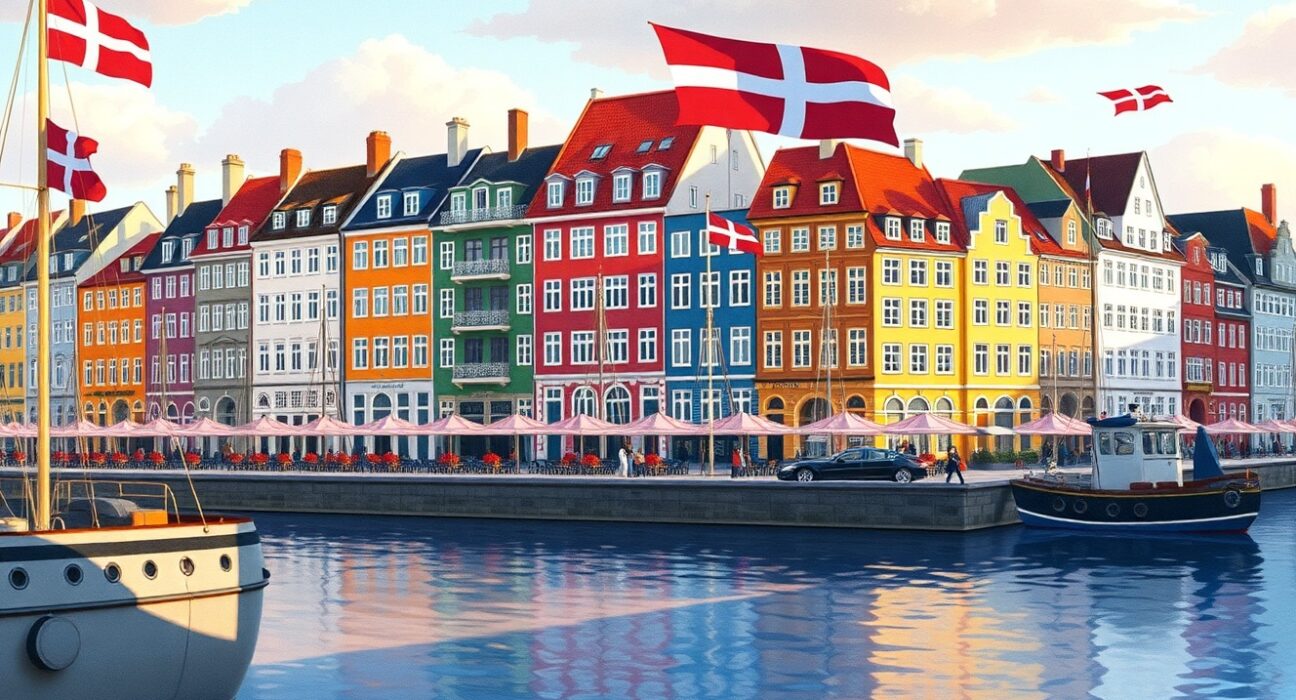
COPENHAGEN, Denmark – November 2024: Denmark’s political landscape enters a pivotal phase as Prime Minister Mette Frederiksen announces a parliamentary election, triggering immediate analysis from financial institutions including Nordea, which maintains a surprisingly stable economic outlook despite the political transition. This development comes at a critical juncture for Danish democracy, marking the first election since the controversial mink culling scandal that reshaped public trust. Financial markets typically react to political uncertainty, yet Nordea’s assessment provides crucial reassurance to investors and citizens alike. The bank’s analysis draws from Denmark’s historical resilience during political transitions, particularly noting the country’s consistent AAA credit rating maintained through multiple government changes. Furthermore, Denmark’s reputation for political stability within the Nordic region offers additional context for this optimistic forecast. European observers closely monitor this election, as Denmark’s policies significantly influence broader EU dynamics despite the country’s opt-outs from certain union policies.
Denmark Election Announcement and Immediate Reactions
Prime Minister Mette Frederiksen dissolved the Folketing on November 5, 2024, setting the stage for a national vote scheduled for early December. This decision follows months of political tension within the minority coalition government. Consequently, financial institutions quickly assessed potential economic impacts. Nordea, Scandinavia’s largest financial services group, published its analysis within hours of the announcement. The bank’s economists highlighted Denmark’s robust institutional framework as a stabilizing factor. Moreover, they pointed to historical precedents where Danish elections caused minimal market disruption. For instance, the 2019 election saw the Copenhagen Stock Exchange’s OMXC25 index decline only 0.8% during the campaign period. Similarly, bond yields remained remarkably stable during the 2015 election cycle. These historical patterns inform Nordea’s current assessment. Additionally, Denmark’s strong fiscal position, with government debt below 30% of GDP, provides substantial buffer against political uncertainty. The country’s current account surplus, consistently above 7% of GDP, further supports economic stability.
Nordea’s Analytical Framework and Methodology
Nordea employs a comprehensive analytical framework when assessing political events. Their methodology combines quantitative economic indicators with qualitative political risk assessment. Specifically, the bank’s research team examines five key areas: fiscal policy continuity, monetary policy alignment, regulatory environment stability, trade relationship consistency, and investor sentiment indicators. For this Denmark election analysis, Nordea’s economists conducted scenario modeling based on potential coalition outcomes. Their models incorporate data from previous Danish elections since 2001. The analysis also considers Denmark’s unique position within the European Union, particularly its opt-outs from the euro and certain justice policies. Nordea’s chief economist for Denmark, Jan Storup Nielsen, emphasized the importance of institutional strength in their assessment. “Danish democratic institutions have demonstrated remarkable resilience,” Nielsen stated in the bank’s research note. “Our analysis shows political transitions typically cause temporary volatility rather than structural economic shifts.” This expert perspective aligns with academic research from Copenhagen University’s Department of Political Science, which has documented Denmark’s political stability across multiple studies.
Economic Implications and Market Response
Financial markets responded cautiously but positively to Nordea’s stable outlook assessment. The Danish krone maintained its peg to the euro within the narrow ERM II band, showing minimal fluctuation. Meanwhile, government bond yields experienced only modest movement. This stability contrasts with typical election-related volatility observed in other European nations. For comparison, consider the following table showing election impact on 10-year government bond yields:
| Country | Election Year | Yield Change (Campaign Period) |
|---|---|---|
| Denmark | 2019 | +0.05% |
| Sweden | 2018 | +0.12% |
| Germany | 2021 | +0.08% |
| France | 2017 | +0.15% |
Several factors contribute to Denmark’s relative stability during elections. First, the country’s consensus-based political culture minimizes policy uncertainty. Second, Denmark’s fixed exchange rate regime provides automatic stabilization. Third, the Danish central bank maintains independent monetary policy aligned with European Central Bank decisions. Fourth, strong social welfare institutions buffer economic shocks. Fifth, high levels of public trust in government institutions reduce uncertainty premiums. Nordea’s analysis particularly emphasizes the role of Denmark’s “flexicurity” labor market model, which combines flexible hiring and firing rules with strong unemployment benefits and active labor market policies. This model has demonstrated effectiveness during previous political transitions, maintaining employment stability despite government changes. Additionally, Denmark’s export-oriented economy benefits from diversified trade relationships, reducing vulnerability to domestic political developments.
Historical Context and Comparative Analysis
Denmark’s political history reveals patterns of stability despite frequent minority governments. Since 1945, Denmark has averaged one election every 3.4 years, yet economic growth has remained consistently strong. The country has experienced only three brief recessions in the past three decades. This resilience stems from several institutional features. Coalition governments typically form across traditional left-right divides, ensuring policy continuity. Furthermore, important economic decisions often receive broad parliamentary support. For instance, Denmark’s energy transition policies have maintained cross-party consensus for decades. Similarly, fiscal responsibility norms enjoy widespread political acceptance. Comparative analysis with other Nordic countries provides additional perspective. Sweden’s 2018 election produced four months of government formation uncertainty, yet economic impacts remained limited. Norway’s 2021 election caused minimal market disruption despite oil policy debates. Finland’s 2023 election saw smooth transition between coalition governments. These Nordic examples suggest regional institutional strength buffers political uncertainty. Nordea’s analysis incorporates this comparative framework, noting that Nordic countries generally exhibit lower political risk premiums than southern European nations. The bank’s research references European Stability Mechanism data showing Nordic countries maintain lower borrowing costs during election periods.
Political Landscape and Potential Outcomes
Current polling indicates a fragmented political landscape with several potential coalition configurations. The Social Democrats maintain lead position but face challenges from both left and right. Meanwhile, the Liberal Party and Conservative People’s Party seek center-right alliances. Additionally, smaller parties including the Social Liberals and Socialist People’s Party could play kingmaker roles. Despite this complexity, most potential coalitions share broad agreement on key economic policies. All major parties support maintaining Denmark’s fixed exchange rate regime. Similarly, fiscal responsibility remains a cross-party priority. Furthermore, climate transition policies enjoy widespread support, though implementation details vary. Nordea’s analysis identifies three most likely outcomes with similar economic implications. First, a renewed Social Democratic minority government with left-wing support. Second, a center-right coalition led by the Liberal Party. Third, a broader centrist coalition including Social Liberals. Each scenario presents minor policy variations but maintains Denmark’s fundamental economic direction. The bank’s economists note that even less likely outcomes, such as a right-wing bloc including the Danish People’s Party, would probably maintain core economic policies due to institutional constraints and international commitments. This analysis draws from University of Aarhus political science research on Danish coalition formation patterns.
Sector-Specific Impacts and Business Considerations
Different economic sectors face varying implications from the Denmark election. Nordea’s analysis provides sector-specific assessments based on party platforms and historical patterns. The renewable energy sector likely benefits regardless of election outcome, as all major parties support Denmark’s ambitious climate goals. Conversely, the agricultural sector faces uncertainty regarding environmental regulations and EU relationship management. The financial services sector anticipates continuity, as Denmark’s banking regulations largely follow EU frameworks. Real estate markets might experience temporary slowdown but historically recover quickly post-election. Export-oriented industries benefit from Denmark’s stable trade relationships. Key considerations for businesses include:
- Policy Continuity: Most economic policies enjoy cross-party support
- Regulatory Environment: Predictable despite government changes
- Labor Market: Flexicurity model provides stability
- International Relations: EU cooperation continues regardless of government
- Investment Climate: Strong institutions maintain attractiveness
Nordea particularly emphasizes Denmark’s consistent ranking in global competitiveness indices. The World Economic Forum’s Global Competitiveness Report consistently places Denmark among top ten nations. Similarly, the World Bank’s Ease of Doing Business index ranks Denmark highly for regulatory quality and contract enforcement. These institutional strengths buffer against political uncertainty. The bank’s analysis references specific examples where Danish companies maintained investment plans during previous election periods. For instance, pharmaceutical giant Novo Nordisk announced major facility expansions during the 2019 election campaign. Similarly, shipping company Maersk proceeded with strategic investments despite political uncertainty. These examples demonstrate business confidence in Denmark’s institutional stability.
International Perspective and EU Relations
European Union observers monitor Denmark’s election closely, though expectations remain moderate for major policy shifts. Denmark maintains four EU opt-outs covering the euro, justice and home affairs, defense cooperation, and citizenship. Changing these opt-outs requires referendum approval, limiting any government’s ability to alter Denmark’s EU relationship dramatically. Consequently, EU-related policies show remarkable continuity across governments. Nordea’s analysis notes that Denmark typically pursues pragmatic EU engagement regardless of governing coalition. The country actively participates in areas not covered by opt-outs, particularly single market policies and climate initiatives. Furthermore, Denmark generally aligns with Nordic cooperation priorities within EU frameworks. International financial institutions share Nordea’s stable outlook assessment. The International Monetary Fund’s most recent Article IV consultation with Denmark highlighted strong fundamentals and resilient institutions. Similarly, Moody’s Investors Service maintains Denmark’s Aaa rating with stable outlook, citing “very high economic strength” and “very strong institutions.” These external assessments reinforce Nordea’s analysis. European Central Bank monitoring of Danish elections focuses primarily on exchange rate stability within ERM II. Historical data shows the krone-euro peg maintains stability during Danish political transitions, supported by the Danish central bank’s substantial foreign exchange reserves.
Long-term Economic Outlook and Structural Considerations
Beyond immediate election impacts, Denmark faces several structural economic considerations. The country’s aging population presents long-term fiscal challenges. Meanwhile, green transition requires substantial investment. Additionally, digital transformation affects labor markets and productivity. Nordea’s analysis examines how different election outcomes might address these challenges. Most party platforms acknowledge these structural issues, though proposed solutions vary. The Social Democrats emphasize welfare state maintenance and green investment. Conversely, center-right parties focus on tax competitiveness and business environment improvements. Despite these differences, consensus exists on addressing demographic challenges through labor market participation increases. Denmark’s high employment rate, particularly among older workers and women, provides strong foundation. The country’s active labor market policies receive international recognition for effectiveness. Nordea’s economists project Denmark’s potential growth rate around 1.5-2.0% annually through 2030, assuming policy continuity. This projection incorporates demographic trends and productivity assumptions. The analysis references Statistics Denmark data showing consistent productivity growth across government changes. Furthermore, Denmark’s innovation ecosystem, supported by strong research institutions and venture capital availability, drives long-term competitiveness. These structural strengths outweigh short-term political uncertainty in Nordea’s assessment.
Conclusion
Nordea’s analysis of Denmark’s election announcement provides crucial reassurance about economic stability despite political transition. The bank’s assessment draws from Denmark’s historical resilience, strong institutions, and consensus-based political culture. Financial markets responded calmly to the election news, reflecting confidence in Denmark’s fundamentals. While coalition negotiations may produce temporary uncertainty, economic policies likely maintain continuity across potential government configurations. Denmark’s fixed exchange rate regime, independent central bank, and robust fiscal position buffer against political volatility. International observers recognize Denmark’s institutional strength, as reflected in consistent top-tier credit ratings and competitiveness rankings. The Denmark election represents normal democratic process rather than economic risk event. Nordea’s stable outlook assessment aligns with broader expert consensus on Danish political economy. As voters prepare for December’s ballot, economic fundamentals remain solid, supported by decades of institutional development and cross-party cooperation on core policies.
FAQs
Q1: Why does Nordea maintain a stable outlook despite Denmark’s election announcement?
Nordea’s analysis emphasizes Denmark’s strong institutional framework, historical resilience during political transitions, robust fiscal position, and consensus-based political culture that minimizes policy uncertainty.
Q2: How have financial markets reacted to previous Danish elections?
Historical data shows minimal market disruption during Danish elections. For example, the 2019 election saw only 0.8% decline in Copenhagen stock index and negligible bond yield movement during the campaign period.
Q3: What are the most likely coalition outcomes from this Denmark election?
Current polling suggests three probable scenarios: renewed Social Democratic minority government, center-right coalition led by Liberal Party, or broader centrist coalition including Social Liberals.
Q4: How does Denmark’s EU relationship affect election economic impacts?
Denmark’s four EU opt-outs require referendum approval to change, limiting any government’s ability to dramatically alter EU relationship, ensuring policy continuity regardless of election outcome.
Q5: What sectors face greatest uncertainty from Denmark’s election?
While most sectors anticipate continuity, agriculture faces some regulatory uncertainty, and real estate might experience temporary slowdown, though both historically recover quickly post-election.
Disclaimer: The information provided is not trading advice, Bitcoinworld.co.in holds no liability for any investments made based on the information provided on this page. We strongly recommend independent research and/or consultation with a qualified professional before making any investment decisions.