

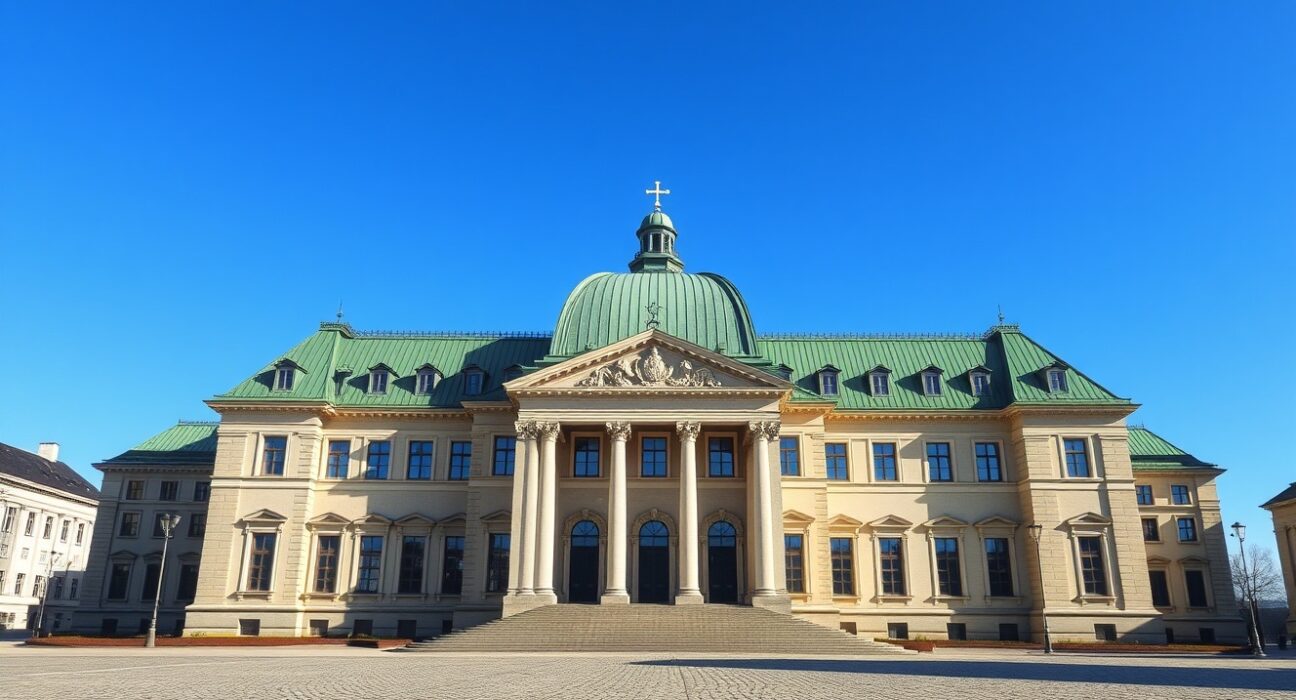
COPENHAGEN, Denmark – Denmark’s government formation process has entered a critical phase of prolonged negotiations, creating significant political uncertainty according to analysis from Nordea, Scandinavia’s largest financial services group. The extended discussions follow recent parliamentary elections that failed to produce a clear majority coalition, potentially impacting economic stability and policy implementation across the Nordic nation.
Denmark Government Formation Enters Complex Phase
Political observers note that Denmark’s government formation typically requires extensive negotiations due to the country’s multi-party system. Consequently, the current process involves at least five major political parties with divergent policy priorities. Moreover, these negotiations center on key issues including climate policy, welfare reform, and immigration controls. Additionally, historical precedent shows Danish coalition talks often extend for several weeks, sometimes exceeding a month. For instance, the 2019 government formation required 26 days of intensive negotiations before reaching a final agreement.
Nordea’s political analysts emphasize that prolonged negotiations create temporary governance challenges. Specifically, caretaker governments maintain basic administrative functions but cannot implement new policies. Furthermore, this political limbo affects legislative planning and international commitments. The European Union particularly monitors such situations among member states. Denmark’s position on EU defense cooperation and green transition initiatives remains uncertain during this period.
Nordea Analysis Highlights Economic Implications
Nordea’s research department has published detailed analysis of the negotiation stalemate’s potential economic consequences. Their report identifies three primary areas of concern:
- Market uncertainty: Extended political negotiations typically increase volatility in Danish bond markets
- Investment delays: Major infrastructure and green energy projects await government approval
- Policy continuity: Existing economic measures face potential revision or cancellation
The Danish krone has shown minor fluctuations against the euro since negotiations began. However, Denmark’s central bank maintains its currency peg mechanism regardless of political developments. Meanwhile, business confidence indicators have dipped slightly according to recent surveys from the Confederation of Danish Industry.
Comparative Scandinavian Political Stability
Denmark’s situation contrasts with neighboring Scandinavian countries’ recent political experiences. Sweden formed its current government after just 18 days of negotiations in 2022. Norway typically completes government formations within two weeks following elections. Finland’s 2023 negotiations required 49 days but produced a broad five-party coalition. This regional comparison highlights Denmark’s particular negotiation challenges.
| Country | Year | Negotiation Days | Coalition Parties |
|---|---|---|---|
| Denmark | 2019 | 26 | 4 |
| Sweden | 2022 | 18 | 3 |
| Norway | 2021 | 14 | 2 |
| Finland | 2023 | 49 | 5 |
Key Negotiation Sticking Points Identified
Several substantive policy disagreements currently prolong Denmark’s government formation negotiations. Climate policy represents perhaps the most significant division among potential coalition partners. Specifically, proposals for accelerating Denmark’s green transition face varying levels of support. The Social Democrats advocate for more ambitious carbon reduction targets. Conversely, the Liberal Party emphasizes business competitiveness concerns.
Welfare system reforms constitute another major negotiation hurdle. Denmark’s comprehensive welfare model requires substantial public expenditure. Therefore, different parties propose varying approaches to sustainability. Some advocate for moderate adjustments to pension eligibility. Others suggest more fundamental restructuring of healthcare financing. These technical discussions require careful compromise.
Immigration policy continues to influence Danish coalition mathematics significantly. Recent years have seen increasingly restrictive approaches gain political support. However, parties disagree on specific implementation details. Integration requirements, family reunification rules, and asylum processing all require negotiation. International observers monitor these discussions closely.
Historical Context of Danish Coalition Building
Denmark’s political system has evolved through decades of coalition governance. The country abandoned single-party majority governments in the early 20th century. Since then, minority and coalition governments have become standard practice. This tradition reflects Denmark’s proportional representation electoral system. Voters distribute support across multiple parties representing diverse interests.
The current negotiation complexity stems from several structural factors. Denmark’s parliament, the Folketing, includes 179 members representing multiple parties. No single party has achieved an outright majority since 1909. Consequently, successful government formation always requires inter-party cooperation. Sometimes this produces formal coalition agreements. Other times it results in parliamentary support arrangements.
Recent Danish political history shows negotiation duration varies considerably. The 2011 government formation required 17 days of discussions. By contrast, 1975 negotiations extended for 35 days before resolution. Each situation depends on specific political constellations and policy disagreements. The current negotiations appear headed toward the longer end of this historical spectrum.
Constitutional Framework and Procedures
Denmark’s constitutional monarchy provides specific procedures for government formation. Following elections, the monarch consults with political party leaders. These consultations identify potential prime ministerial candidates. Subsequently, the designated “royal investigator” explores possible coalition configurations. This process continues until identifying a viable government majority.
The current royal investigator faces particular challenges according to political scientists. Several potential coalition combinations exist mathematically. However, policy differences prevent easy agreement. Furthermore, personal relationships between party leaders influence negotiation dynamics. Past conflicts sometimes resurface during these sensitive discussions.
Potential Scenarios and Outcomes
Political analysts outline several possible outcomes for Denmark’s prolonged government formation. A center-left coalition represents one plausible scenario. This would involve the Social Democrats partnering with three smaller left-wing parties. Alternatively, a broader coalition might emerge across traditional left-right divides. Such “grand coalitions” remain rare in Danish politics but not unprecedented.
A minority government represents another possible outcome. This arrangement would require negotiated support from opposition parties on specific legislation. Minority governments have governed Denmark for approximately half of the past fifty years. They offer flexibility but require constant parliamentary negotiation. Each budget and major policy initiative demands separate coalition building.
The negotiation deadline remains flexible under Danish constitutional practice. However, practical pressures encourage resolution. Parliament cannot conduct normal legislative business during government formation. Important international meetings approach requiring Danish representation. Furthermore, autumn budget preparations require government leadership.
Conclusion
Denmark’s government formation faces genuinely prolonged negotiations with significant implications for political stability and economic planning. Nordea’s analysis highlights the potential consequences of extended political uncertainty. Meanwhile, the complex multi-party landscape requires careful navigation of policy differences. Historical patterns suggest resolution will eventually emerge through compromise. However, the specific timeline and coalition composition remain uncertain. Consequently, Denmark’s political future hangs in delicate balance during these critical negotiations.
FAQs
Q1: How long do Danish government formations typically take?
Danish government formations usually require 2-4 weeks of negotiations, though historical examples range from 14 to 49 days depending on political complexity and policy disagreements.
Q2: What happens during the government formation period?
A caretaker government manages daily administration while negotiations proceed. This government cannot implement new policies or make major decisions without parliamentary approval.
Q3: Why is Nordea analyzing political developments?
As Scandinavia’s largest financial services group, Nordea monitors political stability for economic forecasting. Government formation outcomes influence fiscal policy, regulations, and investment climates.
Q4: What are the main issues delaying coalition agreement?
Climate policy ambitions, welfare system reforms, and immigration controls represent the primary negotiation sticking points among potential coalition partners.
Q5: How does Denmark’s situation compare to other European countries?
Denmark’s multi-party system creates more complex negotiations than majority systems but typically resolves faster than some proportional representation countries like Belgium or the Netherlands.
Disclaimer: The information provided is not trading advice, Bitcoinworld.co.in holds no liability for any investments made based on the information provided on this page. We strongly recommend independent research and/or consultation with a qualified professional before making any investment decisions.