What’s the Difference Between a Crypto Exchange and a Wallet?
The difference between a crypto exchange and a wallet is one of the most fundamental things any new user needs to understand – and most beginners use them interchangeably without realizing they serve entirely different purposes. An exchange is where you trade; a wallet is where you truly own. Getting this wrong is one of the main reasons people lose access to their crypto. This article explains exactly what each does, who holds the keys in each case, and how Indian users should use them together.
What’s the Difference Between a Crypto Exchange and a Wallet?
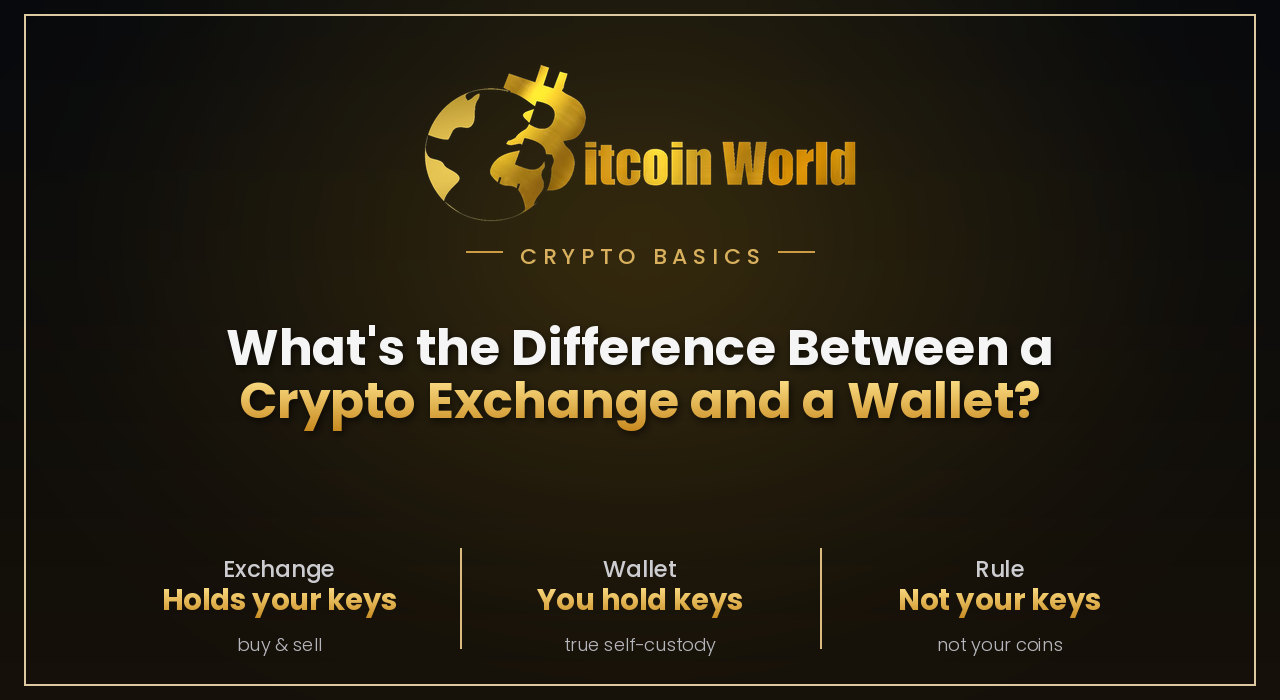
The core difference between a crypto exchange and a wallet is custody: an exchange holds your keys for you, while a wallet puts the keys in your own hands.
- Exchange: A platform to buy, sell, and trade crypto. The exchange controls the private keys on your behalf.
- Wallet: A tool to store and manage your own private keys, giving you direct control of your funds.
- Analogy: An exchange is like a bank – convenient, but the bank holds your money. A wallet is like your own safe – you hold everything.
- Key phrase: “Not your keys, not your coins” – if someone else controls the keys, they control the funds.
What Does an Exchange Actually Do?
Exchanges are the on-ramp to crypto, but they come with trade-offs.
- Buy and sell: Convert INR to crypto and back on platforms like CoinDCX, WazirX, or Binance.
- Trading: Swap between cryptocurrencies using the exchange’s order book.
- Custodial by default: Most centralized exchanges hold your crypto on your behalf – convenient but not self-sovereign.
- KYC required: Indian exchanges require full KYC verification before trading.
What Does a Wallet Actually Do?
A wallet is your personal key manager – the tool of true ownership.
- Stores private keys: Apps like MetaMask, Trust Wallet, Ledger, or Trezor store or manage your keys securely.
- Non-custodial: You hold the keys; no company can freeze, restrict, or lose your funds.
- Send and receive: Wallets let you transfer crypto directly to and from any address on the blockchain.
- Seed phrase backed: Your wallet is recoverable anywhere as long as you have the seed phrase.
When Should Indian Users Use Each?
Both have legitimate roles – the question is which to use for what purpose.
- Use an exchange for: Buying crypto with INR, actively trading, quick conversions, and selling back to fiat.
- Use a wallet for: Storing long-term holdings, interacting with DeFi or NFTs, and keeping full control of your keys.
- Best practice: Buy on an exchange, then withdraw to your own wallet for anything you’re holding long term.
- Avoid leaving large amounts on exchanges: Exchange hacks, regulatory freezes, and insolvencies are real risks – as Indian users have seen firsthand.
Frequently Asked Questions
Can you store crypto in an exchange account instead of a wallet?
Yes, but it means the exchange holds your keys and controls access to your funds. While convenient for active trading, storing large or long-term holdings on an exchange carries custodial risk – hacks, insolvency, and regulatory freezes can all prevent access. Most experienced users keep only trading amounts on exchanges and move holdings to a self-custody wallet.
Is an exchange wallet the same as a personal crypto wallet?
No – an exchange wallet is a custodial account where the exchange holds the private keys, while a personal wallet like MetaMask or a Ledger device puts the keys directly in your control. The key difference between a crypto exchange and a wallet is who holds the private keys. Only a personal, non-custodial wallet gives you true ownership.
Which Indian crypto wallets and exchanges are widely used?
Major Indian exchanges include CoinDCX, WazirX, and Zebpay for buying and selling. For personal wallets, MetaMask and Trust Wallet are popular software options, while Ledger and Trezor are the leading hardware wallets for offline storage. Using both – exchanging on a platform and storing in a personal wallet – gives you the best of both worlds.
Conclusion: Why Understanding Both Changes Everything
Knowing the difference between a crypto exchange and a wallet is the foundation of using crypto safely. For Indian users, the practical takeaway is simple: use exchanges to buy and trade, then move meaningful holdings to a personal wallet where you control the keys. The exchange is the door; the wallet is the house – and only you should hold the keys to your house.
Disclaimer: The information provided is not trading advice, Bitcoinworld.co.in holds no liability for any investments made based on the information provided on this page. We strongly recommend independent research and/or consultation with a qualified professional before making any investment decisions.