

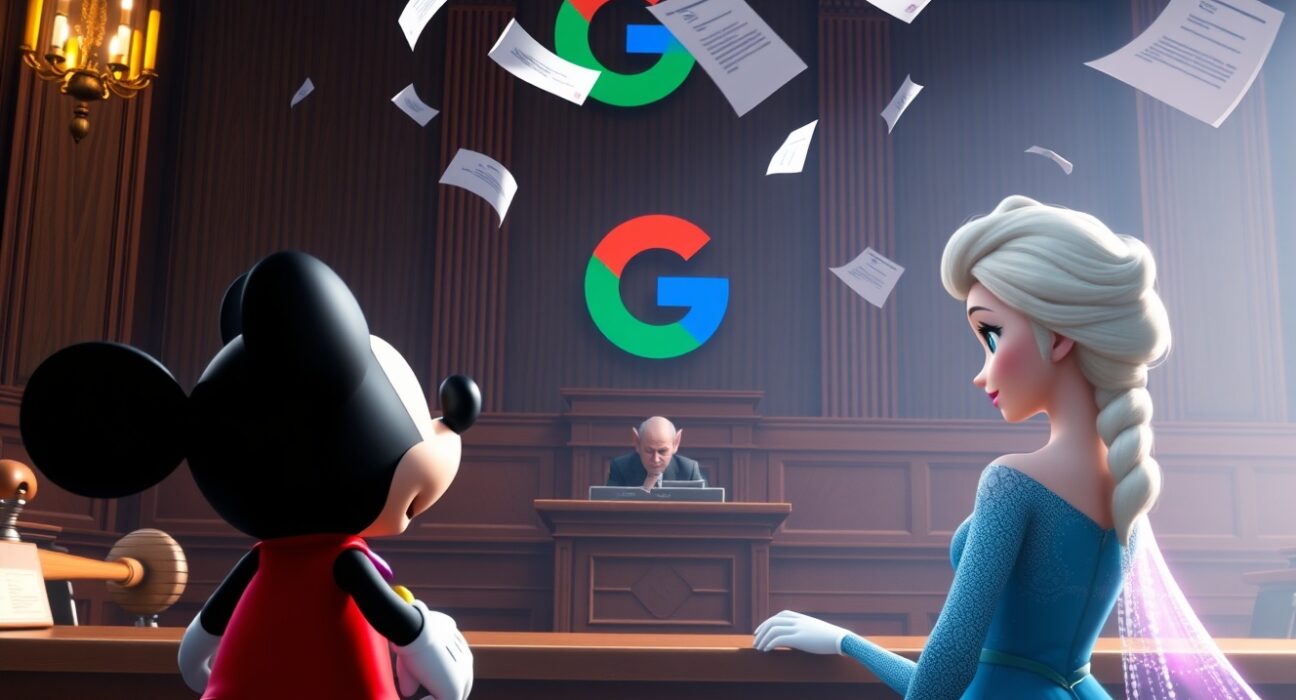
In a stunning legal escalation that could reshape the entire AI industry, Disney has launched a nuclear legal strike against Google, accusing the tech titan of ‘massive’ copyright infringement through its AI systems. This landmark confrontation between entertainment and technology giants comes at the exact moment Disney announces a groundbreaking $1 billion partnership with OpenAI, creating a seismic shift in the AI landscape that cryptocurrency investors and tech enthusiasts cannot afford to ignore.
What’s Behind Disney’s Explosive Copyright Infringement Claims?
Disney’s cease-and-desist letter, obtained by Variety, paints a damning picture of what the entertainment giant calls ‘blatant infringement’ on an industrial scale. The legal document accuses Google of operating as a ‘virtual vending machine’ that systematically reproduces, renders, and distributes Disney’s copyrighted characters without authorization. This isn’t about a few stray images—Disney claims the infringement involves their entire valuable library, including characters from Frozen, The Lion King, Moana, The Little Mermaid, and even the recently acquired Deadpool franchise.
Google’s AI Services: The Copyright Infringement Machine?
The heart of Disney’s complaint focuses on Google’s AI models and services, which the company alleges commercially distribute unauthorized Disney content. What makes this case particularly explosive is Disney’s claim that Google’s AI-generated images bear the Gemini logo, creating what Disney calls a ‘false implication’ that this exploitation is authorized. This raises critical questions about AI training data, copyright boundaries, and corporate responsibility in the age of generative AI.
| Disney Franchises Allegedly Infringed | Google AI Services Involved | Key Legal Allegations |
|---|---|---|
| Frozen characters (Elsa, Anna) | Gemini AI models | Unauthorized commercial distribution |
| The Lion King characters | Various AI image generators | False endorsement implications |
| Moana characters | AI video services | Mass-scale reproduction |
| The Little Mermaid | Text-to-image systems | Brand dilution |
| Deadpool and Marvel characters | Multiple AI platforms | Copyright violation on industrial scale |
The Timing Bomb: Disney’s $1 Billion OpenAI Deal
In what can only be described as a masterstroke of corporate strategy, Disney announced its $1 billion, three-year partnership with OpenAI on the same day it sent the cease-and-desist to Google. This deal will bring Disney’s iconic characters to OpenAI’s Sora AI video generator, creating a legitimate, authorized pathway for AI-generated Disney content. The contrast couldn’t be more stark: while suing Google for infringement, Disney is simultaneously embracing OpenAI as a strategic partner.
Why This AI Copyright Lawsuit Matters for Tech Investors
This legal battle represents more than just corporate drama—it’s a watershed moment for AI development and intellectual property rights. Consider these critical implications:
- Legal Precedent: The outcome could establish new rules for AI training data and copyright
- Market Shifts: Disney’s OpenAI partnership signals where major content creators are placing their bets
- Investment Risks: AI companies using copyrighted training data face unprecedented legal exposure
- Innovation Impact: Future AI development may require expensive licensing deals or risk similar lawsuits
Google’s Silence and the Broader AI Copyright Landscape
Google has remained conspicuously silent, failing to respond to media requests for comment. This silence speaks volumes in an industry where AI copyright issues are becoming increasingly contentious. The case arrives as multiple lawsuits challenge how AI companies use copyrighted material for training their models, suggesting we may be approaching a tipping point in AI regulation and copyright law.
Actionable Insights for the Crypto and Tech Community
For cryptocurrency investors and technology observers, this Disney-Google confrontation offers several crucial takeaways:
- Monitor AI-related stocks and tokens for volatility following major legal developments
- Watch for increased regulatory scrutiny of AI training practices
- Consider the long-term implications for AI companies relying on copyrighted data
- Evaluate how content licensing deals might become a new revenue stream for media companies
FAQs: Understanding the Disney-Google AI Copyright Battle
What specific Disney characters are involved in the copyright infringement claims?
Disney’s letter specifically mentions characters from Frozen, The Lion King, Moana, The Little Mermaid, and Deadpool, suggesting a broad range of their intellectual property portfolio.
How does Disney’s OpenAI deal relate to the Google lawsuit?
The timing suggests Disney is creating a clear distinction between unauthorized use (Google) and authorized partnerships (OpenAI), potentially strengthening their legal position while securing future AI revenue streams.
What are the potential consequences for Google if Disney prevails?
Google could face massive financial damages, forced changes to its AI training practices, and potential restrictions on certain AI services. The case could also trigger similar lawsuits from other content creators.
How might this affect the broader AI industry?
This case could force AI companies to implement more rigorous copyright clearance processes, increase licensing costs, and potentially slow certain types of AI development while legal frameworks are established.
What should investors watch for next?
Key developments include Google’s official response, potential settlement negotiations, regulatory reactions, and whether other media companies follow Disney’s lead with similar legal actions.
This landmark confrontation between Disney and Google represents a defining moment for the AI industry—a legal earthquake whose aftershocks will be felt across technology, entertainment, and investment landscapes. As two corporate titans clash over the fundamental rules of AI development, the outcome will likely shape how artificial intelligence evolves, who profits from it, and what protections exist for creative works in the digital age. The message is clear: in the wild west of AI development, the sheriff has arrived, and he’s wearing Mickey Mouse ears.
To learn more about the latest AI copyright and legal trends, explore our article on key developments shaping AI regulation and corporate strategies in the evolving technology landscape.
Disclaimer: The information provided is not trading advice, Bitcoinworld.co.in holds no liability for any investments made based on the information provided on this page. We strongly recommend independent research and/or consultation with a qualified professional before making any investment decisions.