

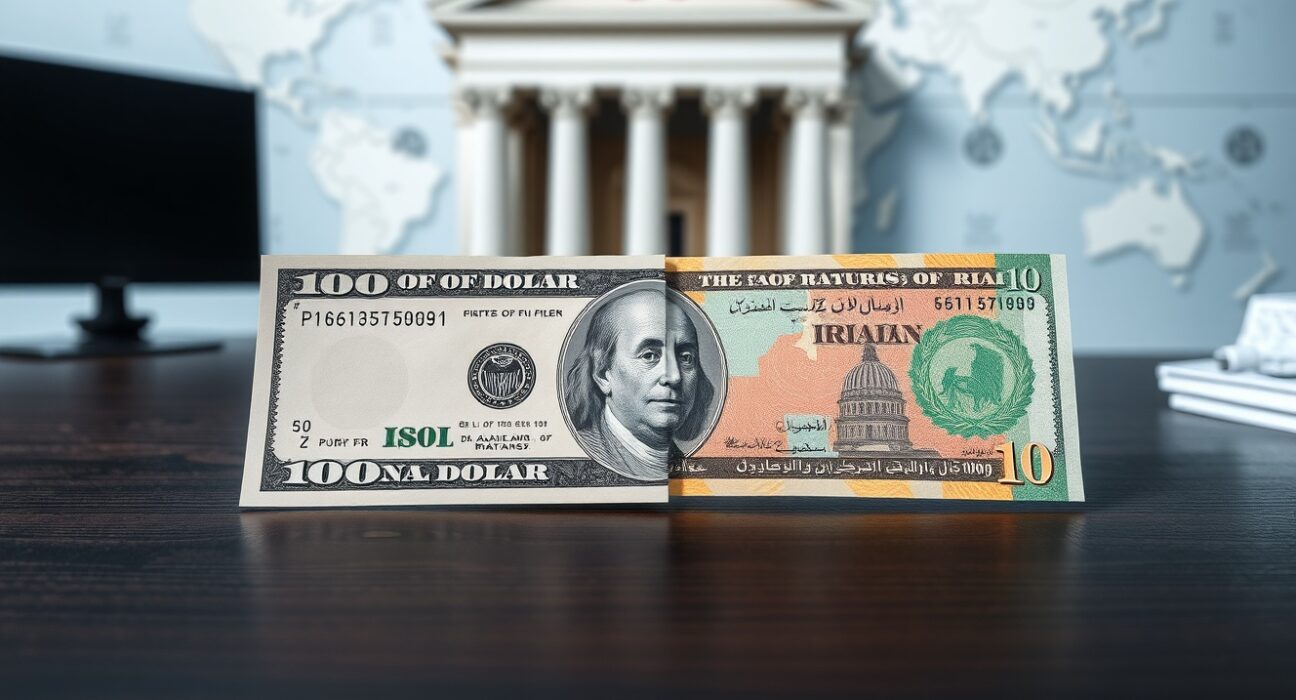
The dollar strengthens sharply this week as the prolonged U.S.-Iran deadlock continues to fuel safe-haven demand. Investors now turn their focus to a series of critical central bank decisions that could define currency trends for the rest of 2025. This dual pressure—geopolitical tension and monetary policy—creates a volatile environment for forex markets worldwide.
Dollar Strengthens: The U.S.-Iran Deadlock Factor
The U.S.-Iran deadlock shows no signs of resolution. Talks in Vienna collapsed last Friday after Iran refused to halt uranium enrichment above 60%. The United States responded by tightening sanctions on Iranian oil exports. This geopolitical standoff pushes investors toward the greenback. The dollar strengthens against most major currencies, including the euro, yen, and British pound.
Analysts at Goldman Sachs note that safe-haven flows typically spike during such crises. The dollar index (DXY) rose 1.2% in the past week, reaching a three-month high. This rally reflects not only the deadlock but also expectations of hawkish moves from the Federal Reserve.
Meanwhile, oil prices remain elevated. Brent crude trades above $85 per barrel. Higher energy costs add inflationary pressure, which further supports the dollar. The U.S. economy, being less energy-dependent than Europe or Asia, benefits from this dynamic.
Central Bank Decisions in Focus: Fed, ECB, and BOJ
Three major central banks meet this week. Their decisions will shape the forex market trajectory. The Federal Reserve, European Central Bank, and Bank of Japan all face unique challenges.
Federal Reserve: Holding Steady or Hiking?
The Fed is widely expected to hold rates at 5.5%. However, recent inflation data shows a slight uptick. Core PCE rose to 2.8% in May, above the 2% target. If the Fed signals a rate hike in July, the dollar strengthens further. Traders price in a 40% chance of a quarter-point increase.
Fed Chair Jerome Powell will likely emphasize data dependency. Any hawkish tone could push the DXY above 105. Conversely, a dovish stance might trigger a sell-off. The market watches every word.
European Central Bank: Diverging Paths
The ECB faces a different reality. The eurozone economy stagnates. Germany narrowly avoided a recession last quarter. Inflation, however, remains sticky at 3.1%. The ECB may cut rates by 25 basis points to stimulate growth. This divergence—hawkish Fed vs. dovish ECB—widens the interest rate gap. Consequently, the dollar strengthens against the euro. EUR/USD now trades near 1.08, down from 1.12 in April.
Bank of Japan: Intervention Risks
The BOJ maintains its ultra-loose policy. The yen weakens past 155 against the dollar. Japanese officials warn of intervention. Yet, the dollar strengthens relentlessly. The BOJ’s decision to keep negative rates makes the yen a funding currency for carry trades. This dynamic amplifies dollar demand.
Forex Market Analysis: Key Levels and Trends
The forex market shows clear technical patterns. The dollar index broke above its 200-day moving average. This signals bullish momentum. Support now sits at 103.5, while resistance lies at 105.5. A break above 105.5 could open the door to 107.
Major pairs reflect this strength:
- EUR/USD: Below 1.09, with next support at 1.07
- USD/JPY: Above 155, with intervention risk at 158
- GBP/USD: Falling toward 1.24, as UK inflation eases
- USD/CHF: Near 0.92, a safe-haven pair
Emerging market currencies suffer most. The Turkish lira hits record lows. The Indian rupee tests 84 per dollar. The Brazilian real weakens as commodity prices dip.
Impact on Global Trade and Commodities
A dollar strengthens scenario hurts commodity-exporting nations. Oil, gold, and copper become more expensive for buyers using weaker currencies. Gold prices fall below $2,300 per ounce, down 5% this month. Silver drops to $28.
Conversely, U.S. exporters face headwinds. A strong dollar makes American goods pricier abroad. The trade deficit may widen. However, U.S. consumers benefit from cheaper imports, which helps contain inflation.
Developing countries with dollar-denominated debt struggle. Servicing costs rise. Countries like Pakistan, Egypt, and Argentina face increased financial strain. The IMF may step in with new programs.
Expert Insights and Historical Context
Historically, the dollar strengthens during geopolitical crises. The 1979 Iran hostage crisis saw the dollar rally 10%. The 2020 pandemic also boosted the greenback. Today’s deadlock echoes those periods.
Mohamed El-Erian, chief economic advisor at Allianz, warns that prolonged dollar strength could destabilize global markets. He states, “A strong dollar is a double-edged sword. It helps the U.S. fight inflation but hurts emerging economies.”
Data from the Bank for International Settlements shows that dollar-denominated debt exceeds $13 trillion globally. A 10% dollar appreciation increases debt servicing costs by $1.3 trillion. This creates systemic risk.
Timeline of Key Events
Understanding the sequence helps traders navigate volatility:
- June 10: U.S.-Iran talks collapse in Vienna
- June 12: U.S. announces new sanctions on Iran
- June 14: Oil prices surge 4%
- June 17: Dollar index breaks above 104
- June 18: Fed begins two-day meeting
- June 19: ECB and BOJ meetings start
- June 20: All three central banks announce decisions
This timeline shows how events compound. The deadlock sets the stage. Central bank decisions then amplify or reverse trends.
Central Bank Decisions: What to Watch
Each central bank’s statement matters. For the Fed, watch the dot plot and inflation projections. A shift to two rate hikes in 2025 would be bullish for the dollar. For the ECB, the rate cut size and forward guidance are key. A 50-basis-point cut would weaken the euro further. For the BOJ, any hint of policy normalization could strengthen the yen temporarily.
Traders also monitor press conferences. Powell’s tone on inflation, Lagarde’s view on growth, and Ueda’s stance on yield curve control all move markets. The dollar strengthens if all three banks disappoint dovish expectations.
Risk Management for Forex Traders
Volatility creates opportunities but also risks. Traders should use stop-losses and position sizing. The U.S.-Iran deadlock could escalate unexpectedly. A military confrontation would spike the dollar further. Conversely, a diplomatic breakthrough would reverse gains.
Diversification helps. Consider hedging dollar exposure with gold or Swiss francs. Use options to limit downside. Stay informed through real-time news feeds.
Conclusion
The dollar strengthens as the U.S.-Iran deadlock and central bank decisions converge. This combination creates a powerful bullish trend for the greenback. Forex traders must monitor geopolitical developments and monetary policy closely. The next few weeks will determine whether the dollar continues its rally or faces a reversal. Understanding these dynamics is essential for anyone involved in global markets.
FAQs
Q1: Why does the dollar strengthen during the U.S.-Iran deadlock?
Investors seek safe-haven assets like the U.S. dollar during geopolitical uncertainty. The deadlock increases risk aversion, driving capital into the greenback.
Q2: How do central bank decisions affect the dollar?
Hawkish decisions (rate hikes) strengthen the dollar by offering higher yields. Dovish decisions (rate cuts) weaken it. The Fed’s stance is most influential.
Q3: Which currencies are most impacted by a stronger dollar?
Emerging market currencies like the Turkish lira, Indian rupee, and Brazilian real suffer most. The euro and yen also weaken but have more central bank support.
Q4: Can the dollar strengthen too much?
Yes. An excessively strong dollar hurts U.S. exports and increases global debt burdens. The Fed may intervene through verbal guidance or policy adjustments.
Q5: What is the outlook for the dollar in 2025?
If the U.S.-Iran deadlock persists and the Fed remains hawkish, the dollar could rally to 107 on the DXY. A diplomatic resolution or Fed pivot would reverse gains.
Q6: How can I protect my portfolio from dollar strength?
Diversify into non-dollar assets like gold, Swiss francs, or Japanese yen. Use hedging instruments like forex options or futures. Stay informed on geopolitical news.
Disclaimer: The information provided is not trading advice, Bitcoinworld.co.in holds no liability for any investments made based on the information provided on this page. We strongly recommend independent research and/or consultation with a qualified professional before making any investment decisions.
