
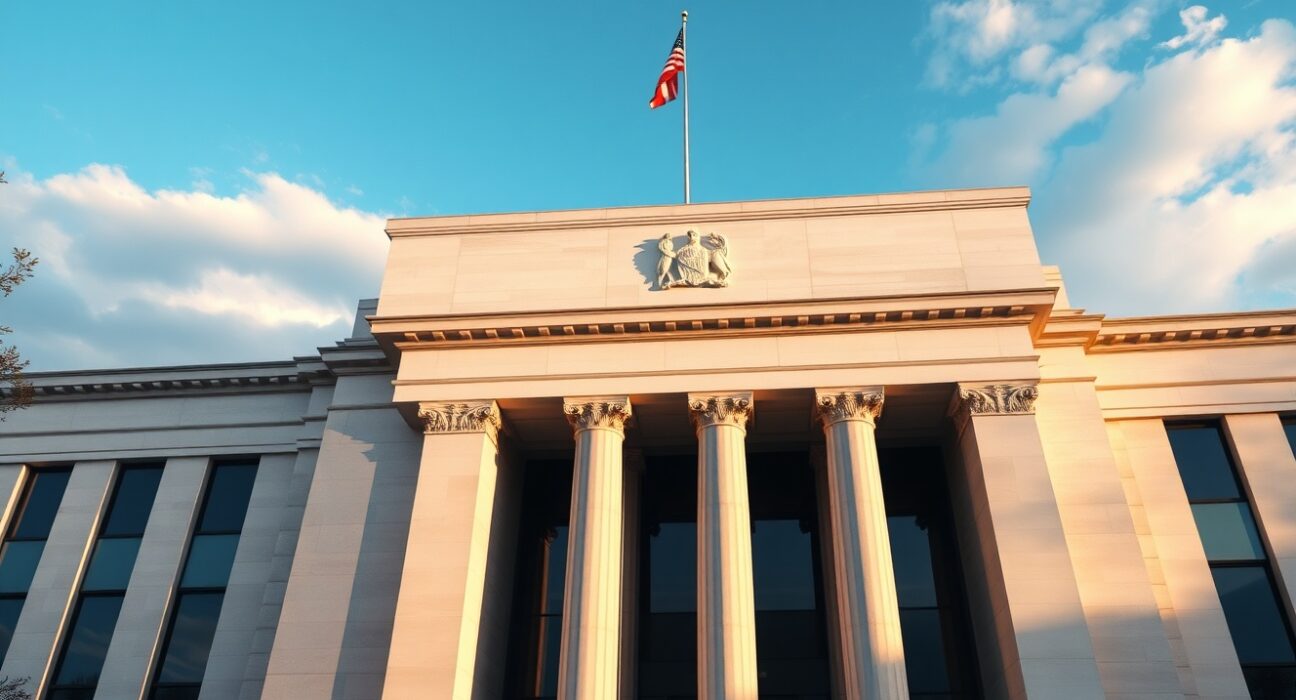
The US dollar gained notable ground against a basket of major currencies on Tuesday, March 18, 2025, as investors globally positioned themselves for the possibility of sustained higher interest rates from the Federal Reserve. This pre-meeting momentum underscores the intense market focus on the central bank’s upcoming policy statement and economic projections.
Dollar Strength Builds on Firming Rate Expectations
Market analysts observed a clear trend throughout the trading session. Consequently, the dollar index, which measures the greenback against six major peers, climbed 0.4% to its highest level in over a month. This movement directly reflects shifting trader sentiment. Specifically, recent robust economic data has tempered earlier expectations for imminent rate cuts. For instance, last week’s stronger-than-anticipated retail sales and persistent services sector inflation have been pivotal. Therefore, the market narrative has swiftly evolved from ‘higher for longer’ to potentially ‘even higher for even longer.’
Money market futures now price in less than a 50% chance of a rate cut at the Fed’s June meeting. This is a significant shift from just one month prior. At that time, traders were nearly certain of a mid-year easing cycle beginning. “The data dependency the Fed emphasizes is now cutting both ways,” noted a senior currency strategist at a major global bank. “Strong data delays cuts, and the market is finally accepting that reality, which is inherently dollar-positive.”
The Federal Reserve’s Precarious Balancing Act
The Federal Open Market Committee (FOMC) begins its two-day meeting tomorrow. All eyes will be on the updated ‘dot plot,’ which charts individual policymakers’ rate expectations. The December 2024 plot signaled three quarter-point cuts for 2025. However, the recent inflationary pressures make it likely that the new median forecast will show fewer cuts, perhaps only one or two. This recalibration is the core driver of the current dollar strength.
Inflation and Employment: The Dual Mandate’s Tug-of-War
The Fed’s mandate requires it to balance maximum employment with stable prices. Currently, the labor market remains tight, with unemployment below 4%. Meanwhile, inflation, while down from its peak, has proven sticky above the Fed’s 2% target. This combination gives the committee little reason to rush toward rate reductions. Chair Jerome Powell will likely reiterate the need for greater confidence that inflation is moving sustainably toward their goal. Any hint that this confidence is building slower than expected will be interpreted as a hawkish signal, potentially fueling further dollar gains.
The global context also plays a crucial role. Other major central banks, like the European Central Bank and the Bank of England, face similar dilemmas. However, their economies show greater signs of weakness. This divergence in economic resilience can widen interest rate differentials, making dollar-denominated assets more attractive to yield-seeking investors. The following table summarizes key data points influencing the Fed’s decision:
| Economic Indicator | Latest Reading | Implication for Fed Policy |
|---|---|---|
| Core PCE Inflation (YoY) | 2.8% | Remains above target, supports hawkish stance |
| Non-Farm Payrolls (Monthly) | +275K | Strong job growth reduces urgency to cut |
| Retail Sales (MoM) | +0.8% | Indicates resilient consumer demand |
| ISM Services PMI | 54.5 | Expansion in services, a key inflation sector |
Market Impacts and Global Ripple Effects
A stronger dollar has immediate and wide-ranging consequences. Firstly, it makes US exports more expensive for foreign buyers, potentially weighing on corporate earnings for multinational companies. Conversely, it lowers the cost of imports, which can help dampen domestic inflation—a subtle benefit for the Fed. For global markets, the effects are profound:
- Emerging Markets: Countries with high levels of dollar-denominated debt face increased servicing costs.
- Commodities: Dollar-priced assets like oil and gold often see downward pressure as they become more expensive in other currencies.
- Central Banks: Peer institutions may delay their own easing cycles to prevent excessive currency depreciation against the dollar.
Forex traders are now closely monitoring technical levels. The dollar index faces resistance near the 105.50 mark, a level not seen since early February. A sustained break above this point could trigger further algorithmic buying and signal a more entrenched bullish trend for the US currency. Meanwhile, the euro and Japanese yen have borne the brunt of the dollar’s ascent, with EUR/USD falling below 1.0750 and USD/JPY approaching 152.00.
Expert Analysis on the Path Forward
Financial historians draw parallels to previous cycles where the Fed maintained restrictive policy for extended periods to fully quell inflation. “The mistake of the 1970s was easing policy too soon,” commented a former Fed economist now with a think tank. “The current board is acutely aware of that history. Their patience, while frustrating for markets, is rooted in a determination to avoid a second inflation wave.” The key risk, however, is overtightening. Excessively high rates for too long could eventually stifle economic growth and trigger a sharper downturn than intended.
Market participants will dissect every word of Wednesday’s FOMC statement and Powell’s press conference. The specific phrasing around the inflation outlook and the balance of risks will be critical. Any acknowledgment of weakening in the labor market or concerns about economic growth could temper the dollar’s rally. Conversely, a focus solely on inflationary persistence will validate the market’s current hawkish repricing.
Conclusion
The dollar’s upward move ahead of the Federal Reserve meeting is a logical market reaction to a shifting economic landscape. Expectations for higher interest rates for a longer duration have solidified, driven by resilient US economic data. The Fed’s upcoming communications will be pivotal in either cementing this new outlook or introducing fresh uncertainty. For traders and policymakers worldwide, the message is clear: the era of ultra-accommodative monetary policy is firmly in the past, and the path to normalization will be cautious, data-dependent, and inherently supportive of dollar strength in the near term.
FAQs
Q1: Why does the dollar rise when interest rate expectations increase?
The dollar rises because higher US interest rates make dollar-denominated assets like Treasury bonds more attractive to global investors seeking yield. This increases demand for the currency itself.
Q2: What is the ‘dot plot’ from the Federal Reserve?
The ‘dot plot’ is a chart released quarterly that shows where each member of the Federal Open Market Committee (FOMC) expects the benchmark interest rate to be in the coming years and in the longer run. It provides insight into the collective policy outlook.
Q3: How does a strong dollar affect the average American consumer?
A stronger dollar can lower the price of imported goods, from electronics to automobiles, potentially easing some inflationary pressures. However, it can also hurt US exporters and companies with large overseas earnings.
Q4: What could cause the Fed to change its stance and cut rates sooner?
A rapid cooling of the labor market, a significant drop in inflation below target, or a sharp contraction in economic growth data could prompt the Fed to consider earlier rate cuts to support the economy.
Q5: Are other central banks facing the same ‘higher for longer’ scenario?
Many are, but the situation differs. The US economy has shown remarkable resilience. Other major economies, like the Eurozone and the UK, show more pronounced growth weaknesses, which may force their central banks to consider cutting rates before the Fed, potentially widening the policy divergence.
Disclaimer: The information provided is not trading advice, Bitcoinworld.co.in holds no liability for any investments made based on the information provided on this page. We strongly recommend independent research and/or consultation with a qualified professional before making any investment decisions.