

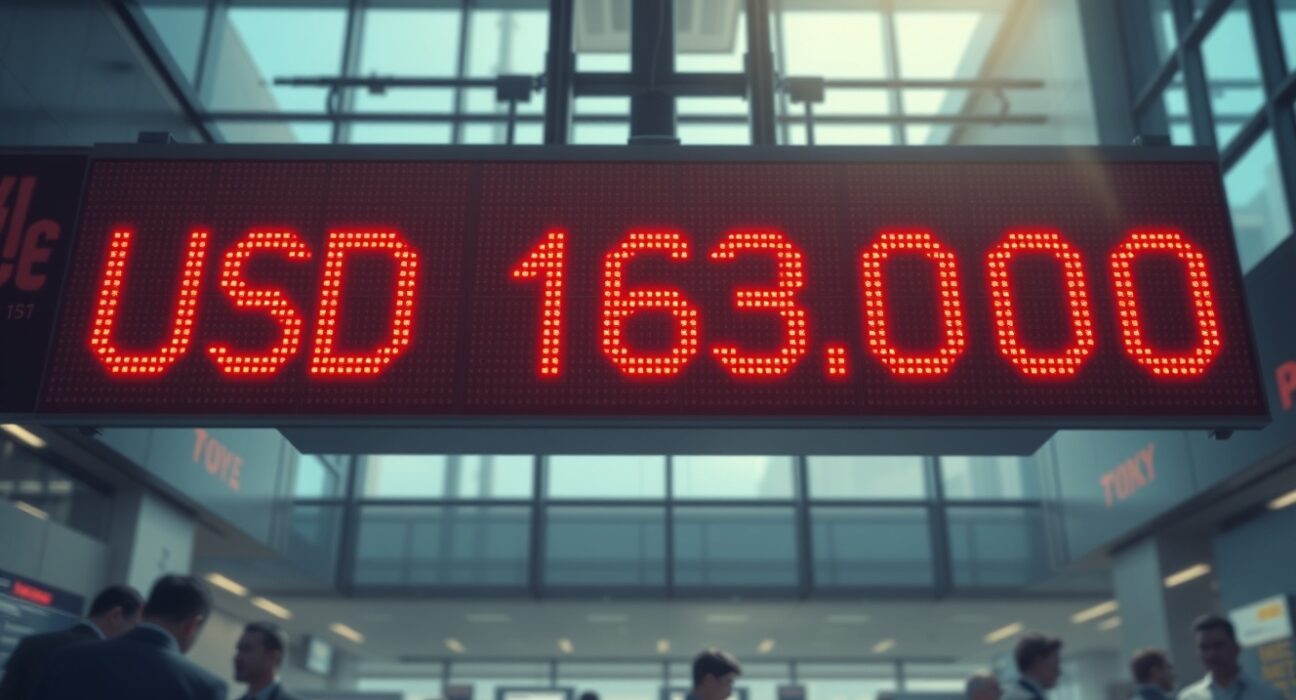
The U.S. dollar surged past the 163 yen level for the first time in nearly 38 years, marking a historic low for the Japanese currency. The breach, which occurred during Asian trading hours, represents the yen’s weakest position against the dollar since July 1986, underscoring the persistent divergence between the Bank of Japan’s ultra-loose monetary policy and the Federal Reserve’s higher interest rate stance.
What Drove the Yen to a 38-Year Low
The dollar/yen pair crossed the 163 threshold as of [current date], fueled by a combination of factors. The Bank of Japan’s decision to maintain its negative interest rate policy, despite growing inflationary pressures, has continued to weigh on the yen. Meanwhile, the U.S. economy has shown resilience, keeping expectations for sustained higher rates from the Federal Reserve alive. This interest rate differential makes the dollar more attractive to yield-seeking investors, putting persistent downward pressure on the yen.
Market Reaction and Immediate Implications
The move above 163 has triggered heightened speculation about potential intervention by Japanese authorities. In the past, the Ministry of Finance has stepped in to support the yen when it weakened rapidly, particularly around the 150 and 160 levels. However, the speed and scale of the current depreciation have raised questions about the effectiveness of unilateral intervention without coordinated support from other major central banks. For Japanese importers, the weaker yen increases the cost of raw materials and energy, adding to domestic inflationary pressures. For exporters, it provides a competitive advantage, though the benefit is tempered by global demand uncertainties.
Impact on Global Forex Markets and Investors
The yen’s decline has ripple effects across global currency markets. It increases the cost of carry trades, where investors borrow in low-yielding yen to invest in higher-yielding assets. A sustained move above 163 could lead to increased volatility in other currency pairs and emerging market currencies. For retail investors and businesses with yen exposure, the move underscores the importance of hedging against further depreciation. The Bank of Japan faces a difficult choice: either adjust its yield curve control policy to stem the yen’s slide, or risk further depreciation that could destabilize the domestic economy.
Conclusion
The dollar/yen’s breach of 163 is a landmark moment in forex markets, reflecting deep structural forces in the global economy. While the immediate trigger is the interest rate gap between the U.S. and Japan, the underlying issue is Japan’s prolonged struggle with deflation and its unique monetary policy framework. The coming weeks will be critical, as markets watch for any signals from the BOJ or the Ministry of Finance regarding intervention or policy shifts. For now, the yen remains under intense pressure, and the 165 level may be the next psychological barrier.
FAQs
Q1: Why is the yen weakening so much against the dollar?
The primary reason is the wide interest rate differential between the U.S. and Japan. The Federal Reserve has raised rates to combat inflation, while the Bank of Japan maintains negative rates to stimulate its economy, making the dollar more attractive for investors.
Q2: Could the Japanese government intervene to support the yen?
Yes, the Ministry of Finance has a history of intervening in currency markets to prevent excessive volatility. However, intervention is less effective when the fundamental driver—the interest rate gap—remains large. The market is watching closely for any intervention around current levels.
Q3: What does a weak yen mean for the average person in Japan?
A weaker yen makes imported goods, including food and energy, more expensive, contributing to higher living costs. It also increases the cost of travel abroad. For businesses, exporters benefit, but small and medium-sized importers face margin pressure.
Disclaimer: The information provided is not trading advice, Bitcoinworld.co.in holds no liability for any investments made based on the information provided on this page. We strongly recommend independent research and/or consultation with a qualified professional before making any investment decisions.
