

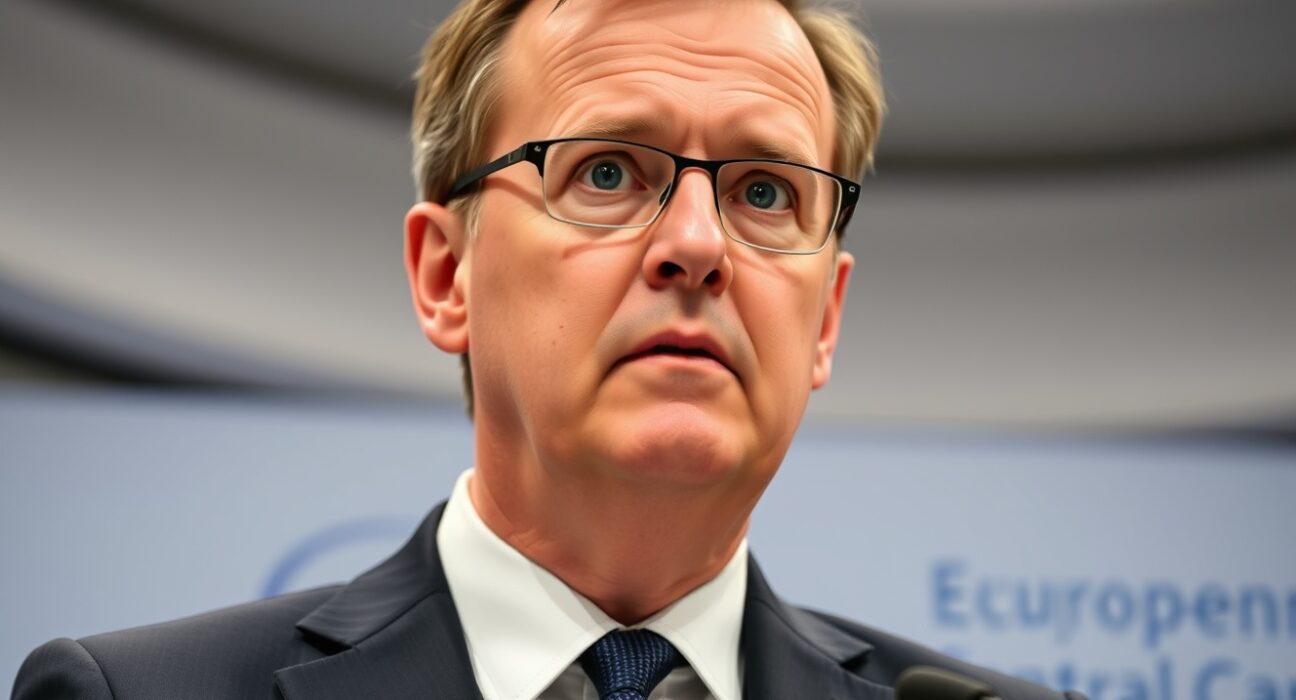
FRANKFURT, March 2025 – The European Central Bank’s Chief Economist, Philip Lane, has issued a significant warning that inflation readings across the Eurozone could show higher numbers in March and April, marking a critical juncture for monetary policy and economic stability in the region. This statement follows a period of volatile price data and comes ahead of crucial ECB Governing Council meetings that will determine the path of interest rates for the remainder of the year.
ECB Inflation Forecast: Analyzing the March and April Projections
Philip Lane’s comments highlight specific concerns about near-term price dynamics. The ECB’s internal models, which Lane oversees, point to several transitory factors that could temporarily push the Harmonised Index of Consumer Prices (HICP) upward. These factors include the delayed effects of energy price adjustments in wholesale markets and base effects from unusually low readings in the same period last year. Consequently, policymakers must carefully distinguish between temporary spikes and persistent inflationary trends.
Market analysts immediately scrutinized the statement for clues about future interest rate decisions. The ECB has maintained a data-dependent approach since its last rate hike cycle, and Lane’s remarks underscore the complexity of the current economic landscape. Furthermore, recent labor market data showing sustained wage growth adds another layer to the inflation puzzle, potentially feeding into services inflation, which has proven stickier than goods inflation.
Economic Context Behind the Inflation Warning
To understand Lane’s warning, one must examine the broader economic timeline. The Eurozone exited a technical recession in late 2024, but growth remains fragile. Supply chain normalization, which helped cool goods inflation, has largely run its course. Meanwhile, geopolitical tensions continue to pose risks to energy and commodity prices. The ECB’s latest Staff Projections, published in December 2024, already anticipated a bumpy disinflation path for 2025, and Lane’s latest assessment appears to confirm that view.
Several key data points support this cautious outlook:
- Energy Component Volatility: Futures markets indicate potential price increases for natural gas and oil as seasonal demand patterns shift.
- Services Inflation Persistence: The prices of services, particularly travel, hospitality, and insurance, continue to rise at an annual rate above 4%.
- Food Price Pressures: Unfavorable weather conditions in Southern Europe have affected some agricultural outputs.
The Data-Driven Policy Framework
Philip Lane, a former academic and central bank governor of Ireland, is known for his rigorous, model-based approach to policy. His warning is not speculative but rooted in real-time data analysis from the ECB’s vast economic monitoring systems. The bank tracks millions of price points across the 20-nation bloc, and leading indicators from these datasets likely informed his statement. This evidence-based communication aims to manage market expectations and prevent a premature loosening of financial conditions, which could undermine the fight against inflation.
Potential Impacts on Markets and Consumers
The immediate market reaction saw a slight steepening of the Eurozone yield curve, particularly in short-dated government bonds. Traders priced in a marginally lower probability of an ECB rate cut in the second quarter. For consumers, higher reported inflation readings could delay expectations for relief in borrowing costs, affecting mortgage rates and business loans. However, Lane emphasized that the ECB’s primary goal remains steering inflation back to its 2% medium-term target in a sustainable manner, even if the path is non-linear.
A comparison of inflation drivers shows the shifting landscape:
| Inflation Driver | 2024 Trend | 2025 Outlook (Q1) |
|---|---|---|
| Energy | Sharp Disinflation | Increased Volatility |
| Food | Gradual Decline | Mixed, Region-Specific Pressures |
| Core Goods | Rapid Normalization | Mostly Benign |
| Services | Persistently High | Slow Moderation |
This table illustrates why the ECB remains vigilant. The stickiness of services inflation, which constitutes a large part of the Eurozone economy, requires particular attention from monetary policymakers.
Conclusion
Philip Lane’s warning about potentially higher ECB inflation readings in March and April serves as a crucial reminder that the disinflation process is rarely smooth. The statement reinforces the ECB’s commitment to a cautious, meeting-by-meeting approach, relying on a wide array of incoming data. For investors, businesses, and households, the message is clear: the road to price stability in the Eurozone will require patience as the central bank navigates temporary fluctuations while keeping its focus firmly on the medium-term horizon. The coming months’ data will be pivotal in shaping the monetary policy stance for the rest of 2025.
FAQs
Q1: What did Philip Lane specifically say about inflation?
Philip Lane, the ECB’s Chief Economist, stated that inflation readings in the Eurozone could be higher in the months of March and April 2025, citing factors like energy price adjustments and statistical base effects.
Q2: Does this mean the ECB will raise interest rates again?
Not necessarily. Lane’s comments highlight near-term data volatility. The ECB’s future decisions will depend on whether higher readings signify a persistent trend or a temporary blip. The overall policy direction remains focused on bringing inflation sustainably to 2%.
Q3: How does this affect the average consumer in the Eurozone?
In the short term, reported headline inflation rates may tick up, potentially affecting consumer sentiment. More importantly, it may influence the timing of future ECB rate cuts, which could keep borrowing costs like mortgages and loans higher for longer than some market participants had hoped.
Q4: What are “base effects” mentioned in relation to inflation?
Base effects refer to the impact of unusually high or low price levels in the same period a year ago on the current annual inflation rate. If prices were particularly low in March-April 2024, even normal price increases in 2025 will produce a higher annual percentage change.
Q5: What is the core inflation measure, and why is it important?
Core inflation excludes volatile items like energy and food. The ECB closely monitors it to gauge underlying price pressures. While headline inflation may fluctuate due to energy, persistent core inflation, often driven by services and wages, is a key determinant of monetary policy.
Disclaimer: The information provided is not trading advice, Bitcoinworld.co.in holds no liability for any investments made based on the information provided on this page. We strongly recommend independent research and/or consultation with a qualified professional before making any investment decisions.