
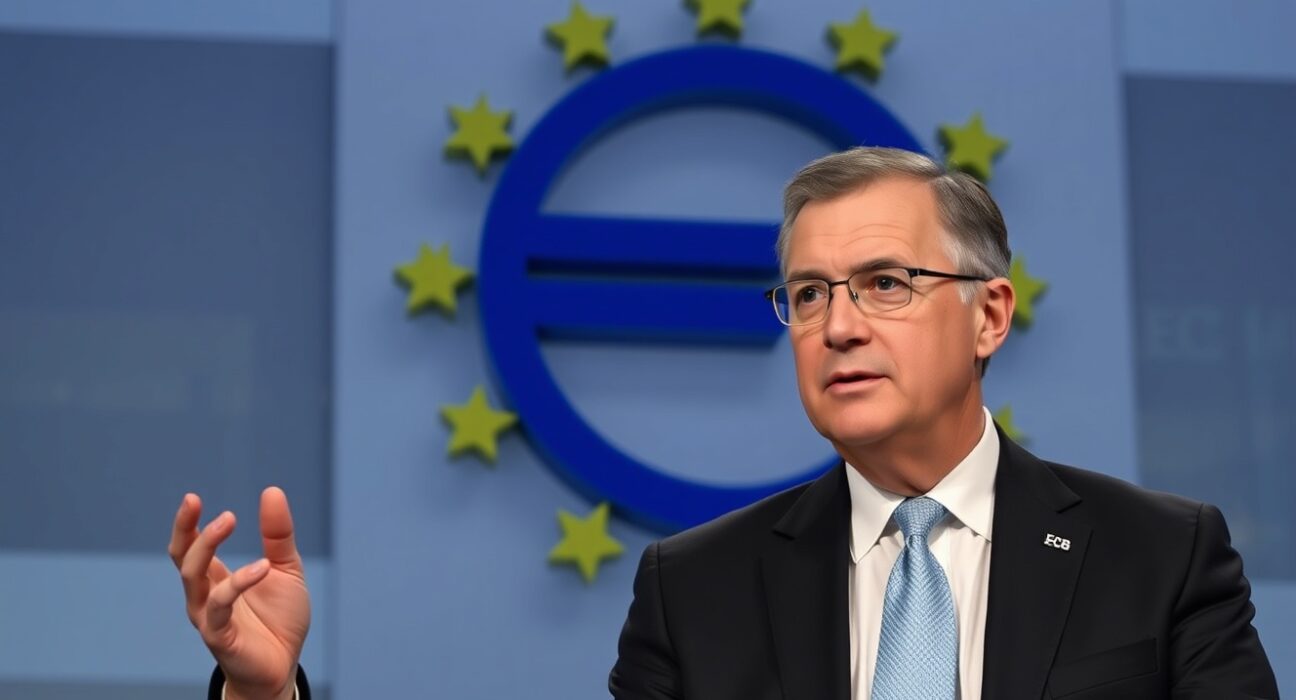
FRANKFURT, Germany — European Central Bank Governing Council member Peter Kazimir has fundamentally shifted expectations for monetary policy communication, declaring that “every future meeting is open and live” during his latest public remarks. This unprecedented statement signals a dramatic move toward real-time transparency in the ECB’s decision-making process, potentially transforming how financial markets anticipate and react to eurozone monetary policy changes. The Slovak central bank governor’s comments arrive at a critical juncture for the European economy, as policymakers navigate persistent inflation concerns alongside growing recession risks across the continent.
ECB’s Kazimir Redefines Central Bank Transparency Standards
Peter Kazimir’s declaration represents more than rhetorical positioning. It establishes a new operational framework for the European Central Bank’s communication strategy. Historically, central banks have maintained carefully controlled information release schedules, with decisions announced after closed-door deliberations. Kazimir’s “open and live” formulation suggests a departure from this tradition toward continuous, real-time engagement with financial markets and the public. This approach aligns with broader trends in institutional transparency but marks particularly aggressive implementation within the conservative world of central banking.
The ECB has gradually increased its transparency over the past decade through several mechanisms:
- Regular press conferences immediately following policy decisions
- Published meeting minutes with a standard four-week delay
- Economic projections released quarterly with detailed assumptions
- Forward guidance about potential future policy paths
Kazimir’s statement implies these existing channels may expand significantly. Market analysts immediately interpreted his comments as suggesting more frequent interim communications, potentially including real-time insights into Governing Council discussions or immediate explanations of voting patterns. Such transparency could reduce market volatility by eliminating information asymmetry between policymakers and participants.
The Technical Implementation of Live Monetary Policy Communication
Implementing “open and live” meetings presents substantial technical and procedural challenges for the ECB. The central bank must balance transparency with the need for candid policy discussions among Governing Council members. Financial stability considerations further complicate real-time disclosure, as premature information about policy shifts could trigger destabilizing market movements. Kazimir acknowledged these tensions while emphasizing the ECB’s commitment to navigating them effectively.
The practical implementation likely involves several phased approaches rather than immediate full transparency. Initial steps may include:
| Phase | Potential Implementation | Timeline Estimate |
|---|---|---|
| Short-term | Enhanced post-meeting communications with more detailed rationales | 2025 Q2 |
| Medium-term | Real-time publication of non-market-sensitive discussion topics | 2025 Q4 |
| Long-term | Live streaming of policy discussion segments with appropriate delays | 2026 onward |
Technical infrastructure represents another consideration. The ECB would need secure systems for real-time information processing and release protocols that prevent accidental disclosure of market-sensitive data. Staff training for this new communication paradigm would require significant investment in both technology and human resources.
Comparative Analysis with Other Major Central Banks
The ECB’s transparency push occurs within a global context of evolving central bank communication practices. The Federal Reserve has gradually increased transparency through Chair Powell’s press conferences and the Summary of Economic Projections. However, the Fed maintains a deliberate pace of information release, carefully timing communications to avoid market disruption. The Bank of England publishes meeting minutes simultaneously with decisions but keeps deliberations private until publication.
Kazimir’s approach appears more ambitious than these existing frameworks. His “every meeting” specification suggests consistency across both routine and emergency gatherings, potentially including ad-hoc crisis response sessions. This comprehensive coverage distinguishes the ECB’s initiative from the selective transparency employed by other major institutions. The implementation will likely draw close scrutiny from global central banking communities as a potential model for future practice.
Market Implications and Financial Stability Considerations
Financial markets have responded cautiously to Kazimir’s transparency declaration. Initially, euro-denominated assets showed minimal price movement, suggesting investors await concrete implementation details before adjusting positions substantially. However, longer-term implications could prove significant for several market segments.
Interest rate derivatives tied to ECB policy decisions may experience reduced volatility as transparency diminishes uncertainty about future actions. The euro’s exchange rate dynamics could similarly stabilize with clearer policy signaling. European government bonds might see tighter spreads between core and peripheral issuers as transparency reduces perceived policy risk differentials.
Financial stability remains the paramount concern in this transparency transition. The ECB must prevent real-time communications from creating self-fulfilling market prophecies or triggering premature capital movements. Kazimir emphasized that appropriate safeguards would accompany transparency measures, though specific mechanisms remain unspecified. Potential approaches include communication delays during market-sensitive periods or tiered information access for different audience segments.
Historical Context of Central Bank Transparency Evolution
Central bank transparency has evolved dramatically over recent decades. In the 1990s, most major central banks operated with considerable secrecy, believing surprise enhanced policy effectiveness. The Bank of Japan’s unexpected policy shifts during this period exemplified this approach. However, academic research and practical experience gradually demonstrated that transparency improves policy transmission and anchors inflation expectations.
The ECB itself has traveled a considerable transparency journey since its 1998 establishment. Initial communications were minimal by contemporary standards, with limited explanation of policy rationales. The global financial crisis accelerated transparency adoption as central banks recognized clear communication’s stabilizing value during market turmoil. Kazimir’s current initiative represents the logical extension of this multi-decade trend toward openness.
Notably, transparency levels vary considerably across eurozone national central banks, reflecting different cultural and institutional traditions. Kazimir’s Slovak background may influence his transparency advocacy, as newer EU member states often prioritize institutional openness to establish credibility. This diversity within the Governing Council could complicate consensus on implementation specifics despite broad agreement on transparency’s general value.
Conclusion
Peter Kazimir’s declaration that every future ECB meeting will be “open and live” marks a potential watershed in central bank communication. This commitment to unprecedented transparency reflects evolving institutional norms and responds to public demands for greater policy accessibility. Successful implementation requires careful balancing between openness and stability, with technical and procedural challenges demanding innovative solutions. As the ECB develops specific implementation frameworks, global financial communities will monitor this transparency experiment closely for lessons applicable to other policy institutions. The ultimate test will be whether enhanced transparency improves policy effectiveness while maintaining financial stability across the eurozone economy.
FAQs
Q1: What exactly does Peter Kazimir mean by “open and live” meetings?
The phrase suggests the ECB will provide real-time or near-real-time access to policy deliberations, moving beyond traditional post-meeting communications. Implementation details remain unspecified but likely involve enhanced transparency throughout the decision-making process rather than only after conclusions are reached.
Q2: How will this transparency affect ECB interest rate decisions?
Greater transparency may reduce market uncertainty about future rate paths, potentially decreasing volatility around policy announcements. However, the Governing Council must ensure transparency doesn’t constrain necessary policy flexibility during economic crises or unexpected developments.
Q3: Are other central banks adopting similar transparency measures?
Most major central banks have increased transparency over recent decades, but none have announced plans matching the ECB’s “every meeting open and live” standard. The Federal Reserve and Bank of England maintain more controlled communication timelines with deliberate information release schedules.
Q4: What are the main risks of increased central bank transparency?
Primary risks include premature market reactions to incomplete information, reduced candid discussion among policymakers concerned about immediate public scrutiny, and potential financial instability if communications are misinterpreted during volatile periods.
Q5: When will these transparency measures be implemented?
No specific timeline has been announced. Implementation will likely occur in phases, beginning with enhanced post-meeting communications in 2025 and potentially progressing to more real-time elements in subsequent years as technical and procedural frameworks are established.
Disclaimer: The information provided is not trading advice, Bitcoinworld.co.in holds no liability for any investments made based on the information provided on this page. We strongly recommend independent research and/or consultation with a qualified professional before making any investment decisions.