

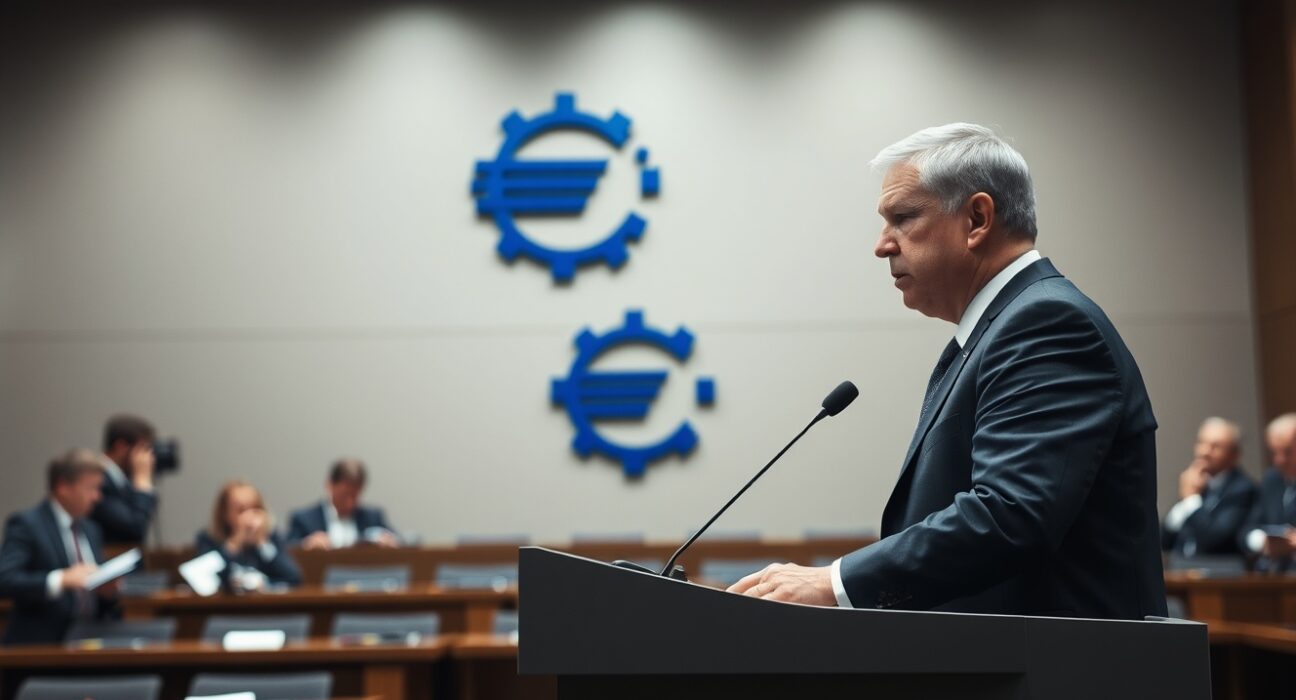
European Central Bank Governing Council member and Austrian central bank governor Robert Holzmann signaled that the ECB may not delay its interest rate hiking cycle if energy prices fail to decline in the near term. Speaking to reporters, Holzmann stressed that persistent energy costs could force the central bank to maintain its tightening bias, even as economic growth slows.
Energy Prices Remain a Key Variable for ECB Policy
Holzmann’s comments come amid a volatile energy market, where natural gas and electricity prices have remained elevated due to supply constraints and geopolitical tensions. The ECB has been navigating a delicate balance between curbing inflation, which remains above its 2% target, and avoiding a recession in the eurozone. According to Holzmann, the central bank cannot afford to pause rate adjustments if energy-driven inflation pressures do not abate quickly.
“If energy prices do not improve swiftly, there is no justification for delaying further rate hikes,” Holzmann said, according to prepared remarks. His stance aligns with the ECB’s data-dependent approach but suggests a hawkish tilt among some policymakers who prioritize inflation control over growth support.
Market Implications and Investor Sentiment
Financial markets have priced in a potential rate hold at the ECB’s next meeting, but Holzmann’s remarks introduce uncertainty. The euro edged higher against the dollar following the comments, while bond yields in Germany and Italy rose slightly. Analysts at ING noted that the market may have underestimated the persistence of energy-related inflation and the willingness of some ECB members to act decisively.
The energy price outlook remains clouded by potential disruptions to Russian gas flows and higher global demand for liquefied natural gas. Eurozone inflation data for the coming months will be closely watched, as any upside surprise could reinforce the hawkish camp within the ECB.
What This Means for Borrowers and Businesses
For households and businesses in the eurozone, a continuation of rate hikes means higher borrowing costs for mortgages, corporate loans, and consumer credit. The construction and manufacturing sectors, already under pressure from weak demand, could face additional headwinds. However, the ECB’s primary mandate remains price stability, and Holzmann’s comments underscore that the central bank is prepared to tolerate some economic pain to bring inflation under control.
Conclusion
ECB policymaker Robert Holzmann has made clear that the central bank will not hesitate to raise rates further if energy prices remain stubbornly high. His remarks add a hawkish note to the current policy debate and signal that the ECB’s hiking cycle may not be over. Investors, businesses, and consumers should prepare for the possibility of tighter monetary conditions in the months ahead, with energy markets serving as the decisive factor.
FAQs
Q1: Why are energy prices so important for ECB rate decisions?
Energy prices directly impact headline inflation in the eurozone. When energy costs remain high, they push up overall price levels, making it harder for the ECB to achieve its 2% inflation target. This gives the central bank a reason to keep raising interest rates.
Q2: Could the ECB still pause rate hikes despite Holzmann’s comments?
Yes. Holzmann represents one voice on the Governing Council. The final decision depends on the full range of economic data, including inflation, growth, and employment figures. However, his remarks suggest that a pause is not guaranteed if energy prices do not fall.
Q3: How might this affect eurozone economic growth?
Higher interest rates typically slow economic activity by making borrowing more expensive. If the ECB continues hiking, growth could weaken further, especially in energy-intensive industries. The central bank is aware of this trade-off but currently prioritizes inflation control.
Disclaimer: The information provided is not trading advice, Bitcoinworld.co.in holds no liability for any investments made based on the information provided on this page. We strongly recommend independent research and/or consultation with a qualified professional before making any investment decisions.
