
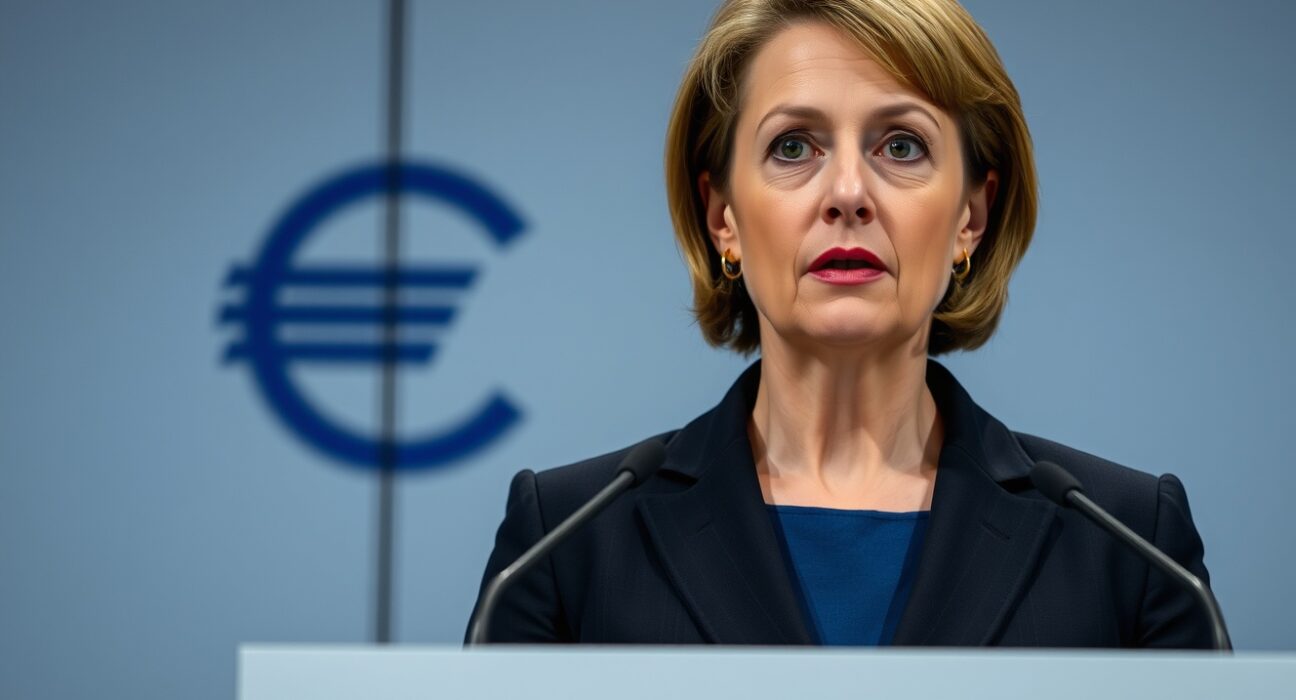
FRANKFURT, March 15, 2025 – European Central Bank Executive Board member Isabel Schnabel delivered a significant monetary policy signal today, explicitly stating that policymakers cannot rule out an interest rate increase during the April governing council meeting. This declaration marks a notable shift in communication from the ECB, which had previously maintained a more cautious stance regarding further tightening measures.
ECB Rate Hike Possibility Gains Momentum
Financial markets immediately reacted to Schnabel’s comments during her appearance at the Bundesbank’s annual conference. Consequently, traders increased their bets on additional ECB policy tightening. Specifically, money market pricing now indicates a 40% probability of a 25-basis-point hike in April, up from just 25% earlier this week. Moreover, European government bond yields climbed across the curve following her remarks.
The euro strengthened against both the dollar and pound after the comments emerged. Schnabel emphasized that recent inflation data continues to show concerning persistence in core price pressures. She noted that services inflation remains particularly stubborn, hovering around 4% annually despite previous policy actions. Additionally, wage growth continues to outpace productivity improvements, creating ongoing inflationary pressures.
Inflation Dynamics Challenge ECB Policy Framework
Recent Eurostat data reveals several troubling trends for monetary policymakers. Firstly, headline inflation in the eurozone registered at 2.8% in February, significantly above the ECB’s 2% target. Secondly, core inflation, which excludes volatile food and energy prices, remained elevated at 3.1%. Thirdly, services inflation, a key indicator of domestic price pressures, showed no meaningful decline from January levels.
The ECB faces a complex policy environment with diverging economic signals. On one hand, economic growth remains subdued across the eurozone. The latest PMI data indicates continued contraction in manufacturing activity. On the other hand, labor markets show surprising resilience with unemployment at record lows. This combination creates what economists term the “stagflation-lite” scenario – modest growth with persistent inflation.
Historical Context of ECB Monetary Tightening
The current discussion occurs against the backdrop of the most aggressive ECB tightening cycle in its history. Since July 2022, the central bank has raised its main refinancing rate from 0% to 4.5%. This represents the fastest pace of monetary policy normalization since the euro’s introduction. Previous tightening cycles have typically unfolded more gradually over multiple years.
Market analysts note several key differences between current conditions and previous cycles. For instance, the ECB now operates with a significantly larger balance sheet following years of quantitative easing. Furthermore, the transmission of monetary policy has changed due to structural shifts in European banking and financial markets. These factors complicate the assessment of appropriate policy settings.
Global Central Bank Policy Divergence Emerges
The ECB’s potential policy path increasingly diverges from other major central banks. The Federal Reserve has signaled it may begin cutting rates later this year. Similarly, the Bank of England has adopted a more dovish stance recently. This divergence creates potential challenges for currency markets and international capital flows.
Several factors explain this emerging policy divergence. European energy markets remain more exposed to geopolitical tensions than U.S. markets. Additionally, European labor markets show different dynamics with stronger wage growth momentum. Finally, fiscal policy support varies significantly across the Atlantic, with U.S. stimulus measures being more substantial.
Key factors influencing ECB decision-making:
- Core inflation persistence above 3%
- Services sector price pressures
- Wage growth exceeding productivity gains
- Euro exchange rate stability concerns
- Financial conditions and bank lending surveys
Market Implications and Transmission Channels
Financial markets face several potential impacts from renewed ECB hawkishness. First, European bond yields would likely increase further, particularly at the short end of the curve. Second, the euro could appreciate against major trading partners’ currencies. Third, European equity markets might face pressure as higher discount rates reduce present values.
The banking sector presents particular transmission challenges. Higher policy rates typically benefit bank net interest margins initially. However, excessive tightening can eventually pressure loan quality and economic activity. Recent ECB bank lending surveys already show tightening credit standards across the eurozone.
Economic Projections and Forward Guidance
The ECB will release updated economic projections at its April meeting. These forecasts will provide crucial context for any policy decision. Most analysts expect modest downward revisions to growth projections alongside upward revisions to inflation forecasts. The balance between these two factors will determine the governing council’s ultimate decision.
Forward guidance remains a key policy tool for the ECB. The central bank has gradually moved away from calendar-based guidance toward data-dependent approaches. This shift provides greater flexibility but also creates more uncertainty for market participants. Schnabel’s comments today represent an effort to manage expectations ahead of the April meeting.
Recent ECB policy rate decisions:
| Meeting Date | Policy Rate | Change |
|---|---|---|
| December 2024 | 4.25% | +25 bps |
| October 2024 | 4.00% | +25 bps |
| September 2024 | 3.75% | +25 bps |
| July 2024 | 3.50% | +25 bps |
Conclusion
Isabel Schnabel’s comments regarding a potential ECB rate hike in April represent a significant development in European monetary policy communication. The central bank faces difficult trade-offs between addressing persistent inflation and supporting fragile economic growth. Market participants should prepare for potential volatility around the April meeting as policymakers weigh conflicting data signals. Ultimately, the ECB’s decision will depend on incoming economic data, particularly regarding inflation dynamics and wage developments in the coming weeks.
FAQs
Q1: What specifically did Isabel Schnabel say about April rate hikes?
Isabel Schnabel stated that ECB policymakers “cannot rule out” an interest rate increase at the April governing council meeting, marking a more hawkish tone than previous communications.
Q2: Why is the ECB considering more rate hikes when growth is weak?
The ECB faces persistent inflation above its 2% target, particularly in services and core categories, forcing policymakers to prioritize price stability despite economic weakness.
Q3: How have financial markets reacted to these comments?
Markets immediately priced in higher probability of April tightening, with European bond yields rising, the euro strengthening, and money markets adjusting rate expectations upward.
Q4: What economic data will the ECB review before its April decision?
Policymakers will examine March inflation data, wage growth indicators, PMI surveys, bank lending conditions, and updated staff economic projections.
Q5: How does the ECB’s potential path differ from other central banks?
The ECB appears more hawkish than the Federal Reserve and Bank of England, creating policy divergence due to Europe’s particular inflation dynamics and energy market exposures.
Disclaimer: The information provided is not trading advice, Bitcoinworld.co.in holds no liability for any investments made based on the information provided on this page. We strongly recommend independent research and/or consultation with a qualified professional before making any investment decisions.